

Say Goodbye To Fridge Mess: The Aluminum Foil Hack That Can Keep It Clean

Your refrigerator is the heart of your home — it's where dinners are planned, and late-night snacks are found. While stocking your fridge might be fun, keeping it clean and spill-free is not. Even though understanding why cleaning your fridge weekly is the easiest way to keep a tidy kitchen can help you build good habits, it sometimes makes life easier to have a plan in place to avoid mess in the first place. Refrigerator liners can be colorful and sturdy — and often come with a hefty price tag. Plus, if you spill something gross, like raw egg, you'll need to take the liner out to wash and disinfect it, making more work for yourself. Instead of spending that money, look toward your pantry for a cheaper alternative.
Aluminum foil is the inexpensive, versatile kitchen staple that will help you say goodbye to fridge messes. In fact, lining refrigerator shelves is just one of many genius aluminum foil hacks you should be using in the kitchen. The foil acts as a removable barrier to catch drips, spills, and sticky residue. When a mess happens, you can lift the foil and throw it out, then simply replace it with a new sheet. This lets you avoid having to remove the refrigerator shelf to clean it and scrub stubborn messes. Since it's so affordable, you don't need to worry about wasting money when it gets dirty.
This hack only works for glass or solid shelves, and should not be used for any wire shelving. Wire shelves rely on air passing directly through the slats to keep things cool — if you completely cover these shelves, you'll reduce the airflow significantly. This can lead to problems like uneven temperatures and food spoilage. Glass shelving can use this hack because it already blocks vertical airflow anyway.
How to use foil to avoid fridge messes
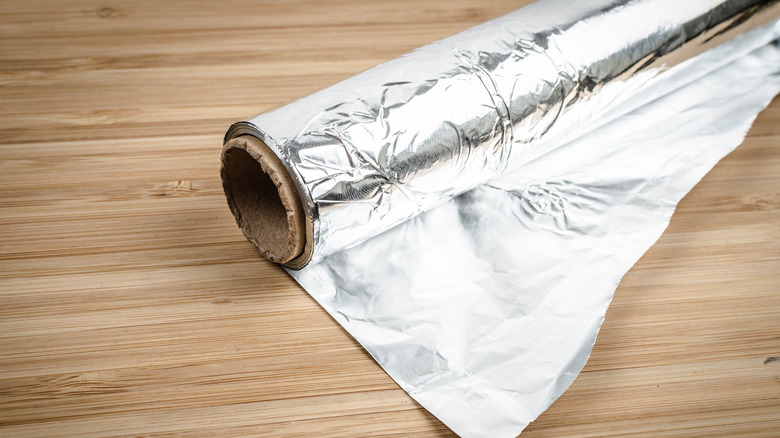
Before reaching for the foil, use the ultimate guide to deep cleaning your fridge for a thorough reset to make sure your refrigerator shelves are clean. This helps keep odors out, but also sets you up for a fresh surface. Wipe down glass or solid shelves with warm, soapy water, and let them dry completely. Since foil is so good at trapping moisture, this step is crucial to avoid hidden mold problems down the road. Once everything is nice and dry, you can measure and cut your foil. Make sure you grab the heavy-duty kind — it's thicker than the standard option so you'll avoid tears and rips more easily.
When you cut the foil to fit the shelves, you'll need to measure it so you have a one- to two-inch gap along the outer edges for cold air to still circulate around the shelf and down through the fridge. Don't have the foil go up the back of the shelf or along the walls — there needs to be open space to allow proper airflow. It's important not to let the foil block back-wall air vents or cover internal temperature sensors, since this will interfere with temperature regulation. Once you've got the foil sheet in place, press it down snugly on the shelf. Since foil can wrinkle, take your hands and smooth it out before placing any jars or bottles on it to avoid immediate spills. The best part of this hack is that when sticky drips or raw food spills happen, you can peel off the foil and throw it right into the trash. Replacing the sheet should only take a minute, so your fridge stays clean effortlessly.