

Should I Unplug My Fridge During A Thunderstorm?
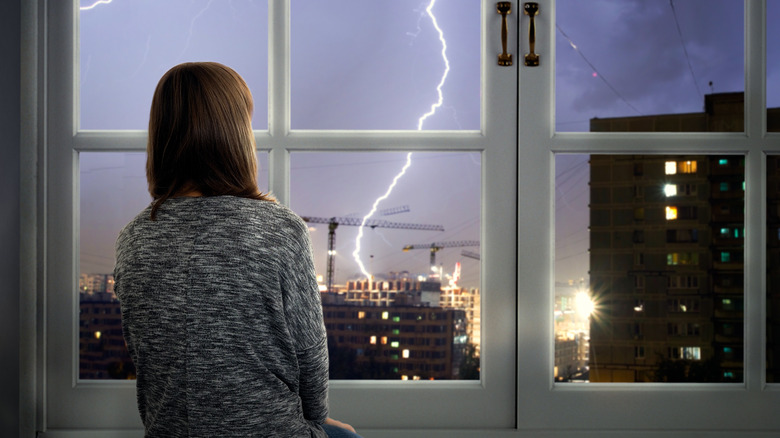
Since refrigerator prices have gone up drastically in recent years, you want to do everything you can to take care of one after you buy it. You might promise yourself that you'll do regular maintenance on this pricey appliance, such as cleaning the condenser coils a couple of times a year and calling for repairs as soon as you notice a problem with operation.
You might wonder whether other steps are necessary, such as unplugging the refrigerator during a lightning storm. However, doing so is generally not recommended during a storm. This key appliance can usually withstand sudden changes in electrical power intensity without damage. While some people recommend unplugging computers, laptops, and other sensitive electronics when a thunderstorm is approaching, it may not be necessary for a fridge. If you want to disconnect your refrigerator to reduce the risk of surge damage, you should do so before the storm arrives. This move reduces the risk of an electrical surge moving through the wiring and damaging plugged-in equipment after a nearby lightning strike.
A key reason to leave a refrigerator plugged in as a lightning storm approaches is concern about spoiled food. According to the U.S. Department of Agriculture, an unopened refrigerator will keep perishable foods like meat, eggs, and milk cold and safe for about four hours without power. After that time, you should throw them out. Although storms may form and fade in about an hour, some can last for 12 hours or more. So, you don't want to purposefully unplug the fridge during a lightning storm and end up spoiling the food because you forget to plug it back in or the storm lasts several hours.
How to keep your fridge safe during a lightning storm
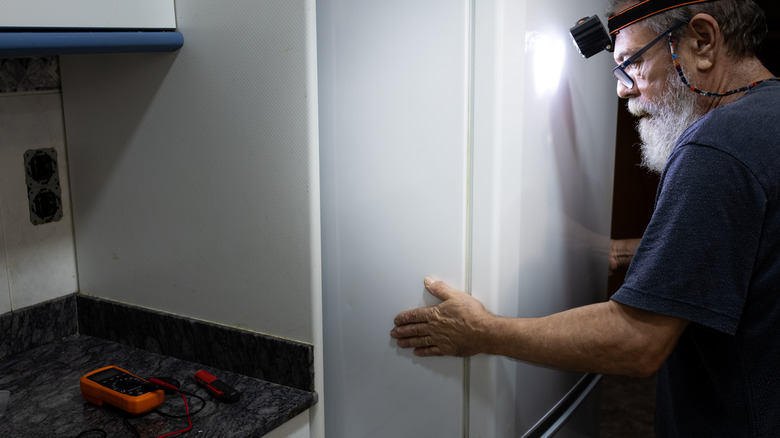
It's important to understand that just because you leave a refrigerator plugged in when a lightning storm is approaching, it doesn't mean this major appliance is automatically safe. Although a direct strike to your home is rare, if one happens, it could damage your electrical system and anything plugged into an outlet connected to it. A home's electrical system simply isn't made to handle the massive electrical current a lightning bolt carries.
Additionally, lightning doesn't have to strike your house directly to cause damage. A strike that hits nearby power lines or transformers could send a massive surge of voltage into your electrical panel and damage appliances and electronics.
One of the best ways to protect your refrigerator and other appliances is to install a lightning protection system in your home. You may have seen plug-in surge protectors at a local retail store, but these devices aren't designed to protect appliances from a direct lightning strike. In fact, using a plug-in surge protector with a refrigerator could cause overheating and create a safety risk. When an electrician installs a whole-home lightning protection system, it attempts to direct any electrical surge from a lightning strike into the ground before it reaches your home's electrical system. Your local power utility might also offer to install a whole-home protection system.
What to do with your refrigerator if a storm kills the power
Even if a lightning bolt doesn't hit your house directly, you could still lose power in a storm. If lightning hits a nearby power line or another part of the utility system, you could lose electrical service for an undetermined amount of time. An outage alone shouldn't damage your refrigerator, though, and you can leave it plugged in while you wait for service to resume.
Without power, the temperature inside the refrigerator will slowly rise, eventually reaching a point where the stored food is no longer safe to consume because of increased bacterial growth (usually after about four hours). The freezer can maintain safe temperatures for 24 to 48 hours. A key tip to follow to save your food during a power outage is to keep the doors closed to keep cold air inside.
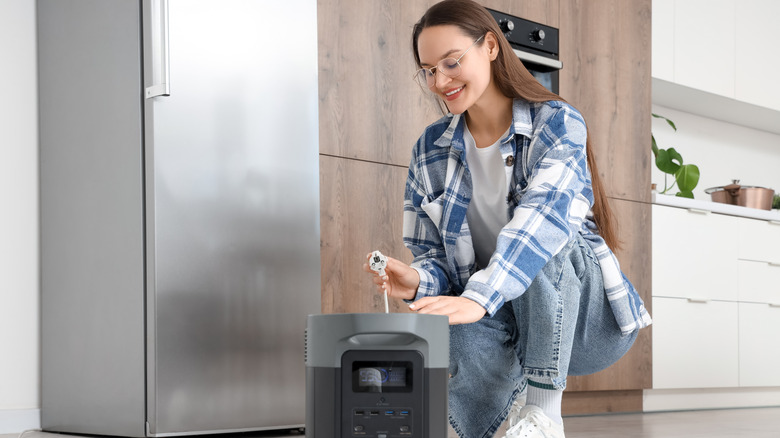
If the power outage may last more than four hours, you could operate a generator and plug your refrigerator into it to keep your food safe. You could install a standby generator that powers the entire home and turns on automatically. Another option is a portable generator that costs less and can run a few electrical products. However, it usually runs on gasoline, meaning it must be outside to manage the exhaust. As long as you charged it before the power went out and it has enough capacity, a large battery-powered portable power station could run your fridge, too.