

The Rare Butter Dish Color With Antique Charm That Collectors Dream Of Finding
We may receive a commission on purchases made from links.
Adding a butter dish to your daily routine is one of the easiest ways to give your overly-modern kitchen some vintage charm. There are plenty of interesting designs to choose from — lucite from the '60s, bold ceramics from the '90s, warm-toned florals from the '70s — but none have captivated the minds of collectors quite like ruby glass. Unfortunately, it was fairly rare even during the peak of its popularity in the 1880s, and in the 140 years since then, it has only become more difficult to find.
Ruby glass is an exceptionally beautiful butter dish material that is sure to invite a bit of luxury to your home. With a deep red hue that doesn't wear off over time, unlike vintage colored glassware that has been stained, it's no surprise that pieces made from this material are a holy grail for collectors. If you stumble across a glass item in this hue — especially a butter dish with both parts in good condition — it's certainly worth snapping up. You'll likely be able to make a little profit on the resale market, but even if you decide to keep it for yourself, you'll enjoy having a unique decor item that's sure to be a conversation starter.
What is ruby glass?
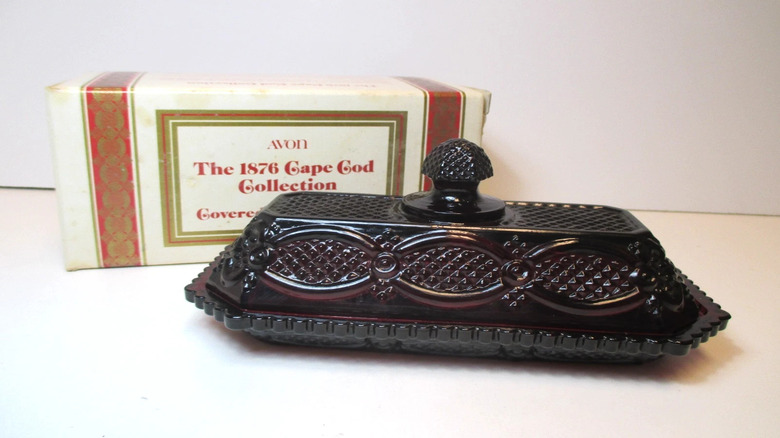
Ruby glass doesn't actually contain or have any relation to real rubies, though its complex history makes it nearly as precious. The moniker comes from its striking crimson color, but this glass is actually synthesized with the help of gold chloride or metallic oxides in a multi-step process. The only problem? This process was a lost secret for centuries. Ruby glass was first created in ancient times, but making it is finicky, to say the least. If the gold particles are too large, the glass becomes an opaque brown. If they're too small, there's no color. Add on the fact that the process actually requires you to reheat the glass to see your results, and you're left with a conundrum that's nearly impossible to crack, even for experienced glassmakers.
Physician Andreas Cassius figured it out in 1676, passing his discovery on to chemist and technologist Johann Kunckel von Löwenstern soon after. But it was kept a secret from other glassmakers and the general public. In the late 19th century, it was finally produced again at the glassworks at Ehrenfeld, and ruby glass pieces became a popular signifier of Bohemian glassmaking. Today, many of the antique ruby glass pieces you'll find are from this boom. Even though modern-day glassmakers know the process, this material still has an air of mystery and a reputation for being something rare and beautiful, which is why something as small as a ruby glass butter dish is all you need to make your kitchen look high-end.
How to source ruby glass
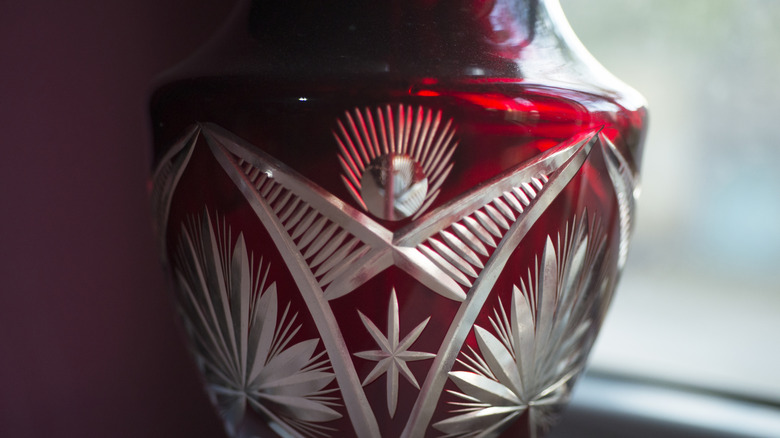
Ruby glass is still produced today, and while it's more difficult to make than standard glass and, by nature, more expensive, you can find pieces on the secondhand market for fairly reasonable prices. Vintage butter and cheese dishes pop up often, but one of the most common you'll find is from Avon's 1876 Cape Cod Collection. Don't let the name and intricate design fool you — these dishes were actually made in the 1970s, '80s, and '90s as an homage to the past boom of ruby glass. If you simply want something with the look of antique ruby glass but the rarity is cost-prohibitive, this is a great option — these butter dishes usually go for between $15 and $50 secondhand.
Tracking down true antique ruby glass is where things get challenging. Glass shatters, so older pieces without damage are often few and far between. Combine this with the fact that ruby glass was already somewhat rare, and you're setting yourself up for a fairly intense hunt. Prices for these items often rise into the hundreds, if not the thousands, but if you're truly dedicated, high-end auction sites like 1st Dibs and curated antique stores will likely be your best bet. Narrowing things down further to finding a butter dish specifically will increase the challenge even more, but hey — rarity is what draws in collectors, and if you're dedicated, you might just come across a true gem.