

How To Prevent Bed Bugs From Climbing Onto Your Furniture With A Small, Simple Tool
We may receive a commission on purchases made from links.
What bed bugs lack in size, they make up for in sheer stubbornness. If you've ever found yourself dealing with bed bugs, it can feel like there's nothing you can do to stop them from making a meal out of you each night. Spot a couple in your hotel room on vacation, and suddenly, you're convinced your entire space back home is bound to become infested, too — what's left to do besides trash all of your earthly possessions and move out of state? Before you pull up Zillow and start doing research to determine where you can find reduced home prices, take a breather. A little tool called a bed bug interceptor could provide you with just the protection you need to prevent these pests from taking over your space.
While bed bug interceptors won't do anything to nix a large, active infestation, they are beneficial for keeping it from spreading or giving you a better idea whether or not you actually have a problem on your hands. Essentially, they're just small plastic saucers with vertical walls. They're placed under the feet of furniture, especially beds, and as bed bugs attempt to find their way to their next carbon-dioxide-producing meal — you — they become trapped. While they're stuck here, they're unable to continue their journey up to the mattress, and you get a clear view of how many of these pesky little bugs are actually hiding in your space. If there aren't any bugs finding their way into the trap over time, you're likely safe. If there are, you know it's time for a DIY bed bug treatment or a call to a professional pest control service.
Tips and tricks for using bed bug interceptors
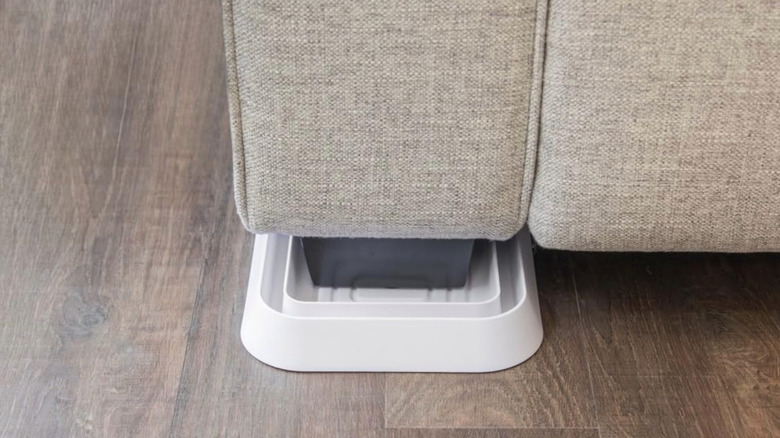
There are plenty of different bed bug interceptor designs out there, from square Ecopest XL Bed Bug Blockers to smaller, rounded Schadro Bed Bug Interceptors. Larger options are simply intended for heavier furniture or pieces that have thick legs. The size and shape don't impact effectiveness here, as all designs follow the same basic structure: The outside of the trap is textured, allowing bed bugs to climb up, but the inside is slick, which leaves them trapped in the channel.
For these traps to be as effective as possible, they should be the only way bed bugs are able to climb up on the bed or sofa. You'll need to add an interceptor for each furniture leg that makes contact with the ground, clear away any bed skirts or bedding that touches the floor, and pull furniture away from walls. To boost your traps' effectiveness, you can also use them in conjunction with a pheromone bait or carbon dioxide source, like dry ice, though simply hanging out on your furniture is often more than enough.
Bed bug interceptors are a great diagnostic tool, but they aren't an all-in-one treatment. In order for them to be effective, you need to actively monitor the situation and use the data you gather to determine whether or not it's time to call in the pros or invest in an at-home chemical treatment. If you do see bed bugs collecting in the trap, drown them in soapy water or bag them up in plastic before throwing them away — simply dumping them in the trash could just spread the infestation further.