

The Best Month To Control Weed Growth Is October. Here's What To Do
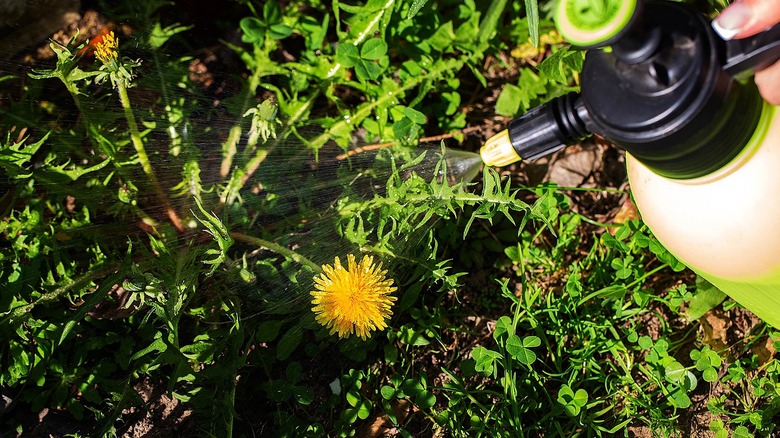
You might think controlling weeds when they're actively growing in spring and summer gives you the best long-term benefits. However, October is actually considered the best time to perform effective weed control. When caring for your lawn in autumn, you can also deal with weeds for next year. In fact, controlling common broadleaf weeds, such as dandelions or clover, is especially effective in October, as is eliminating creeping broadleaf weeds like ground ivy.
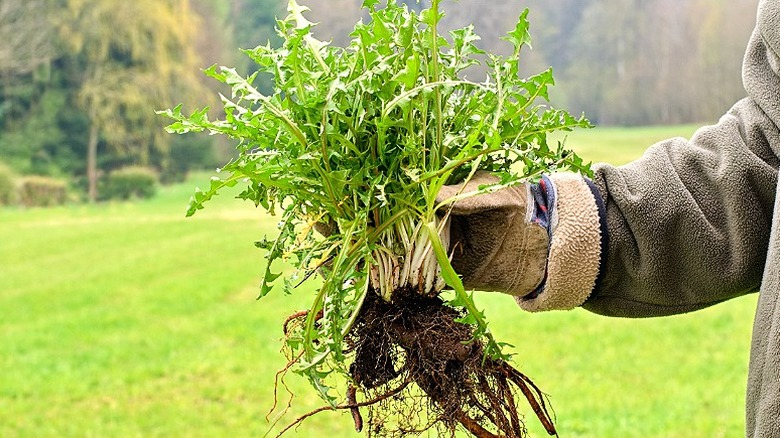
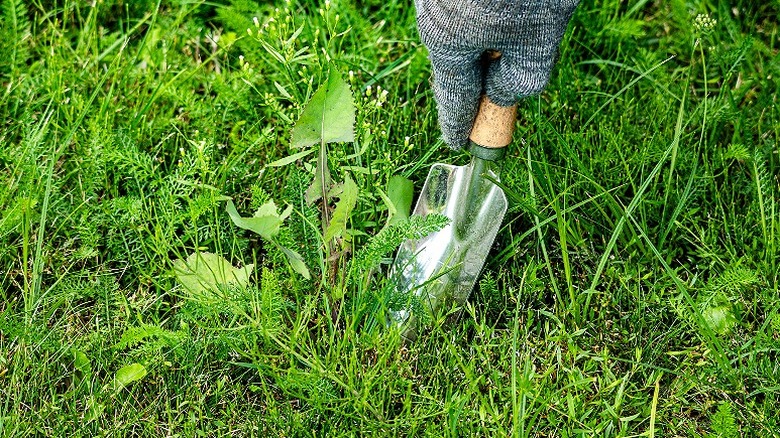
You'll likely need to use a one-two combination of hand-pulling and spraying weeds in the fall. To start the process, inspect your lawn for these unwanted plants. Try hand-pulling first if you have small areas with a few weeds, using shovels, trowels, or other tools as needed to remove the entire plant — roots and all. Generally, it's an easier task to remove weed roots in autumn because everything is smaller, and the soil is damp.
For areas of the lawn with a significant number of weeds, you may need to use a treatment. When you do, spot-apply a liquid herbicide that's as safe as possible for the grass. Consider making two rounds of herbicide spot applications for the best results, and spread them two to three weeks apart.
Eliminating weeds in October for next spring
If new weeds sprout in the fall, these unwanted plants will naturally be weak with roots that aren't deeply anchored in the soil yet. Eliminating them in October ensures they won't be able to store food and nutrients all winter and gain strength for the following spring. Additionally, it's easier to see actively growing weeds in autumn than at most other times of the year. Green grass blades tend to fade to brown in the fall, while the freshly sprouted weeds remain green.
Because they're storing energy to prepare for spring, weeds don't tend to flower in the fall, which also makes it easier to remove them. Flowering weeds are far more difficult to eliminate once spring arrives; broadleaf weeds that produce flowers often have deep taproots.
With that said, understand that if you spray lawn weeds in October, they probably won't visibly curl up and die like they do when you spray them as fully formed plants. If you don't see signs of the leaves dying, it doesn't necessarily mean you need to add more herbicide. Look for subtle signs of distress in the weeds instead. Stick with a liquid herbicide application instead of using granules, as direct spot treatments on weeds will usually be more effective during this time of year.
Pulling and spraying weeds (with caution)
Eliminating broadleaf weeds in October using a spray treatment requires additional consideration, and caution. If you plan to reseed (or already have reseeded) your lawn, you shouldn't liberally use herbicides. Young grass plants won't survive most herbicide applications. So, as said, try to only spot-apply herbicides directly on larger weeds. As the University of Maryland Extension advises, using herbicides should not be a first option.
As well, instead of spraying an herbicide near a flower bed or shrubs, pulling the weeds by hand is safer, regardless of size. When pulling weeds, remove the entire root. Some types of broadleaf weeds, such as dandelions, can regrow in the spring if even a tiny piece of the root remains in the ground. To help with this task, use tools like a trowel or a weeding knife. And, if you have a lot of weeds to deal with, pull them using shorter working sessions over a few days.