

Goodbye Traditional Privacy Screens: Use Hanging Baskets For Your Porch Instead
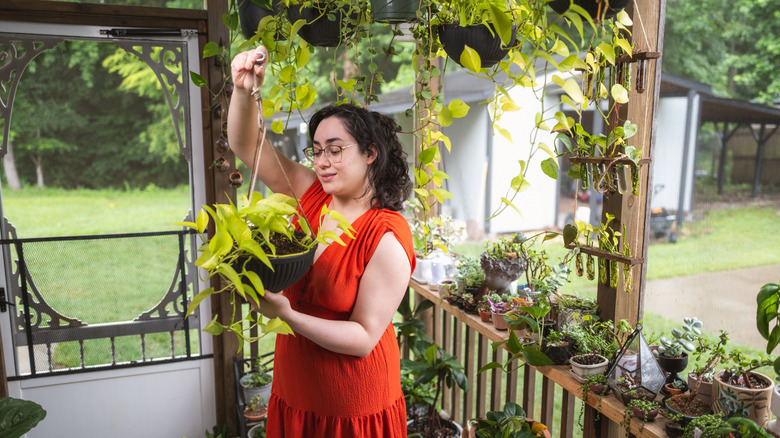
Hanging out on your porch should feel like a cozy middle ground between the inside of your home and the rest of the world, but if you have nosy neighbors, this area can easily lose its charm. Privacy screens exist to help solve this problem — often made of wood, vinyl, or metal, they can essentially be used as supplemental fencing to block off specific areas — but they have their drawbacks, too. When used on a porch, their sheer size and relative opacity can interrupt both your ability to enjoy your own yard and the design of your outdoor space. Finding a happy medium might seem impossible, but there's a deceptively simple approach that will allow you to enjoy the best of both worlds: hanging plants.
When displayed in large planters or hung at varying heights, a collection of hanging plants can be transformed into a stylish privacy screen that adds to the appearance of your porch instead of simply blocking it off. While curious passersby might still be able to sneak glimpses between the pots, their view will be diminished. Yours, on the other hand, will be improved. You'll still be able to see out into your own yard, and rather than staring at a boring wall, you'll get to enjoy even more greenery.
This isn't a particularly challenging DIY to take on yourself, especially if you have a green thumb, but there are a few considerations you should keep in mind when it comes time to decide on your planters, their placement, and the plants you'll fill them with. In order to achieve a truly private feel, you'll need to create a lush display — a couple of dinky planters simply won't cut it.
How to arrange your hanging basket privacy screen
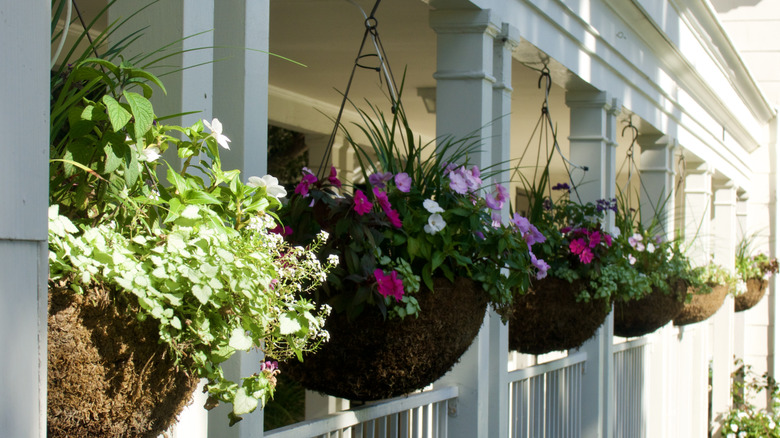
There are two main approaches you can take when it comes to this DIY privacy solution: investing in a handful of large planters that will obscure a significant amount of your porch in one pass, or layering several smaller planters at different heights to create a more curtain-like look. As a general rule of thumb, larger planters will look more precise and structured, while smaller planters will create a free-flowing, boho display. These ideas can also be combined if you want to vary the design a bit throughout your outdoor space.
For a multi-planter look, you'll want to begin by installing several hooks into the underside of your eaves. Space the hooks based on the size of your pots, and install one hook per planter. For the side of an average-sized porch, about five will do the trick, but this can be modified to your needs. Once it's time to hang your plants, mount the first in the middle at eye level, mount the two along the sides at your desired heights, then use the remaining two to fill in the gaps. For the plants that sit lower, you'll likely need some pot chain extenders to get them to the ideal height.
Larger hanging planters can be hung solo, or if you're feeling creative, you can DIY a multi-level planter by drilling holes through standard rectangular planters and connecting them with knotted rope. Regardless of the design you go for, make sure you use heavy-duty hardware like these Naceture Ceiling Hooks for this project. Soil is heavy, and it only gets heavier when it's wet, so choosing hooks with a suitable weight limit is incredibly important.
What plants you should choose for your privacy screen
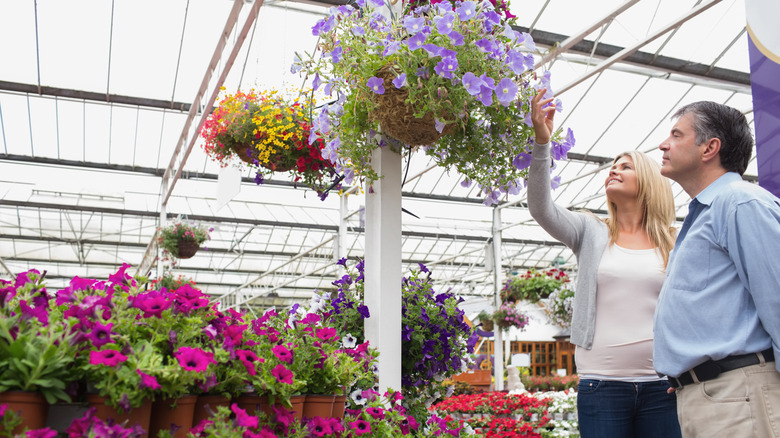
The plants you fill your planters with are another matter of preference, but there are a few boxes you'll want to check. You can't put just any plant in a hanging basket and expect it to thrive. Hanging planters provide more drainage and dry out more quickly than garden beds, so unless you want to be outside constantly watering, it's best to stick with options that are somewhat tolerant of drought. You'll also want to cater your choices to the sunlight levels on each side of your porch — sedum and thyme are great for full sun areas, for example, while ferns and alyssum are tolerant of shade.
It's important to factor in the privacy aspect here, too — combining flowing foliage, trailing flowers, and options with a mounding growth habit will help to obscure the view of your porch and create a texturally interesting display. Perennials will be the lower-maintenance and longer-lasting choice, but there's always the possibility of opting for annuals and swapping out your hanging plants once they've completed their life cycle. If you lack a green thumb, consider going for artificial plants instead. While they carry a bit of a bad reputation, faux plants have come a long way in recent years and can provide a shockingly realistic and lush look without the hassle of daily maintenance. For example, the Forest Prince artificial outdoor ferns from Amazon are highly rated by buyers.