

How To Use WD-40 To Help Get Rid Of Carpenter Bees
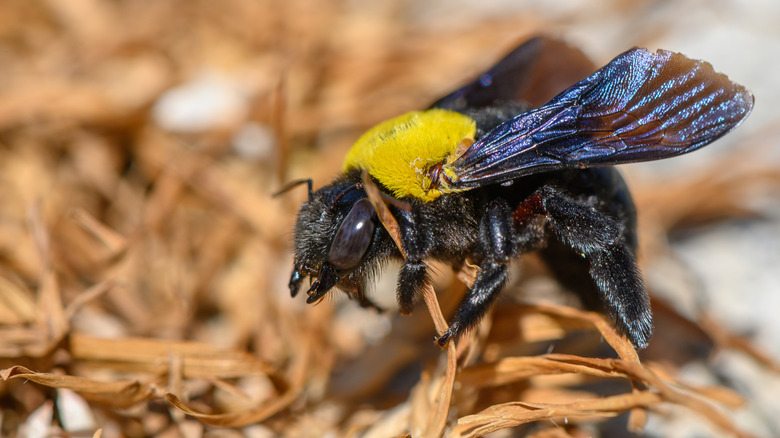
Summertime and early fall bring warm weather, and with it comes the presence of bees. While bees are helpful pollinators, some, like carpenter bees, can also be pests. These insects nest in bare wood, potentially damaging wooden structures whether they target your main home or you find carpenter bees in your shed. Traditional insecticides labeled for carpenter bees can help tackle an infestation, but if you inconveniently run out, you might be tempted to reach for a trusty can of WD-40 instead.
Chances are you wouldn't normally associate the product that makes hinges less squeaky with bee control, but this is just one of many unexpected ways you can use WD-40 around the house. Some homeowners claim WD-40 works by clogging carpenter bees' spiracles — the exterior openings they use to breathe — and suffocating them on contact. However, its effectiveness against carpenter bees, particularly hidden larvae inside the gallery, hasn't been established.
Beyond its initial application, WD-40's strong petroleum base penetrates deep into raw lumber, which some sources say may temporarily make the wood unappealing to returning tunnel-borers. Even though using WD-40 might seem as simple as pointing and spraying, you need to know that this is only half the solution. If you do not properly treat and seal the entrance after using the spray, other female bees will move into the vacant tunnel and create new galleries and structural damage.
How to deal with carpenter bees and their nesting holes
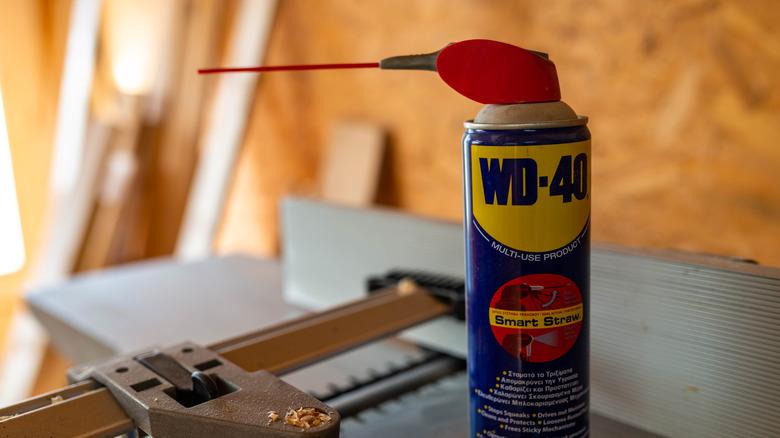
You might see DIY YouTubers and home improvement channels spraying WD-40 right into nest entry holes using the thin red straw, but pest control experts generally advise against it. Spraying directly into the nest isn't guaranteed to reach the bees inside, and disturbing an occupied nest could provoke a defensive female. If you're planning on using WD-40 to get rid of your bee problem, the safest thing to do is to go for individual bees you see flying around or spray outside wood surfaces where they often land.
If you're dealing with active carpenter bee galleries, time any treatment carefully and gear up. Early morning or late evening is generally preferable when bee activity is lower, and protective clothing, goggles, and gloves can help reduce exposure. Solvents can easily drift or drip when you're spraying overhead or at awkward angles, and you'll want to keep the product off your skin and out of your eyes. To target individual adult bees, aim carefully and give them a direct, short burst of spray to coat their outer body. To discourage bees from carving out new galleries in a specific spot, spray a light, even coat onto the exposed wood surface where you've noticed frequent hovering or drilling attempts.
Keep in mind that while WD-40 might knock down an active bee on contact, it won't fix an existing hole. To handle old entrance holes without disturbing a live nest, wait until you're sure no bees are inside. Tightly pack the gallery opening with rust-proof copper mesh or brass wool, or use a properly sized wooden dowel coated in exterior wood glue. Cap the repair flush with exterior wood filler, let it fully cure, and then sand and paint the wood to make the area less appealing to future borers.
What to know before trying the WD-40 hack
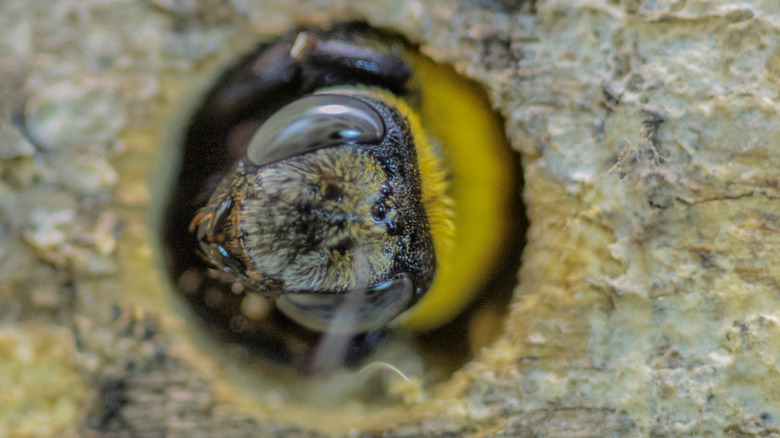
WD-40 will kill carpenter bees on contact, but it's really a band-aid, not a reliable long-term pest control solution. The main issue is longevity. Once the liquid dries and those fumes evaporate, the protection vanishes with them. Any female bee scouting for a nest later can easily bypass that dried residue and move right in, which is why sealing up the hole afterward is the step you can't skip if you want to fully get rid of carpenter bees from your home.
Beyond the lack of proven long-term prevention, using this hack presents safety hazards and potential surface issues. WD-40 contains flammable components and comes in a pressurized aerosol can. Directing this aerosol spray near things like exterior lighting fixtures, junction boxes, outdoor outlets, or HVAC units creates an unnecessary ignition risk. There's also a risk of surface damage and paint failure. Petroleum solvents deeply penetrate unsealed lumber, leaving dark stains on raw wood and a slippery residue that prevents fresh primer, paint, exterior caulk, or wood filler from properly adhering to the repair area later on. This is why you must thoroughly clean and sand the surface if you use WD-40 on exposed exterior wood.