

Gravel Vs Crushed Stone: What's The Difference?
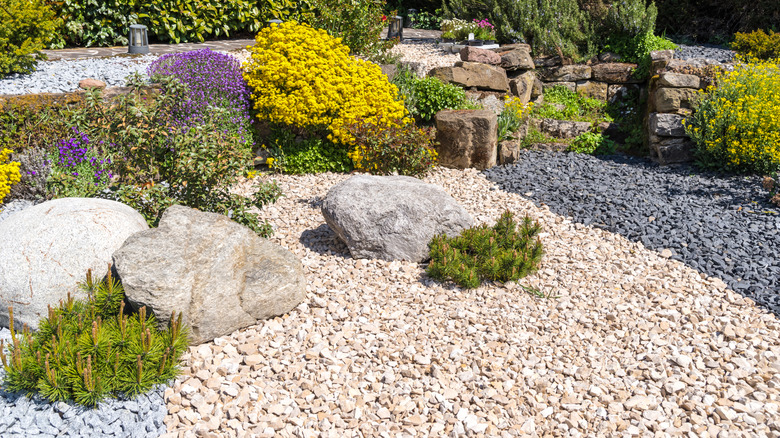
Using the terms "gravel" and "crushed stone" may be acceptable in casual conversation, but if you're serious about your landscaping rocks, then it will serve you well to know the difference. In fact, there are quite a few distinctions between gravel and crushed stone, both in appearance and application. Without learning about the specifics of each substance, you may find yourself facing foundational issues wherever you've implemented your chosen aggregate. Fortunately, it's easy to tell whether you're working with gravel or crushed stones with just a few visual clues. Then, you'll be able to get the full benefits out of either material.
The biggest physical difference between these two rocks is that crushed stone tends to be sharp and rough while gravel is smooth and round. This is because the former is made by smashing up larger rocks, and the latter is the natural result of any jagged edges being worn away by erosion. Crushed stone may have a more rugged appearance, but since it's man made, it's available in more colors than gravel, including vibrant pink or red. One similarity between the two materials is that they are both popular choices for decorative landscaping. There are a few different types of gravel available for landscaping your yard, but it generally tends to maintain a soft, organic look, and crushed stone is a good option when you need something with a bright pop of color. Aside from aesthetics, the shape of these stones also greatly affects their structural integrity and strength as an option for paths or driveways.
Crushed stone provides more structure
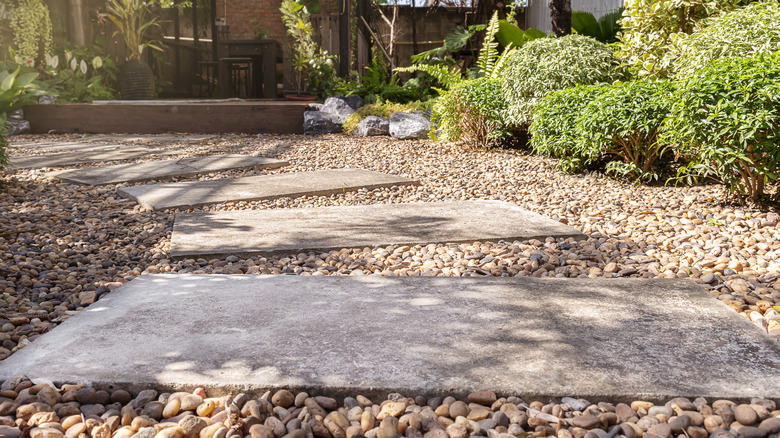
Crushed stone and gravel respond differently when compacted under vehicles and foot traffic. Thanks to its random edges and range of shapes, crushed stone tends to fit together like a puzzle with various points and divots locking into place. This makes crushed stone work much better for driveways or as a foundation for patios and roads. That's not to say that gravel can't make for an attractive walkway material — it can. It just can't stand up to as much wear and tear as crushed stone, and may need to be replaced more often. For this reason, gravel is typically reserved for flower beds or decorative areas that won't be disturbed.
One major benefit that gravel and crushed stone share is that they provide great drainage. They're great for providing a bit of structure to areas that see a lot of standing water, such as under a gutter drain, along the base of a retaining wall, or driveway border. The one caveat to this is size: The smaller the individual stones, the more likely it is for them to be messed up by rain or other elements. That's why larger coarse gravel is better suited as a base layer for something like a beautiful rock garden, while tiny pea gravel is best for decoration. Crushed stone and gravel is also generally affordable, with the price varying depending on the size, color, and rock type. If you need a heavy-duty base, opt for crushed stone due to the extra stability. But for general landscaping use, feel free to let the subtle differences between these materials inspire your design, and use both crushed stone and gravel in your garden.