

Is It Okay To Leave Wicker Patio Furniture Out In The Rain?
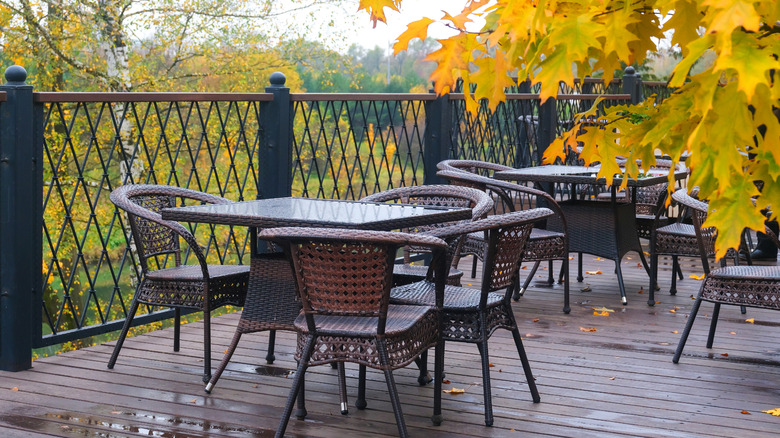
When it comes to decorating your outdoor space, aesthetic and vibes cannot be your only consideration. You also need to look into materials; think waterproof and built to last. Wicker is a common find in outdoor spaces for several kinds of furniture. From seating to side tables, wicker is all over the place. Weatherproofing is vital to being able to leave it out in the rain though — even still, you may not wish to leave it out and uncovered all year through extreme weather.
Not all wicker furniture is made equally. It's important to remember that wicker refers to the weaving method and not the material from which the furniture is made. Historically, the weaving technique goes back to ancient Egypt, where natural fibers like rattan, bamboo, willow, or reed were used. Today, wicker furniture can be woven from resin-based synthetic fibers for outdoor use. This all-weather wicker can stand up to moisture, sunlight, and even temperature changes that natural wicker cannot. Synthetic, or resin wicker may not last forever, but when it comes to water, it will significantly outlast natural-fiber wickers and is fine to leave out in the rain. That's also why it's the best type of wicker for patio furniture.
Rain care for wicker furniture
One of the downsides to natural wicker is that water can absolutely destroy your furniture due to the plant material's ability to absorb liquids. The constant water exposure can lead to swelling that can cause the natural fibers to separate, crack, and weaken. There is also the chance for mold growth. If your outdoor wicker furniture is made of natural materials, you need to keep it covered — either with a furniture cover or under an awning of sorts. You really can't afford to get it wet.
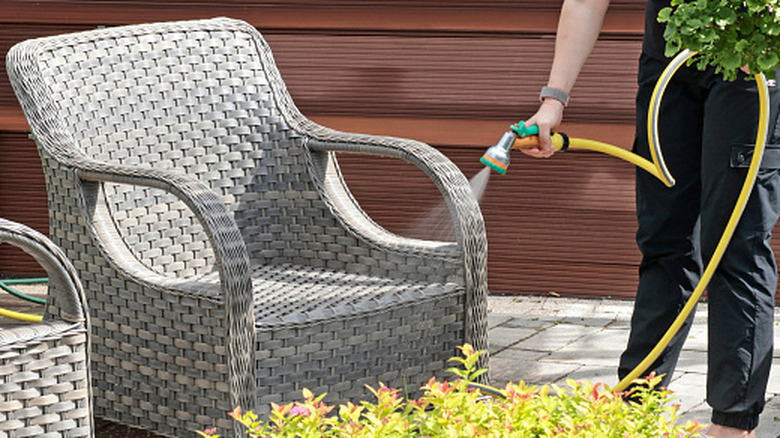
Synthetic materials absorb almost no water — this not only allows it to endure rain, but also allows you to wash your outdoor wicker furniture with soap and water as you notice buildup. Still avoid pressure washing or the use of harsh chemicals as those could damage the fibers. Synthetic material is not perfect; through UV exposure, it will still weaken overtime, but not nearly as fast as natural wicker would. You can mitigate this by choosing a location that is not always exposed to the elements, for example, against your home or somewhere that offers partial shade.
If you live somewhere with extreme weather, you may need to store natural wicker indoors during those conditions — especially as wood tends to split in icy conditions. Synthetic wicker is designed to withstand more, but you can improve its longevity with outdoor furniture covers during extreme conditions.