

How To Reduce Wind Burn In Your Garden: The Affordable Solution In Your Kitchen

We may receive a commission on purchases made from links.
Most careful gardeners have heard about winter burn, sun scorch, and even nitrogen burn, but what about wind burn? Wind burn can strike in any season, leading to chapped, dry, and twisted leaves. If the winds are wild enough, they might also rip off a plant's foliage or break its stems and branches. It can be difficult to save plants suffering from wind exposure once they've already been damaged, so prevention is really the best treatment. If you notice that your prized blooms are taking a beating from blustery winds, look for a roll of plastic wrap in your kitchen. Also known by the brand name Saran wrap, plastic cling film is the perfect material to wrap around your plants, protecting them from strong winds without blocking too much sunlight.
Don't just swaddle your plants like a bunch of leftovers, of course. First, you'll need to provide a frame to ensure there's enough airflow and growing space to keep your plants healthy. For a quick fix, pop a tomato cage over the plants that need shelter and wrap around the sides with a roll of cling film. Leftover fence paneling can also be shaped and wrapped into a perfect fit-to-size frame. This is a perfect hack to help your tomato plants thrive, especially since they're very susceptible to wind burn, but it also works well for a variety of other container plants and even raised beds.
Give your garden plants a Saran wrap shield
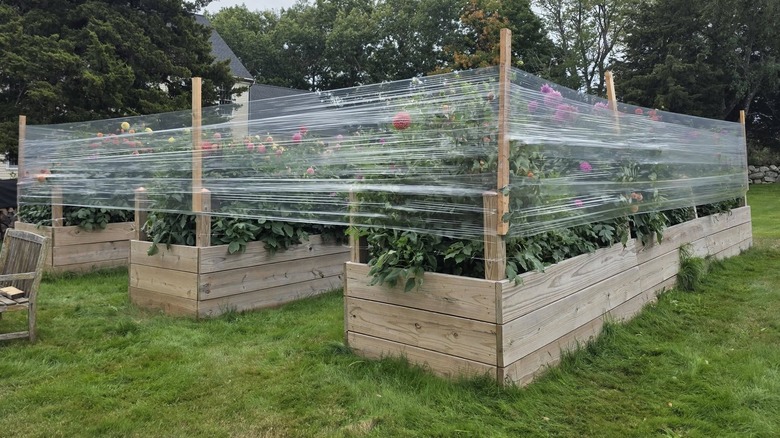
A roll of Saran wrap might be easier to work with than a heavier duty product like Xstrong Greenhouse Plastic Sheeting, especially for container plants. Once the winds have died down, you can pull your wrapped tomato cages out of the ground and stow them away for future use. But depending on the size of your plants — and how much extra Saran wrap you have — you can easily adapt this to fit around larger in-ground plants and garden beds too. Stick bamboo poles or fence posts into the corners of your raised bed, or construct a full frame out of PVC pipe, then walk in a circle around the frame several times with the plastic wrap roll, working your way up from the bottom. You may need to wrap in several tight layers for the plastic to feel sturdy.
While wind chill might be your main concern, this plastic wrap hack could also protect your plants from other hazards. Pests and hungry wildlife will have a harder time getting around your plastic barrier. In cold climates, the plastic walls can also act like a miniature greenhouse, keeping vital warmth and moisture from escaping the soil too quickly. However, those in very hot, humid climates should practice this hack with some caution. A lack of air circulation and increased moisture can open the door to several common plant diseases you don't want, like powdery mildew or damping off in seedlings. Some gardeners may want to wait until the weather turns in fall and winter, when plants will appreciate the extra shelter and warmth. After sealing away your holiday leftovers, you'll know just what to do with the extra wrap.