

Prevent Weed Growth With The Help Of These Light-Blocking Solutions

Like all plants, weeds need photosynthesis in order to thrive. That's especially true of annual weeds, which rely on the sun to reach their buried seeds. While hand-weeding and herbicide-spraying may have a part in your landscaping routine, putting in sunlight-blocking measures should also be part of your arsenal. After all, who wouldn't rather find labor-saving, no-dig ways to get rid of weeds?
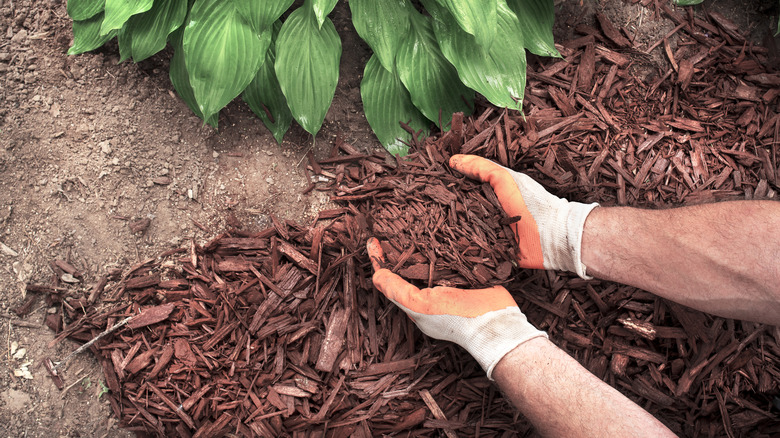
Mulching is an eye-pleasing way to block light from weed seeds, especially when you use natural products like wood chips, pine needles, or ground leaves. If weeds are still coming through your organic mulch, you may need to tweak your method a bit. Instead of laying down chunky wood chips, which let more light in, use bark chips or nuggets no larger than 1½ inch in size. Larger mulching materials should go on about 4-inches thick. Finer materials like straw or ground leaves pack more tightly and can be spread about 2-inches thick.
Cardboard layers or thick layers of newspaper smother existing weeds, while preventing the sunlight from signaling new weed seeds to sprout. In addition, the materials are biodegradable, adding needed carbon to your soil as it breaks down. Keep cardboard or newspaper heavily moistened in order to help it maintain ground contact. Adding decorative mulch on top makes this method more aesthetically pleasing, as well as more effective as a weed suppressor. And don't forget to overlap the cardboard or newspaper layers pieces by several inches, so that stubborn weeds don't make their way through the gaps!
Choose the shade-out methods that suit your needs
Inorganic mulches are additional ways to get rid of weeds in your garden and your lawn by blocking light. These manmade or non-living mulches not only suppress perennial weed roots, but also block sunlight from reaching annual weed seeds. Black plastic can be used independently, or under other inorganic mulches like gravel or sand. Synthetic mulches, also known as landscape fabric, work in much the same way. Even if you don't like the look of it, its weed suppression abilities are a good reason not to ditch landscape fabric just yet. Remember — it, too, can be covered with additional mulching material such as wood chips.
You can also harness the natural power of plants to block out sunlight as a solid weed-fighting strategy. If you let your lawn grow a little longer than usual, you may be surprised to see how dramatic the decrease in grass weeds are. Set your mower blade to at least 2 inches to enable glass blades to shade the soil beneath them, and consider mowing a little less often.
Similarly, groundcover works to suppress weeds by both blocking sunlight from activating weed seeds, but by smothering young weeds before they get a foothold. Consider types like moss phlox (Phlox subulata) for sunny, well-drained spots or northern maidenhair fern (Adiantum pedatum) for damp, shaded sites. In addition, shade weeds out with nearby shrubs and tall perennials, which are especially helpful for the weedy outer edges of lawns. Finally, set leafy plants close together to block light from the bare soil below them.