

10 Best Plants To Grow Around An AC Unit
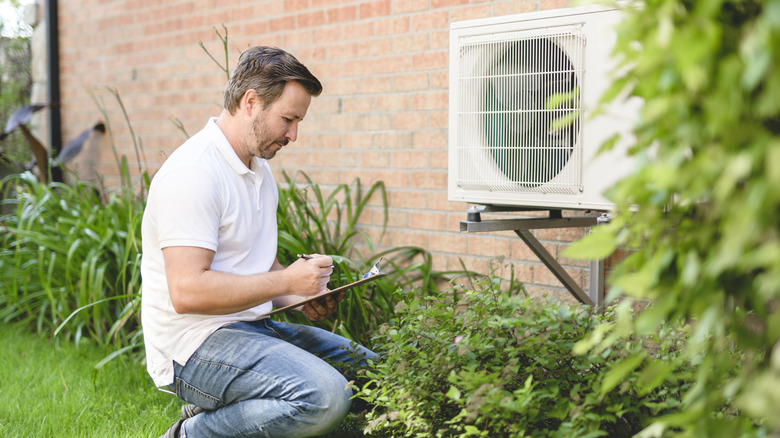
A gorgeous landscaping design does more than liven up your yard. It can add some aesthetic interest to features of your home that you don't want to put on full display, like your air conditioning unit. If looking at a big metal box doesn't fit your vision for your yard, you can use natural elements to spruce up the area around it.
When picking the best plants to grow around an AC unit, it's important to be mindful of several important considerations. First, you need to be careful to allow enough airflow around the unit so that it functions properly. Second, avoid plants that have an extensive root system or that produce a lot of pollen since these things could interfere with the AC unit over time. There are plenty of plants that meet these criteria and add color and visual interest to your yard so that your AC unit fades into the background.
The common boxwood shrub is easy to prune
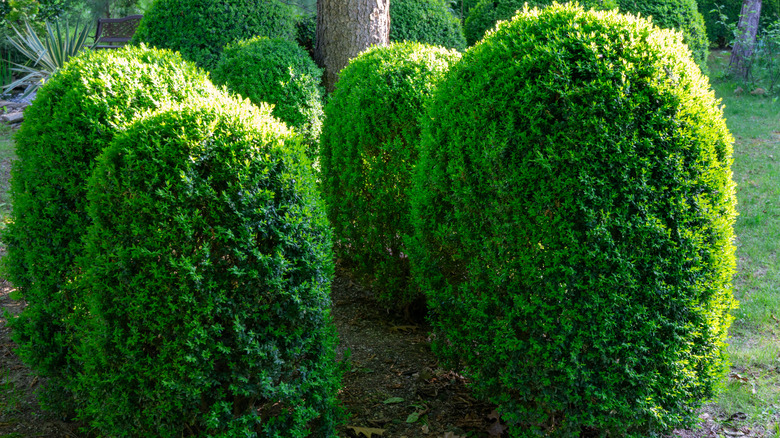
The common boxwood shrub (Buxus sempervirens) is an easy-keeper that grows slowly and thrives in growing zones 5 through 8. These evergreen shrubs will make your landscaping look great all year because they'll add color in the area around your AC unit. Plus, they can be pruned and shaped to fit your size constraints and leave plenty of airflow around your unit.
Boxwoods can reach a top height of 20 feet with a 5- to 15-foot spread, but they can be pruned to maintain a more compact shape. If you're not handy with pruning shears, start with a smaller variety like the dwarf English boxwood (Buxus sempervirens 'Suffruticosa'), which reaches about 1 to 2 feet tall and wide. Boxwood shrubs need partial to full sun and prefer well-draining soil.
Hostas are easy to grow in shady spots
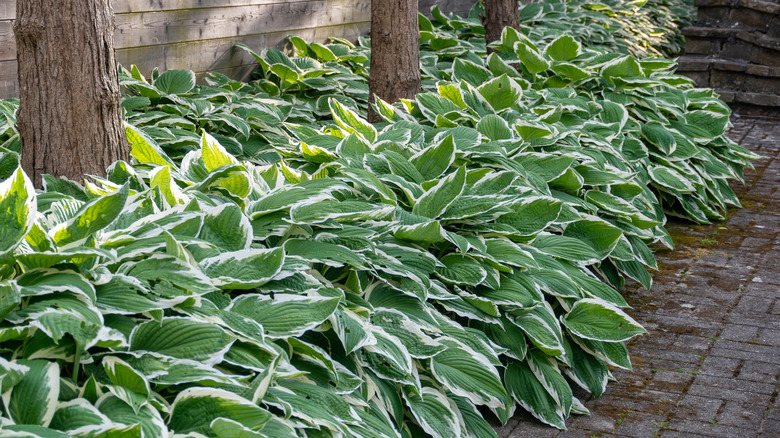
Hostas have the advantage of growing well even in low-light conditions. These plants don't mind shady spots, so that's a plus if your AC is on the side of the house that receives very little sun. Hostas—especially variegated varieties—are popular for their visual interest.
The clumping growth habit of hostas means they won't crowd your AC as they grow. Keep in mind that large hostas can be 3 feet wide while more compact varieties may take up only 6 inches of room. These perennials thrive in hardiness zones 3 to 9.
The American dogwood shows off a different look in every season
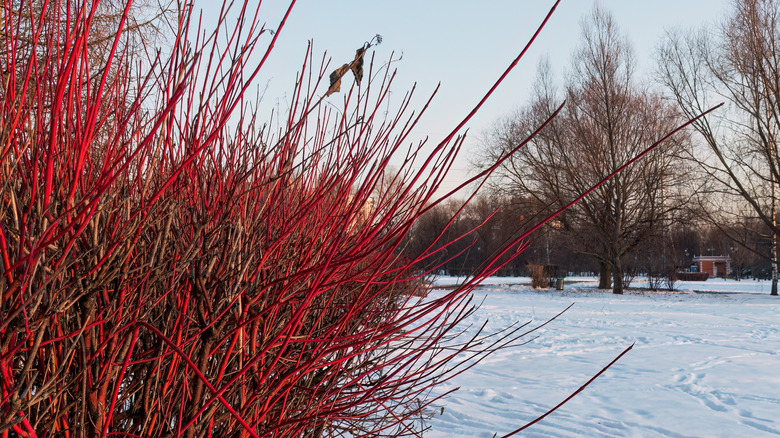
American dogwood (Cornus sericea) is also known as redstem dogwood because it has bright red stems that stand out. Although this isn't an evergreen shrub, the bare branches still add a pop of color to your landscaping during the winter and take the focus from your AC. They also produce lovely white flowers in the spring and berries in late summer.
It's best to choose a dwarf variety of American dogwood like the 'Kelseyi' variety. It tops out around 3 feet tall and wide. This deciduous shrub is hardy in growing zones 2 to 7 and adapts to full sun or partial shade conditions.
Feather reed grass 'Karl Foerster' grows tall and narrow
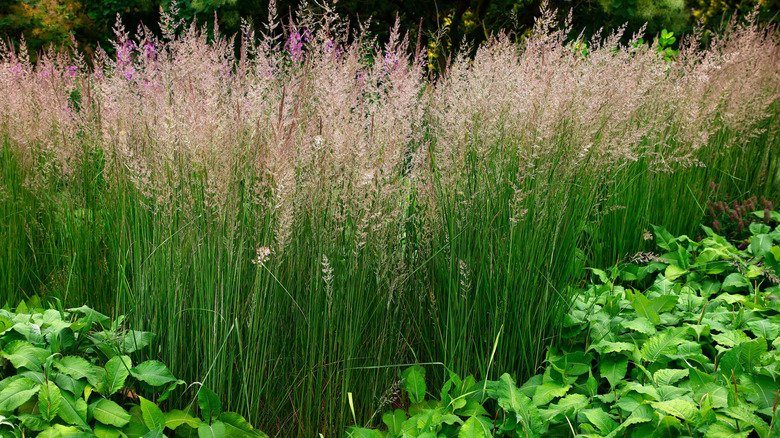
'Karl Foerster' feather reed grass (Calamagrostis x acutiflora 'Karl Foerster') is an ornamental grass that grows in a tall, narrow clump—about 3 feet high and 2 feet wide. This perennial grass is hardy in zones 3 to 9. It's not a fit for deep shade since not enough light makes the grass weak.
Feather reed grass offers its biggest aesthetic appeal when blooming. During the summer, the grass stalks are topped by pink plumes that turn to an appealing tan. More than a short show, the golden hue lasts for months.
American arborvitae is a popular shrub that stays green all year
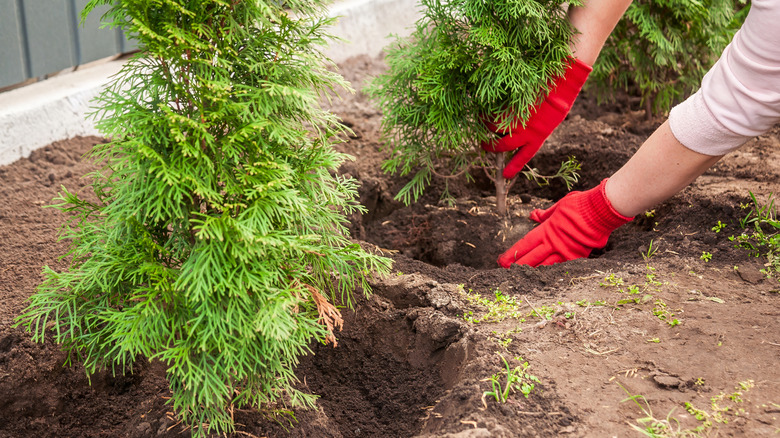
The American arborvitae (Thuja occidentalis) is commonly used for landscaping because it's not fussy and comes in many varieties. For a compact pick that won't encroach on your AC, consider 'Emerald Green.' It reaches a height of 10 to 15 feet but doesn't spread beyond 4 feet wide.
You can achieve an attractive screen with several arborvitae planted in a row. However, take note that they don't make a good windbreak as arborvitae are prone to windburn, which turns the green foliage to a dull brown. This evergreen is hardy in zones 3 to 7.
The Mediterranean cypress stays very slender as it grows tall
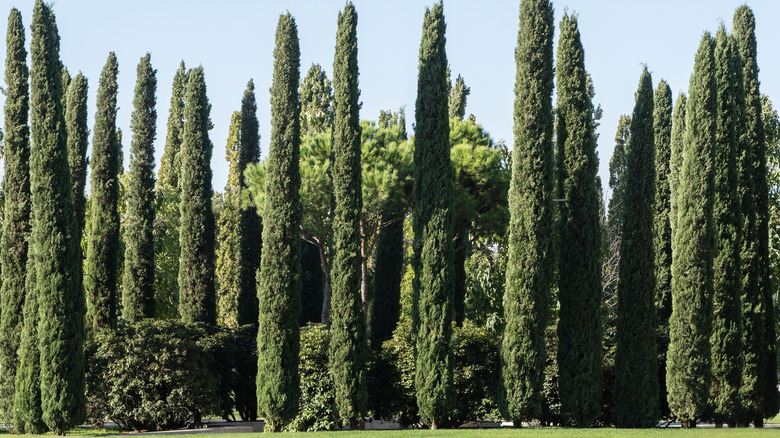
Mediterranean cypress trees (Cupressus sempervirens) are notably slender and upright. These trees can reach a height of 40 feet or more but they don't grow more than a few feet wide. Because they are so narrow, they pose less risk to crowding your AC.
This evergreen ideally needs full sun, so it's not a fit for shady locations. These trees prefer warmer climates and are hardy in growing zones 7 to 10. Because they maintain their tall and narrow shape without any help, there's no need to prune a Mediterranean cypress so they're considered very low-maintenance.
Compact hydrangea varieties offer big blooms in a small space
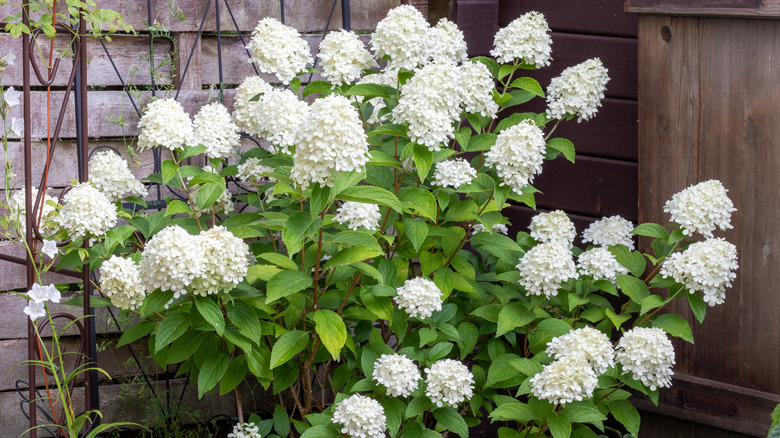
With the right conditions, one of the best flowering plants to grow around your AC may be hydrangeas. They grow in full sun to partial shade but need protection from intense sun exposure in warmer climates. Most varieties of these perennial shrubs are hardy in zones 4 or 5 to 8.
Hydrangeas can be large so if space is tight, consider small varieties of hydrangea plants. 'Little Lime' (Hydrangea paniculata 'Jane') is a panicle variety that tops out at 5 feet tall and 3 to 5 feet wide. If you prefer mophead blooms, consider the 'Seaside Serenade' variety. It has sturdy stems and long-lasting flowers.
Blue fescue grass stays in tight bunches
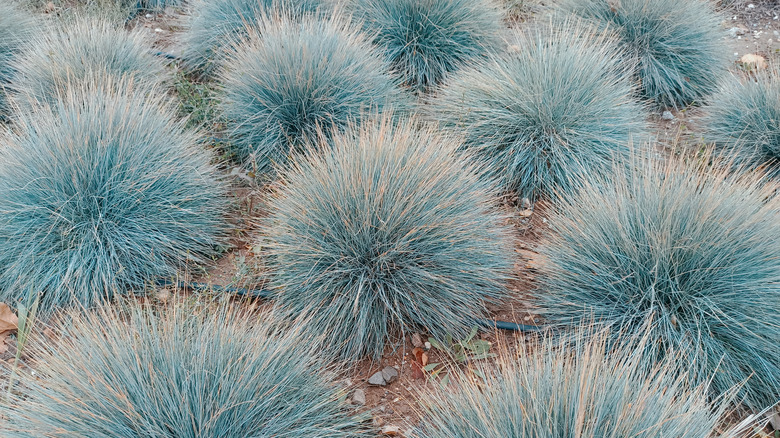
Blue fescue grass (Festuca glauca) is an ornamental grass frequently used in landscaping because it's low-maintenance. This perennial typically grows in a tidy clump to a height of 12 inches without spreading beyond 18 inches. Because of its compact growth, you won't have to be preoccupied with controlling the plant's spread.
The blue-gray color of the grass is especially attractive in summer, but expect it to become more brown in the winter or in very hot weather. Blue fescue grass needs replacing every few years but it tolerates a variety of soil conditions. It's hardy in zones 4 to 8.
The skip laurel has bright green foliage all year long
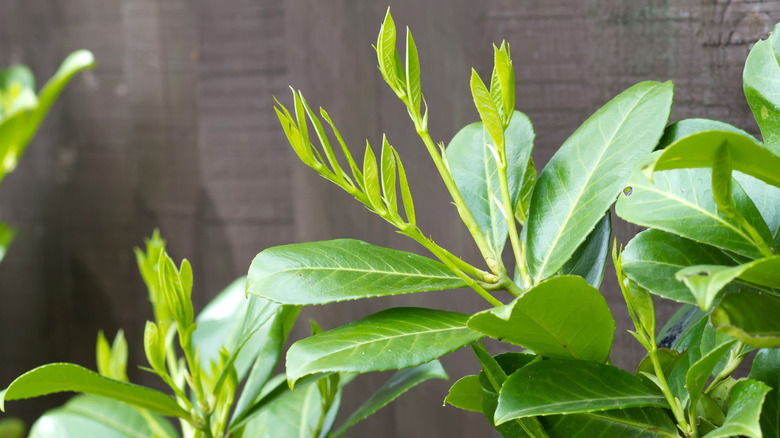
The skip laurel (Prunus laurocerasus 'Schipkaensis') can make a living screen for your AC unit. Also known as a cherry laurel, this plant is an upright evergreen shrub. It has a slightly more narrow base and wider canopy but doesn't surpass 15 feet tall or 7 feet wide — and can be pruned to keep it shorter, if needed.
Skip laurel's advantage is that it can be pruned heavily and adapts to a variety of soils. The lush foliage maintains its color year-round and is attractive to birds. It's hardy in zones 6 to 9, but choose a planting location that offers full sun to partial shade.
Autumn moor grass grows up to a foot high
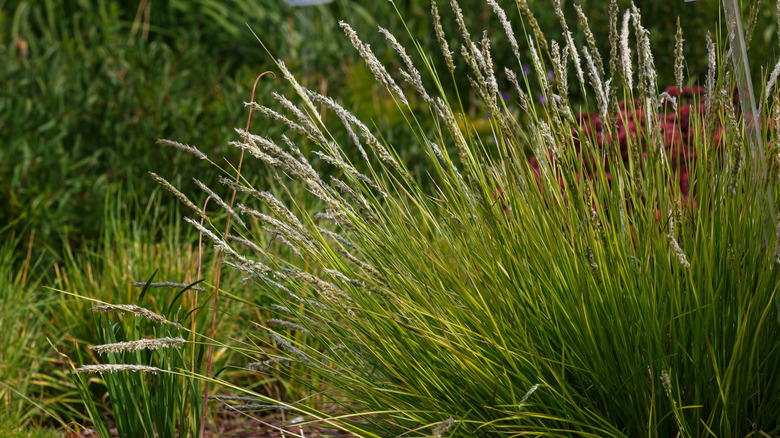
Another pick for an ornamental grass to dress up the space around your air conditioner is autumn moor grass (Sesleria autumnalis). This clumping grass sends out shoots of yellow-green foliage that grow up to 12 inches high. In the fall, the grass produces subtle white flowers.
Autumn moor grass is versatile enough to handle dry soil conditions or more moist but well-drained soil types. However, it doesn't fare well in high heat and humidity. That being said, it's tough enough to survive in a wide range of climates—including growing zones 5 to 9.