

Why Painters Use A Bucket And Roller Grid Instead Of A Paint Tray
We may receive a commission on purchases made from links.
If you want to paint your home like a professional, you'll have to mimic some of the techniques they use. For example, using the cutting-in technique to accurately cover corners and edges helps you achieve a professional-looking finish. Pros also take the time to use the right tools for the specific painting job they're doing, ensuring they receive full coverage and save time in the process. Sometimes, pros use a combination of techniques and tools that DIY painters and homeowners may not know about.
One such process involves using a roller bucket grid and a bucket of paint instead of a tray when painting with a roller. By using the grid, you receive a number of advantages, starting with being able to work more efficiently. Once you get the hang of using the grid, you can load the proper amount of paint on the roller more quickly in comparison to using a tray. You should also waste less paint and have fewer drips on the wall, because the grid efficiently removes the excess from the roller nap. There's a lower risk of spilling paint when using the bucket instead of pouring it into a tray, too. All of this is why some pros consider the metal roller grid a must-have tool for a flawless home paint job.
How to use the bucket and roller grid for better results than a tray
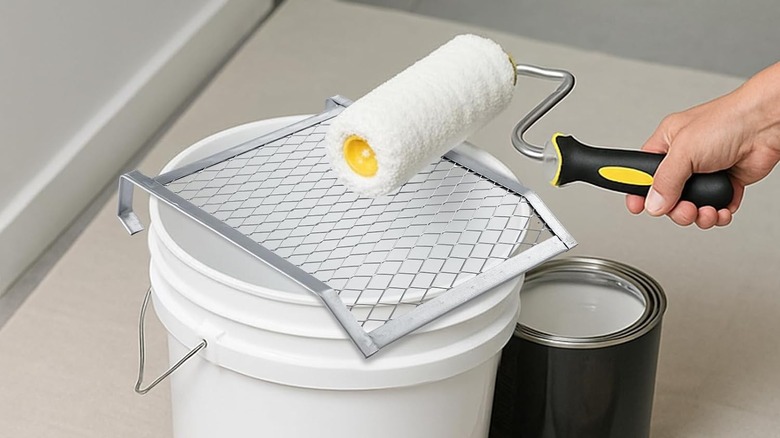
To deploy the roller grid and bucket painting system, you just need the roller, a grid, and a bucket. The grid usually consists of metal, such as galvanized steel, to ensure long-lasting performance. It has a frame with two hooks on the top and a mesh system attached to the interior of the frame. The hooks securely slide over the edges of the bucket, while the mesh area hangs inside the bucket (and may hang partially below the surface of the paint).
To use the grid, dunk the roller in the paint in the bucket. Then roll it across the grid two or three times (always going in the same direction) to efficiently remove excess paint from the nap. Moving the loaded roller across a dry surface of a tray will also remove some paint, but you're more likely to leave the nap overloaded with paint when using a tray compared to the mesh.
You can purchase roller grids in hardware stores or online. For example, Amazon has a set of three grids from CraftyDream for $22 or a single grid for a 5-gallon bucket from Rocky Mountain Goods for $10. Because roller grids are available in various sizes, you need to be sure to select a width that will fit the bucket you're using. If you're using a 1-gallon bucket, a 4-inch wide frame will fit. Use a 6-inch frame for a 2-gallon bucket and a 9-inch frame for a 5-gallon bucket.
Situations where you may want to skip the roller grid
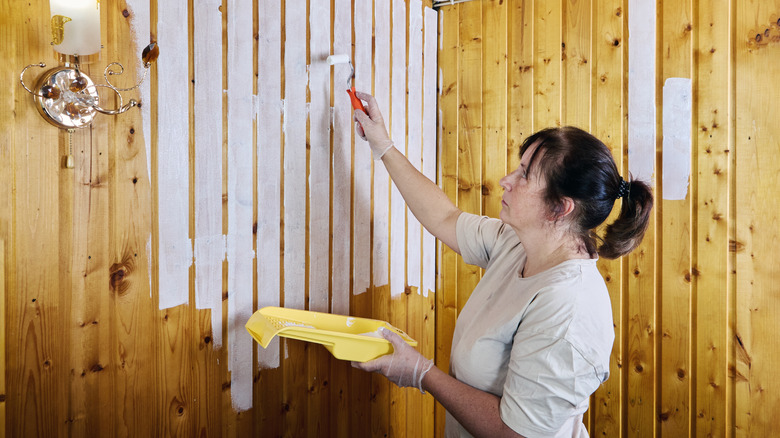
Although the roller grid and bucket system offers quite a few advantages for commercial and at-home paint jobs, DIYers deploying a reusable paint tray can have better results in select situations. If you're only using a little bit of paint and a small roller, you may be able to work faster with a mini-tray. You can hold the tray in one hand and use the other hand for the roller when working on window or door frames, for example. Or, if you need to use a 12- or 18-inch roller for a large painting job but don't have an extra-wide bucket that can accommodate the wider roller, a matching size of tray will be easier to use. The 12- or 18-inch roller won't properly fit in a 5-gallon bucket.
If you want to simplify cleanup, using a reusable metal tray with a disposable liner allows you to just throw it away after completing the job. The liner should keep paint off the tray, meaning you don't have to wash it, which saves time. By contrast, the mesh section of the metal roller grid could have paint on the narrow edges of the holes in the mesh, which can make a thorough cleanup challenging. However, if you're worried about accidentally kicking the tray while working, which would spill paint everywhere, the grid and bucket should be more stable and less prone to these kinds of spills.