

Heated Birdbath Or De-Icer: Which Fall Upgrade Fits Your Setup?
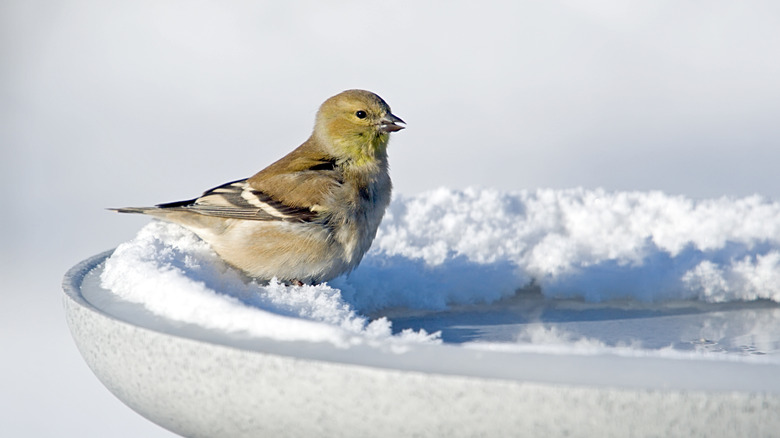
As temperatures start to dip during the later months of the year, preparing for the surge of true winter weather becomes top priority. Whether your list includes getting mulch down before mid-October, scheduling a tune-up for your heating system, or stowing away your patio furniture, keeping your space warm and protected should be the focus. One thing that's often forgotten, however, is the comfort and safety of animals that don't have the privilege of cozying up indoors. Heated birdbaths and de-icers can be invaluable resources for flying visitors during winter, and fall is the time to decide which setup works best for you. Both of these options will allow you to provide access to fresh water for birds in winter, but the heating system that's ideal for your space will depend on your design preferences, your existing setup, and your budget.
Heated birdbaths contain a thermostat-controlled heating element within the basin that keeps the water at a consistent temperature. De-icers, on the other hand, consist of a standalone heating element, also thermostat-controlled, that you can add to an existing birdbath. As a general rule of thumb, a full heated birdbath will require a bigger investment than a de-icer — if you already have a birdbath that's made of heat-resistant material like stone, concrete, or ceramic, a de-icer will likely be the better choice for you. If you're looking for a new birdbath, however, a heated bath can be used year-round and will often provide a sleeker look. Both options will need to be cleaned and inspected regularly to ensure they're working effectively, so the choice primarily comes down to differences in design.
When de-icers are the best pick
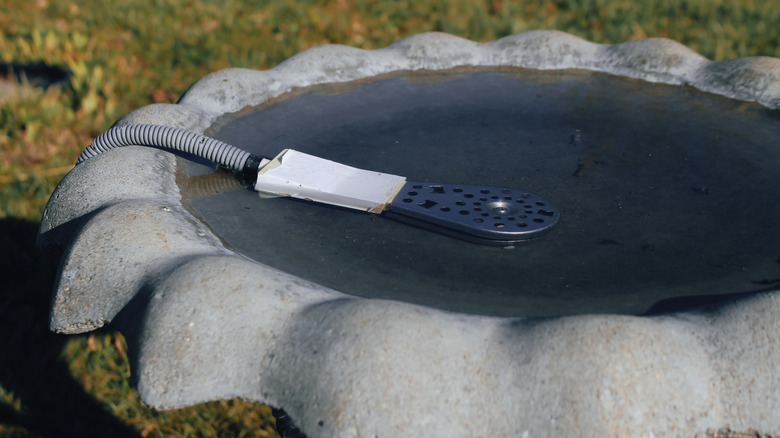
Think of a de-icer like a waterproof heating pad — it can be inserted into the water when needed, then tucked away when not in use. This is the more cost-effective solution to keeping your birdbath usable if you already have a functional setup, especially if you're working with an existing concrete or ceramic basin. As the weather fluctuates, the freeze-thaw cycle can cause cracks in these materials. Because of this, it's often recommended to drain birdbaths and store them during winter. A de-icer can minimize these temperature changes and ensure that your birdbath is protected during chilly weather, in addition to helping out the birds.
There are two main downsides here, however: appearance and compatibility with your existing setup. To put it bluntly, de-icers aren't the prettiest addition to your outdoor space — while many designs are intended to look like a barely noticeable puck or a flat rock, the long cord extending from the device does little to help out the illusion. Combine this will the need for an outdoor-rated extension cord if your birdbath isn't close enough to an outlet, and you're left with a display that's primarily utilitarian.
While most de-icers claim to be compatible with birdbaths made of any material thanks to the fact that their thermostat control is designed to keep the water simply liquid rather than hot, there's always the risk of a rogue heating element burning through plastic. If your bath isn't heat-resistant, you'll need to be careful with the de-icer you choose. Make sure to shop around for an option that clearly states that it's safe for use in a plastic birdbath to minimize your risk.
When you should opt for a heated birdbath
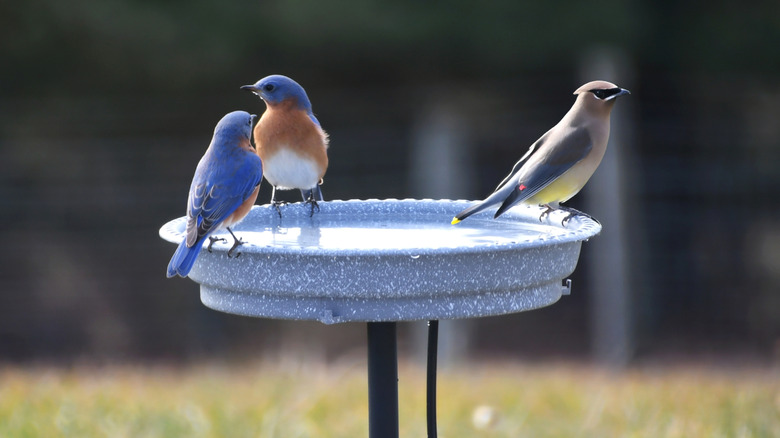
If you don't already have a birdbath or you're looking to replace one, a heated option can be a great investment. While the heating feature on this style of bath is obviously intended for use in chilly temperatures, the bath itself can be used year-round — simply unplug it if you don't want to waste power on running the thermostat when it's not needed. While you'll still have to deal with an annoying cord, the heating element within these baths is integrated and therefore hidden, resulting in a much more streamlined display than you'd get from a de-icer.
As with anything, however, heated birdbaths do have their cons. One of the main drawbacks is the relatively limited array of designs. With a de-icer, the world is your oyster — you can find just about any birdbath design under the sun and add a heating element, but heated baths are usually simpler stylistically and made of metal, plastic, or ceramic. Within this category, there are also plenty of deck-mounted finds to keep visitors warm, which are likely to make running power to the unit simpler for those who have existing outlets along the side of their home.
There's also, of course, the cost. While there are tons of affordable heated birdbaths available for purchase, prices vary widely. The least expensive options will only cost you around $50, but pricing can easily climb into the triple digits. Compare this to the price of a de-icer — usually $20 to $60 on the high end — and the difference is clear.