

How To Keep Your Lawn Mower Bagger From Clogging
We may receive a commission on purchases made from links.
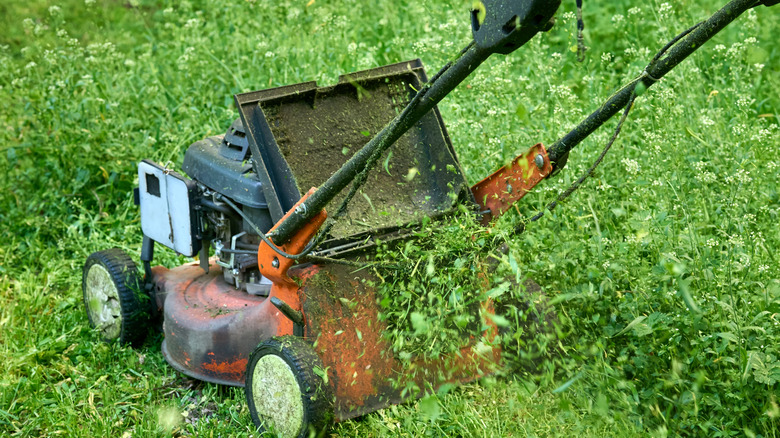
For many homeowners, mowing the lawn isn't exactly a fun activity. And if your lawn mower bagger has a tendency to clog up every time you use it, it makes things even worse. Every now and then you'll have to stop and manually unclog the blockage, or even redo the messy cuts. So a task that should take a few minutes can end up eating into your entire afternoon and then some. If that's your predicament, the solution isn't waiting to fix the clog; it's working on preventing it in the first place. You can do this by following the right mowing techniques, cutting the grass at the right time, and ensuring every part of your mower functions optimally.
But first, you need to understand the mower's bagging mechanism and why your lawn mower keeps getting clogged. As you mow, the blades inside the cutter deck usually spin rapidly to cut the grass. But at the same time, these rotating blades create airflow akin to vacuum suction that pulls up the cut grass clippings, pushes them through the chute, and into the collecting bag. Therefore, clogging will typically happen if this airflow is interrupted for various reasons, such as dirt buildup in the deck or clumping from wet grass. Also, the machine needs to have sufficient power when running, move at the right speed, and undergo regular maintenance (like sharpening the blades) for optimum functioning. These are the very things to address if you want to keep your lawn mower bagger from clogging.
Mow your lawn under the right conditions
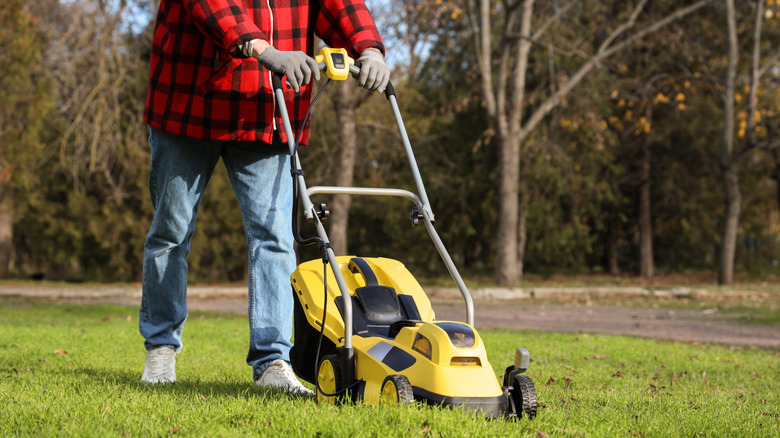
Make sure you mow at the right time and with the correct technique. The right time to mow is when the grass is dry. This allows for a neat cut, and the grass doesn't clump up or stick to the mower. If you mow after a downpour or very early in the morning when the grass is still covered in dew, the heavier, wet grass is likely to clog your mower. Try mid-morning, or later in the day, when the heat has dried the dew.
When it comes to the right technique, use the ⅓ mowing rule. Make sure to not cut more than ⅓ of the grass height. If you do, the volume of grass clippings entering the mower will be too much for the mower to handle and is more likely to lead to clogging. This also means it's better to mow more frequently so the grass doesn't grow too long and overwhelm your machine.
Also, make sure the lawn mower is running at full throttle. Otherwise, the blades won't spin fast enough to create the vacuum-like airflow to push the grass through to the bag. When that airflow slows down, grass clippings build up and clump together, causing clogs. But even at full throttle, you should move the mower at a slower speed. One of the most common mistakes everyone makes when mowing the lawn is moving at a high speed. If you move too fast, the mower cannot always handle the massive amount of grass in the chute, and clogging ensues. So remember to take it slow.
Perform regular maintenance on your lawn mower
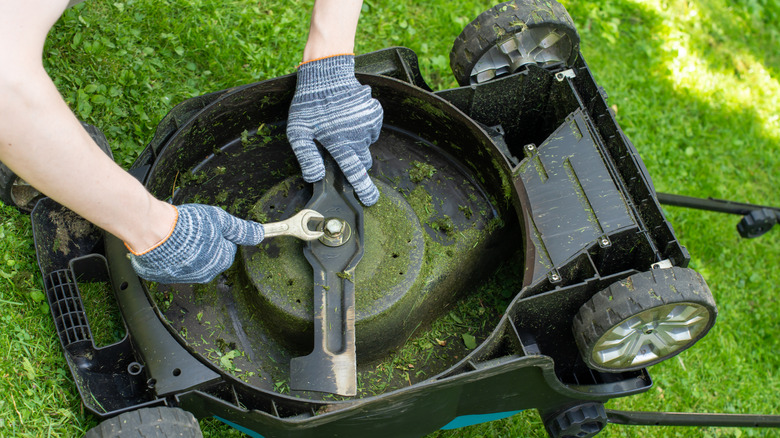
The top of your regular maintenance list should be the cutter blades. Ensure they're always sharp before mowing. Blunt, worn, or damaged blades will not cut cleanly. Instead, they fray the grass, which causes it to move sluggishly and less smoothly through the chute and into the collecting bag. This also hampers airflow. So sharpen your cutter blades about two or three times per mowing season using a sharpener like the Cenoz Crafts Man Lawn Mower Blade Sharpener available on Amazon.
While you're sharpening your mower's blades, have you confirmed they are the right type? If your mower is fitted with the wrong type of blades, that's a problem. High-lift blades are the best for bagging. Unlike mulching blades, these blades generate adequate airflow to quickly move the grass to the bagger. They also deliver a cleaner cut.
Remember to also check your mower's deck to prevent clogging. If the underdeck has leftover grass fibers and dirt, it can clog because the accumulated grass restricts airflow and clumps up. The same thing happens if the chute system is dirty or crammed with grass particles. So, to avoid your bagger clogging, clean the underdeck after use by hosing it down. For the chute, soak it in soapy water for a few days and then scrub it clean after the soak. Afterward, try spraying the underside with a non-stick silicone lubricant like WD-40 or, if in a pinch, cooking spray, to prevent further instances of grass sticking.