

Is It Okay To Hose Down Your Garage?
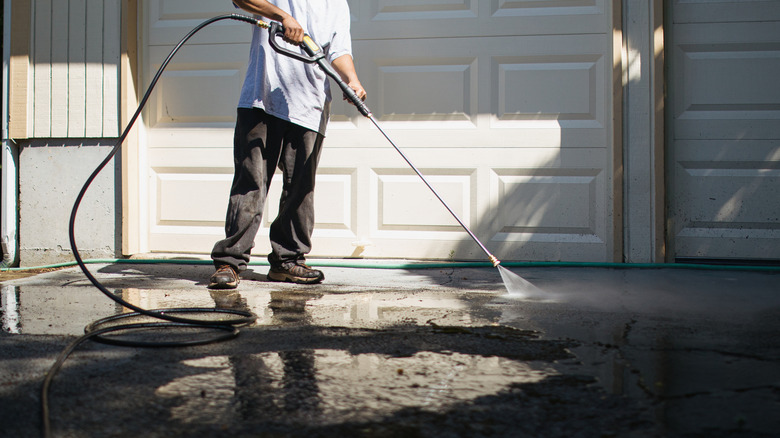
If you have an attached garage, this add-on accounts for both a large percentage of your home's square footage and a striking amount of its view from the street. Keeping it clean, inside and out, should be a top priority, but it's easy to let this task fall to the wayside. Whether it's scrubbing algae from the door or removing oil stains from the concrete flooring, these to-dos have a way of landing at the bottom of our list. In an effort to knock this chore out quickly, you might be wondering if it's okay to simply spray everything down with a hose. There are certain cases where this is a reasonable option, but this approach has quite a few caveats.
While we often treat our garages like a transitional space between indoors and outdoors, the truth is that they're still structures, just like the rest of the rooms in our home. While the hose can come in handy in some situations, we can confidently say that it's not a good idea to spray the inside of your garage with a hose without taking proper precautions — after all, you wouldn't do the same to your living room, would you? Outdoor areas on your garage, like the siding and door, are safe to spray from a moderate distance, and if you're going for a true deep clean, concrete flooring can also be pressure washed or sprayed down with a hose. Everything else is a no-go. Electrical outlets, garage door openers, and stored items shouldn't be exposed to water, so if you decide to aim your sprayer up to the walls or ceiling, you're setting yourself up for disaster.
How to safely clean your garage with a hose
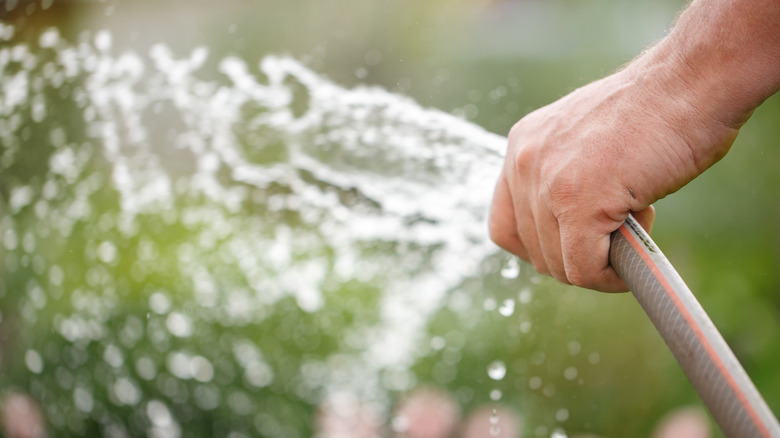
The exterior of your garage is by far the safest area to hose down. If you're simply cleaning your garage door or removing debris from your siding, a gentle blast of water from a garden hose is a great way to loosen and wash away dirt. These surfaces are already designed to handle exposure to moisture and the elements, so as long as you keep the pressure gentle, you shouldn't see any issues. With that being said, try to avoid directly spraying the edges of the garage door — moisture could seep in at these points and damage the items that you're storing inside. You should also exercise caution around any outdoor outlets or your garage's exterior opener, as mixing electricity and water is a big no-no.
Heading inside, things get a bit trickier. If you want to hose down your garage floors, you'll first have to remove everything you're keeping inside, from cars to shelving to Christmas decorations. Open up your garage, sweep or blow away any loose debris with a leaf blower, and apply your cleaning solution of choice. After scrubbing, letting the solution sit, and scrubbing again, it can be rinsed off with your hose. Exercise caution here, and try to only get the floor wet — interior walls can trap moisture, and metal items, like your garage door tracks, can rust. Consider squeegeeing out extra water if the natural slope of the garage isn't doing the job for you, then allow the space to fully dry before bringing your items back inside.
Less risky ways to clean your garage
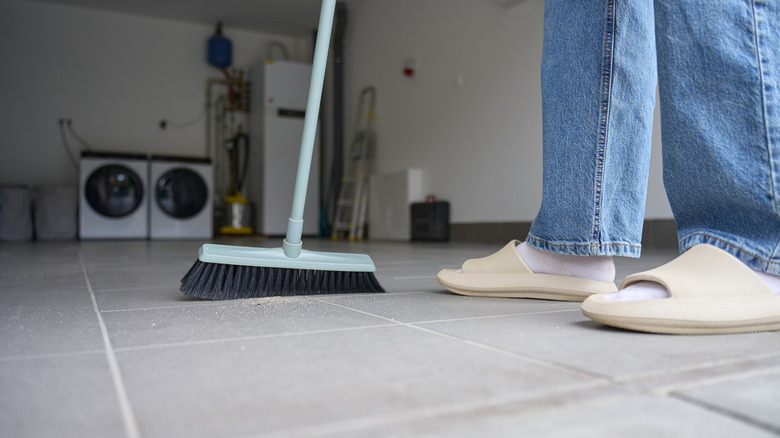
After you factor in all of the necessary precautions, the idea of hosing down your garage as a quick fix starts to lose its shine. Luckily, more controlled methods to get a thorough, risk-free clean are abundant. There are plenty of things in your garage that you should be cleaning more often, and most of the time, a spot clean is the best approach. Tackling small patches with stains as soon as they appear can minimize the risk of them becoming permanent blemishes, and little tasks like dusting will prevent debris from snowballing into a bigger problem. Brooms and leaf blowers are also valuable tools that will give you a quick clean without having to rely on water at all — sometimes, you just need to blow away a couple cobwebs to make your space feel brand new.
There's also, of course, the obvious alternative to taking a garden hose to your floors: mopping. You'll still get the satisfaction and deep clean of water washing away the dirt in your garage, but you're working with much less liquid in a much more controlled way. This will reduce the risk of accidentally getting unintended items wet and minimize the amount of moisture that lingers after you're done cleaning. The same idea can also be applied to other areas in the garage — a damp, soft cloth and a bucket of soapy water is often more than enough to tackle smaller spots of debris. This can even be used to touch up your garage door's track, though you'll want to make sure that your rag is adequately rung out before you start cleaning to reduce the chances of rust.