

He Turns A Retaining Wall Into A Functional Entertaining Space With This Genius DIY
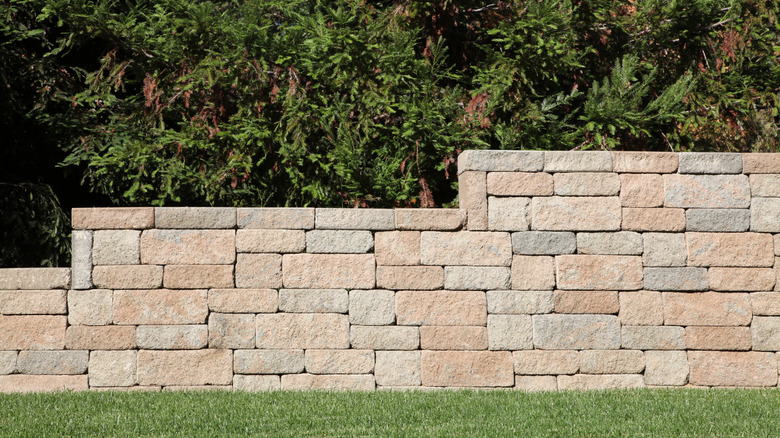
If you have a sloping yard, a retaining wall is about as essential to your property as your gutters are to your house. Retaining walls direct drainage, protect against erosion, and create level areas around your yard for you to enjoy however you like. YouTuber Richard Cox decided to make his retaining wall part of a new entertaining area complete with a fire pit, and he documented his entire build in a video.
For this DIY, Richard constructs the retaining wall first, then clears and levels the seating area. He builds another much shorter retaining wall to contain the pea gravel and flagstone patio he adds later. With the addition of a fire pit made from tumbled concrete blocks and some fresh landscaping courtesy of his wife, he creates the perfect backyard entertainment space for his family to enjoy. Due to the layout of his yard, Richard wasn't able to build out his seating area in a perfect circle as he'd envisioned, but he was able to adapt his design as he went along.
Midway through the project, Richard points out a mistake he made: he'd underestimated the depth of his wall relative to the amount of soil he'd have to clear to the level the seating area. As a result, the entire bottom of the wall ends up exposed, weakening his foundation — which is something to keep in mind alongside the other do's and dont's in building a retaining wall. He solves it by hauling soil back in to raise the area and shore up the wall. If you want to build an area like this in your own yard, make sure you follow Richard's advice and familiarize yourself with the procedures of building both retaining walls and fire pits.
Key points for building a combination retaining wall and fire pit
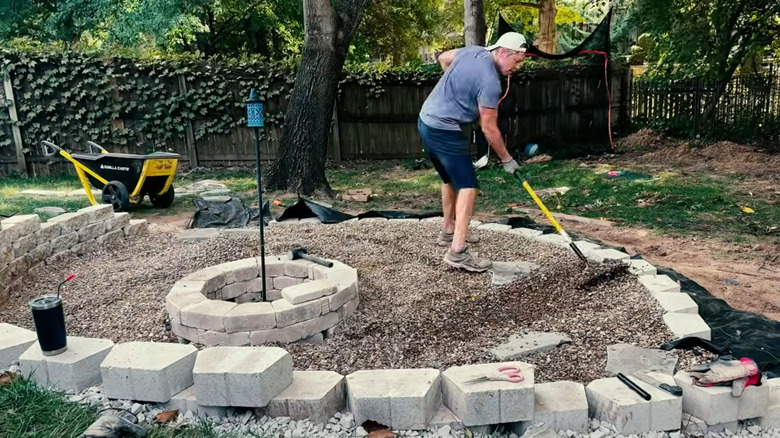
As you're choosing the location for the fire pit, make sure it's clear of any trees and overhanging branches. In Richard's case, he had to trim some large branches to create enough clearance to use his fire pit safely. Also ensure you're following any local building codes and HOA restrictions regarding fire pit proximity to your house or other structures.
You'll also need to consider whether building a retaining wall is within your skill set — or if such a wall is safe for your yard conditions. There are beginner-friendly retaining wall DIYs out there, but a wall that's less than 3 feet tall is generally doable for experienced DIYers. However, if you need to build a taller wall, or if you have serious runoff issues to address, you should enlist a professional. And regardless of whether you build it yourself or you get some help, you'll have to remember the retaining wall maintenance step you shouldn't skip to prevent future problems.
In Richard's build, the DIY wall is just the right height to both support the landscaping and provide additional backup seating for guests. As Richard worked on the retaining wall, he used an angle measuring tool to ensure the triangular space between the blocks was consistent for a precise curve. He also dedicated significant time to making sure the base and the first level of retaining wall blocks were level. If that first row isn't perfectly level, the variance will show through in later rows, resulting in a visibly crooked wall.