

Man Uses Concrete Blocks And Wood To Build A Backyard Bridge With An Eye-Catching DIY

We may receive a commission on purchases made from links.
Golden Gate, Brooklyn, London–– there are bridges so iconic that you can instantly picture them by name alone! Then there are the little, nameless bridges– in a zen-filled Japanese garden, or at a local park or playground. There's something magical about traversing a span or catching a view from a bridge, big or small. Matthew at thebuchaus on TikTok decided to build a simple, flat garden-style bridge from concrete blocks and wood to reach the forest behind his home.
Even if you don't have unexplored acreage just beyond a backyard creek, a bridge can be both useful and aesthetic in a host of applications around your home. You'll need concrete blocks, cut lumber, 3 ½ inch deck screws, a drill, wood stain supplies, safety glasses, and heavy duty gloves. Aside from being affordable, concrete blocks can be used for fun DIY designs in your yard, giving you a chance to make something functional without breaking the bank. Plan your bridge measurements and the type of pressure-treated wood you'll use. Hardwoods like oak, black locust, teak, and ipe are strong and durable but come with a higher price tag, whereas softwoods like Douglas fir, southern yellow pine, and western red cedar are less expensive and easier to work with. Pine and cedar are also the most weather resistant of the options. Since there's framing below this bridge build, and it's not meant to hold heavy equipment, a softwood should work fine.
Choose a spot and prep the area. Start by clearing any brush or debris, tamp down the ground for your base, and spread a thin layer of gravel before laying your concrete blocks. This solidifies your base, stops potential shifting under pressure, and provides drainage, which is especially important to prevent erosion and the damage from repeated freezing and thawing.
A flat bridge style that spans a wide range of uses
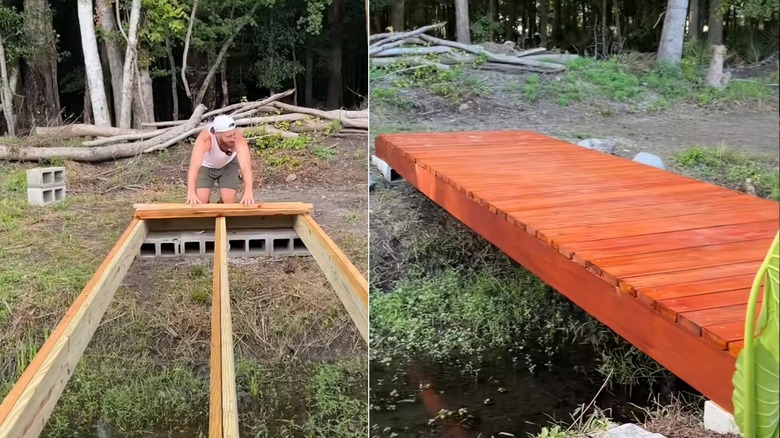
Create a foundation of concrete blocks with the solid, longer sides face up. This bridge has 16 blocks on either side of the bridge. Then, add a line of four more to create a shelf for the wood framing to sit upon. For added stability, use a heavy duty adhesive between the shelf blocks and the base, like PL Premium Polyurethane Construction Adhesive (available at Home Depot for around $8 per 10-ounce tube).
Pre-drill holes for deck screws in your rectangular frame, consisting of two exterior spans of doubled-up 2-by-6-inch lumber and another pair of boards down the center. Cap the three lengths with one piece of lumber at each end, insert the deck screws to fasten, then top the frame with enough appropriately cut 2-by-6-inch boards to cover the frame. Brush on your stain, let dry and then add four screws total to every board. Finally, fit the frame on top of the concrete base with the elevated row of blocks as an anchor. You can add plants, gravel and stone to decorate around your bridge.
There are so many applications for a backyard bridge. Adding one makes creeks, streams, drainage ditches, dry creek beds, and water features crossable; it can span a beautiful pond in a rustic or Japanese-style garden. They can route foot traffic away from delicate plantings or provide a smooth path for ease of mobility over uneven ground, connecting slight elevation changes, making it wheelchair accessible or just easier to push a wheelbarrow around the garden. A bridge is so much more than a place to walk; it's a decorative focal point that lends an old-world feel to your garden that everyone can enjoy.