

Better Than Planting: An Easier Hack For Saving Potted Hostas During Cold Months
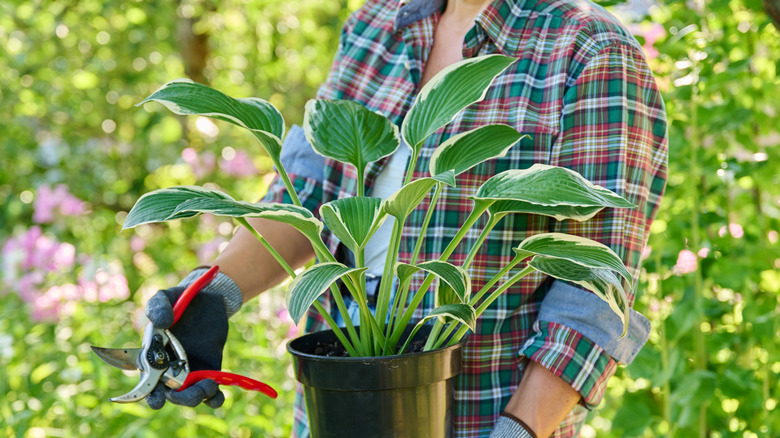
Yes, you can grow hosta plants in pots, but can you keep them alive past the summer? That answer largely depends on whether you have a game plan for the colder months. Winter can be brutal on container gardens. Perennials planted in garden beds are much more protected than potted plants, because their vulnerable roots are more insulated than those growing in containers above ground. But how you prep your hostas for winter likely depends on how many potted hostas you have, as well as which method is more practical for you.
The most straightforward way to bury container-bound hostas is to "plant" them, pot and all, into the soil. To do this, dig a trench that is a little deeper than the pots are tall. Once the pots are settled into place, backfill the soil around them. Alternatively, fill the gaps between pots with mulch, such as woodchips, straw, or leaves. This method allows the plants to be insulated by the ground itself, as well as the mulch. Make sure to pile your backfill material about 2 inches above the rims of the pot.
But what if you find this step too labor-intensive, or the ground has already had a hard freeze? Don't despair! Another way to "bury" hostas starts by moving them to a protected outdoor area that has an overhang. Tilt them on their sides and cover them with mulching material. Settling the pots horizontally prevents water from accumulating at root level, where it might freeze and damage roots. Covering the pots with mulching material provides insulation.
Winter prep should start early for potted hostas
Prepping container-bound hostas for winter begins well before the temperatures plummet. In fact, it can be argued that it starts almost as soon as you bring the young hostas home! That's because the potting soil you choose could inadvertently cause root rot problems in the cooler months. Don't choose the type with moisture-retaining pellets or "crystals," which can turn into icy traps in the winter.
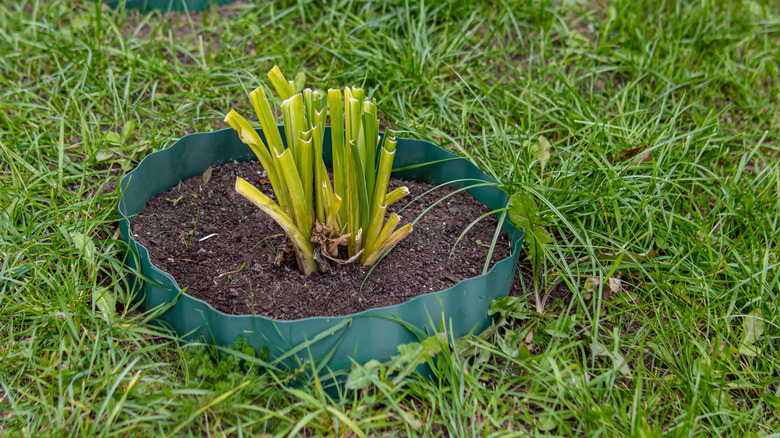
In addition, it's important to avoid the hosta fertilization mistake that increases the chance of winter damage. You don't want to spur new growth in the fall, which is the most vulnerable to frost damage. Stop adding fertilizer to your potted hostas after mid-August or so. Once frost does settle in, it's important to cut hostas' stems and foliage back near to soil level. In addition, remove any damaged vegetation from the soil surface. Otherwise, slug eggs might overwinter in the mushy leaves and damage next year's vegetation after hatching time.
Because water is more of an enemy to your hosta plants in winter than the actual cold is, they certainly don't need to be watered during their dormancy period. The only possible exceptions are temporary thaws that may come in late winter or early spring. If temperatures rise above 50 degrees Fahrenheit (and are forecast to remain so for a few days), give the pots a bit of water, or even a scoopful of nearby snow. This light moisture should disperse before the cold temperatures return.