

Quickly Remove Rust From A Coffee Maker With A Powerful Find From Lowe's
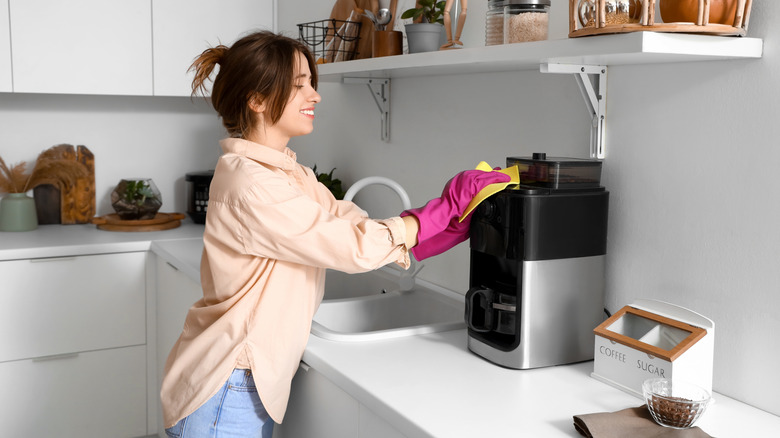
There's nothing like that first cup of joe in the morning to really shake the rust off your groggy mind. But sometimes, it's the coffee maker itself that needs a bit of a pick-me-up. Over time, metal can corrode when exposed to moisture, acidic compounds, and air — all elements likely to interact within the kitchen workhorse that is your coffee machine. And while there are plenty of ways to clean your coffee maker, it's important to be selective. Harsh cleaners can break down metal surfaces even faster, leading to more rust, and not all cleaning chemicals are safe for use around kitchen appliances, food, and drinks. Usually, limescale buildup is a more common concern, but rust can occur around the hot plate of a drip coffee maker or inside manual, metal coffee makers like the Moka Pot. In theory, internal components could also rust over time. To tackle several problems in one go, the answer may be CLR.
As the name suggests, CLR Calcium, Lime, and Rust Remover is one of the top-rated cleaning products for banishing rust. Available at Lowe's in a 28-ounce jug for $6.28, CLR is described as being safe for most coffee makers, although it's also suitable for more heavy-duty projects like dishwashers, washing machines, and humidifiers. More than 1,390 Lowe's reviews collectively gave the product 4.5 stars, and customers largely agree it lives up to the promise of its name. "It's like WD-40 in that there is a hundred uses for this stuff," noted one Lowe's buyer, "Everything from cleaning rust off tools to cleaning your coffee pot. My wife swears by it." While the cleaner has plenty of uses around the house, thanks to its ability to remove rust and mineral buildup from coffee makers, it's a surprising must-have in the kitchen.
Use CLR to remove rust and other buildup in your coffee maker
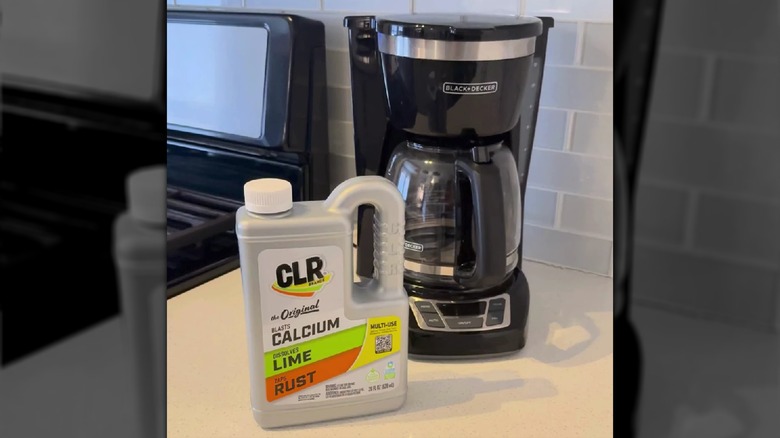
Before pouring CLR haphazardly into your coffee maker, take a close look at the instructions on the package and note your appliance's manufacturer instructions. For most generic drip coffee makers, you'll first need to dilute the solution with one part CLR to eight parts water. Pour the mixture into the water tank, then run it through the machine the same way you would if you were making coffee. Follow up with two to four rinse cycles using clear, cold water. A gentle scrub brush and CLR diluted in a 1:1 ratio should work wonders for cleaning rust from the hot plate. You can also use CLR in manual coffee makers like a kettle or percolator, or as a cleaning solution for the glass carafe only, rather than the machine itself.
However, you should know that this isn't the right solution for all coffee makers. CLR Brands specifically advises against using CLR in espresso machines, Keurigs, Gevalia, or Cuisinart coffee makers, as well as any other similar units that constantly store water in a reservoir or have a built-in carbon filter. Coffee appliances like these may not be able to properly cycle and flush out the cleaner, and leaving residue behind can be unhealthy — not to mention, unappetizing. A handful of buyers reported a chemical taste lingering after they used CLR in their coffee maker. If you decide to give it a try, be cautious around other delicate surfaces in your kitchen; CLR can damage wood, natural stone, Formica countertops, some plastics, wallpaper, and more.