

To Warm Up Your Garage During Cold Months, Start By Turning Off The Lights
We may receive a commission on purchases made from links.
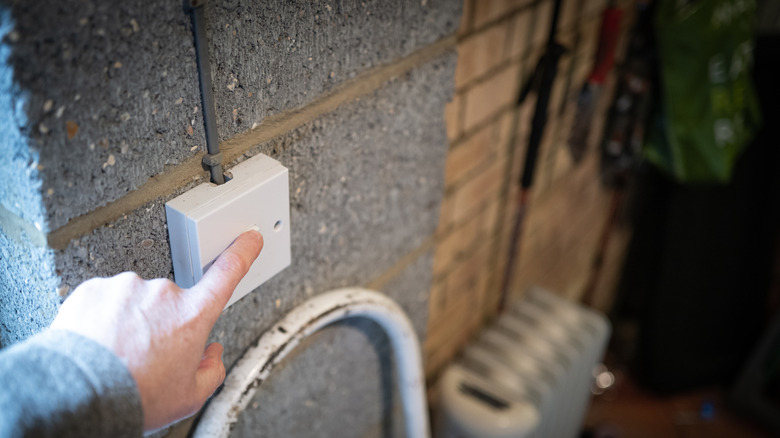
Even though it's cold outside, you probably still have a few DIY tasks you want to get completed out in your garage. In fact, the colder months can be a great time to tackle garage projects, especially when it's too chilly to spend your free time out in your yard. However, working in a freezing-cold garage that turns your fingers to ice is no fun. We all want a pleasant working environment. It might sound a little strange, but the secret to warming up your garage starts with turning off the lights. It won't magically make your garage warmer, but it will show you where cold air is getting in by revealing gaps in the garage's construction.
It probably goes without saying that you want to turn off the lights when the garage door is closed. When you shut off those bulbs, take note of any slivers of daylight you can see around the doors and windows in your garage. If your garage is old or made from timber, you may notice small gaps in the walls or at the corners, too. Any amount of light coming into the space is a major warning sign that your garage's weatherproofing needs to be replaced. In short, you'll want to eliminate gaps and add insulation around door frames, window frames, and siding to keep that cold winter air outside where it belongs.
Seal gaps to keep your garage warmer in winter
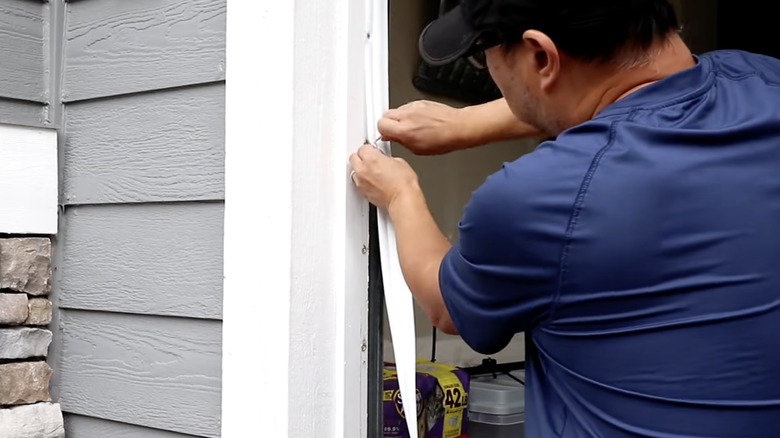
Once you've taken note of all the gaps where cold air may be coming in, it's time to get to work sealing them. Start with your garage door, making sure that it has adequate weatherstripping around the sides and at the top. Weatherstripping is fairly inexpensive and not that difficult to install — it's one of the best ways to weather-seal a garage door. For example, this Greymond Garage Door Top and Side Seal costs about $29, has an adhesive backing, and comes with screws to attach it securely. If your weatherstripping is worn or missing, it's not that hard to replace it. You just want to make sure that it sits nice and snug against the door to help prevent drafts.
You also want to check that your garage door has a rubber strip or seal at the bottom (like these Bowsen Rubber Garage Door Bottom Seals) to keep cold air and moisture, such as rain or sleet, out. Once again, replacing this weatherstripping isn't going to be very expensive, but will make all the difference when it comes to maintaining a more consistent temperature inside the garage. If your garage has windows, you can seal any gaps in the frame, too. If your garage has a door that leads into the house, check for and seal any gaps around it. On top of that, you may want to grab a flexible rubberized sealant, like Gorilla Waterproofing Spray, to plug up gaps in the siding. Once you've eliminated drafts, consider investing in an affordable garage heater to stay warm all winter long.