

What's The Difference Between Bush Hog And Regular Lawn Mower Blades?
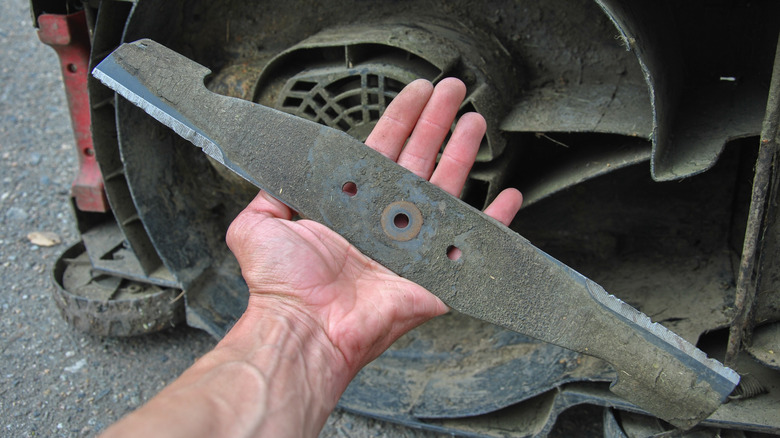
If mowing your yard regularly leads to broken parts and frustration, you may be using the wrong mower and blades. While regular mowers come in different styles and features, they all serve the same purpose: to trim grass and create a nice-looking lawn. However, when deciding what type of lawnmower is worth buying for your yard, it's important to match the equipment to the terrain and vegetation. If your regular mower struggles with overgrown fields or thick brush, a bush hog, also called a rotary cutter, may be a better fit. These heavy-duty implements are usually attached to the back of tractors rather than being self-powered machines. Regular mower blades are rigid and designed for a clean cut, while bush hog blades are heavier, spinning blades built to handle tougher jobs.
These two categories of machines and their accompanying blades differ completely in design and operation. Regular mower blades tend to be sharp and rigid in their placement, turning only in circles. Meanwhile, bush hog blades are thick and blocky. This is because they serve different purposes. A mower's cutting edge is designed to slice light weeds and grass, while a bush hog's is designed to power through thick vegetation like woody areas, saplings, and around rocks.
What to know and when to use regular mower blades
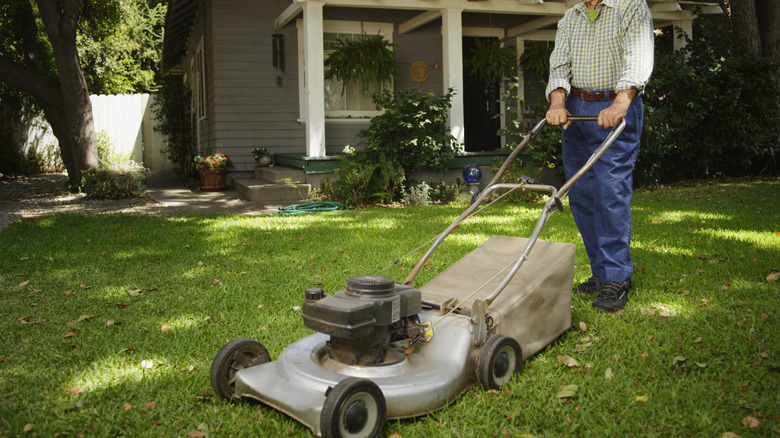
Normal lawn mower blades are sometimes called standard or 2-in-1s because they serve two jobs: bagging and spraying grass. They may also be called high-lifts. Generally, they are straight and relatively short, as well as thin and sharp, which allows for even, clean cuts and good airflow. They are one of the most common blades you'll come across on regular lawn mowers, and you may already be familiar with them, even if you don't realize it.
They are used to handle grass and non-woody weeds and are meant to keep lawns at the right level with a nice clean cut. For the average homeowner, 2-in-1 blades are more than enough for regular lawn maintenance. Even lawn companies who work on several yards a day use them.
Because they are thin, you need to perform standard maintenance to keep cutting properly. For example, waiting until your grass is fully dry is a crucial step before lawn care to protect your mower blades, as well as sharpening them every 25 hours of use or so. Even if you have a messy, overgrown area, it may be better to manually cut back weeds, roots, and thick areas before bringing out your standard lawn mower. Branches, rocks, and toys can all cause problems with these regular blades, and are some of the things you should do before mowing your lawn in the spring.
When to use brush hog blades in your yard instead
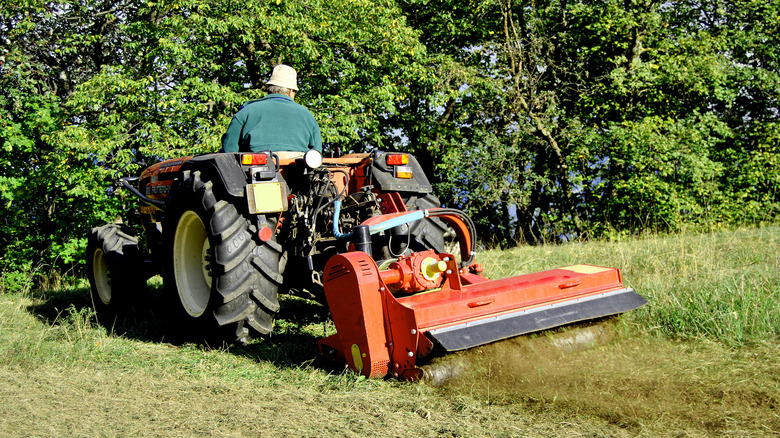
A bush hog is excessive if you're just looking to keep your lawn trimmed. But if you have a rocky area or wild and thick plants you regularly need to fight back, you may want this machine and its powerful blades. Another time a bush hog may come in handy is if you have a lot of land to cover, like pastures or farmland. Since they can come in pretty large sizes and don't need everything picked up ahead of them before mowing, they're a handy tool if you have more than an acre or two of property.
These machines are large and need a lot of power, which is why they are most often hooked up to a tractor. You can't just use any kind, though. Depending on the size and strength, bush hogs require a specific horsepower range, so you'll need a tractor that fits that requirement.
The blades will still break down eventually when handling tougher areas, but they can take the abuse much better than a regular mower, especially with proper care. This means you need to inspect the machine and the blades on occasion to make sure nothing is broken. Start by searching for any loose or damaged parts. Then check the sharpness. While these are more blunt than sharp, they still have a cutting edge that needs to be sharpened regularly to keep them working as well as possible. Never assume, though, that they should be sharpened like conventional lawn mower blades; consult the specific manual, and replace damaged parts with approved components.