

The Unexpected Ingredient That Gives Asphalt Its Black Color And Sticky Texture
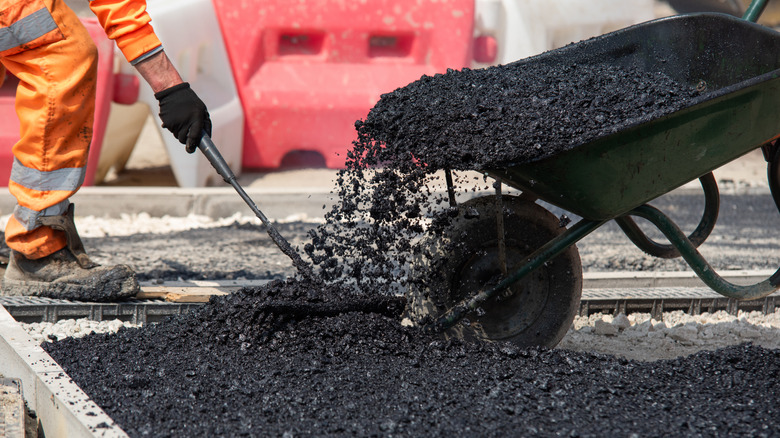
Asphalt is everywhere. It's used to pave parking lots, driveways, and a whopping 94% of public roads in the United States, according to the National Asphalt Pavement Association. So, there's a solid chance you see or drive on it every day. You're likely all too familiar with its distinctive smell, dark look, and smooth finish, but do you actually know what it's made of? The answer might surprise you. While some asphalt was previously made of aggregate material bound with tar, the use of this binder was discontinued in the '80s. Today, bitumen is one of the most prominent ingredients in asphalt and the reason for its dark color.
Bitumen comes from crude oil, and it is composed of petroleum. It has been an important material for thousands of years, appearing in archaeological finds dating all the way back to the ancient Sumerians. When produced, crude oil is distilled to create a carbon-heavy, sticky mix. Even with increased focus on recycling, sustainability, and eco-friendly production in recent years, one of the major disadvantages of asphalt is how it affects the environment, since bitumen is a non-renewable, petroleum-based resource.
Many homeowners question whether asphalt is the right choice for them because they worry about its release of harmful chemicals, contaminants leaching into stormwater runoff, and the consumption of limited resources. While it's unlikely that we'll be overriding the way we pave the bulk of the roads in the country anytime soon, knowing more before you buy an asphalt driveway can put the power back in your hands and give you the resources to determine whether or not this material is the right fit for your property.
Should you choose asphalt as a driveway material?
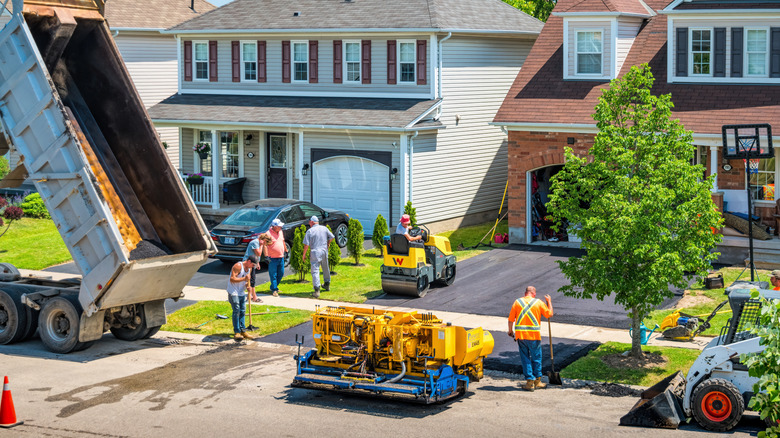
Asphalt driveways aren't all bad. According to a survey of House Digest readers, it came in as the second-most popular driveway material, trailing behind concrete. It's still a top choice for a reason: Compared to concrete, it's usually cheaper to install and easier to repair, not to mention the smooth, polished look it provides right out of the gate. It is less durable, though, and often has a shorter lifespan. If you're choosing between the two, consider how much you're willing to spend up-front and how much work you want to put into maintaining it. While concrete doesn't utilize petroleum-based ingredients, it's still environmentally damaging to produce.
Beyond its use of non-renewable bitumen, asphalt also releases volatile organic compounds (VOCs) during installation, which can be a major downside for eco-conscious homeowners. Asphalt's recyclability helps temper this concern, as does the growing use of low-temperature installation processes that minimize off-gassing. But another major factor to consider is runoff. If you're looking for the most eco-friendly option to repave your worn-out driveway, permeability should be a top consideration.
Asphalt is completely non-permeable, and while concrete can absorb some water, it's still considered fairly impervious. When either material is used for a driveway, the water runs off, collects debris and chemicals, and flows directly into nearby water sources. On the other hand, permeable pavers, open-cell pavers, and gravel all allow water to absorb into the earth and filter naturally. So, the driveway option you choose ultimately comes down to your personal preference and how sustainable you want the production and materials to be.