

11 Furniture Trends That Are Out In 2026

Trying to stay abreast of the latest furniture trends is frustrating, and if you get it wrong, it's an expensive mistake to fix. However, while the fickle nature of fashion is unlikely to ever change, it is still possible to avoid falling for the trend trap. The trick to choosing home decor that stands the test of time is to first understand what's happening on a more macro level in the world of interior design. From there, it becomes a little easier to choose furnishings that work, as opposed to those that irk. But it takes time — time that you may prefer to spend simply sinking into your new sofa. If that sounds familiar, then this guide is here for you.
In the sections below, we're uncovering some of the furniture trends that are likely to date your space. For example, with a growing movement towards character and personality-led spaces, you'll notice that matching furniture sets are very much on the out. So, too, are oversized sofas, which are just one of the living room trends no longer cutting the mustard in 2026. You'll find tips to bring your dining space up to speed, like ditching that enormous farmhouse-style table. And if you suspect that the monochrome gray chairs in your Wayfair basket lack character, you'll find that we are, on the whole, inclined to agree. Altogether, we've highlighted 11 furniture trends that are worth avoiding in 2026. More than that, for those who are wondering what to do instead, we've also included some pointers to help steer your shopping in the right direction.
Cool, gray furniture has started to feel cold
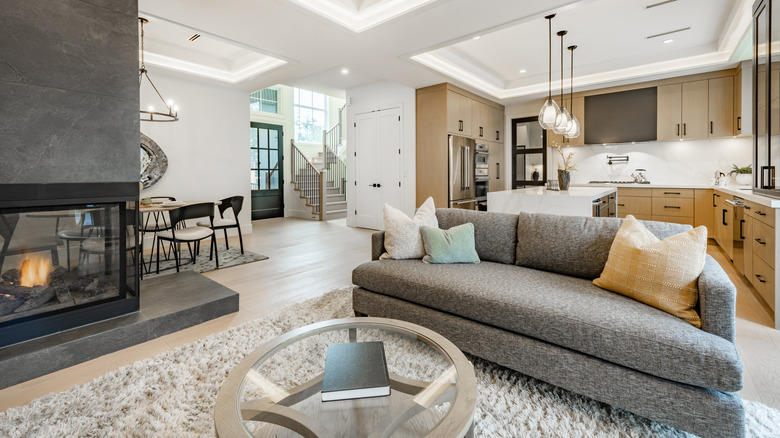
If you've had your fingers on the pulse of home design for the last decade, you'll know that gray has been held in high esteem. It's neutral, and pairs well with a variety of patterns and intriguing palettes. And in more minimalist and industrial spaces, the general consensus is that it's downright cool. The problem is, it has now cooled to the point of freezing. It feels flat and impersonal, but more importantly, it lacks the warmth that modern homemakers crave from their spaces. With that in mind, furniture in cool, charcoal grays are best left in the showroom.
Home design is becoming more eclectic and textured. In other words, it's okay to dabble with other colors and patterns, and with fabrics that intrigue the eye. Reassuringly, it's not strictly about getting rid of all your existing gray pieces. That would be wasteful, not to mention highly expensive. Instead, it's about letting them blend into the background, and using gray's inherent neutrality to your advantage. Go bold with some patterned cushions on a gray dining chair. Drape a luxe, fluffy throw over an all-gray sofa. And don't be afraid to mix in pieces from different eras to add further interest. Interior design in 2026 is all about personality and a feeling of curatorial collection. Letting those accent pieces do the talking will go a long way to achieving this without relegating your grays to the garbage heap.
Matching furniture sets spark little interest
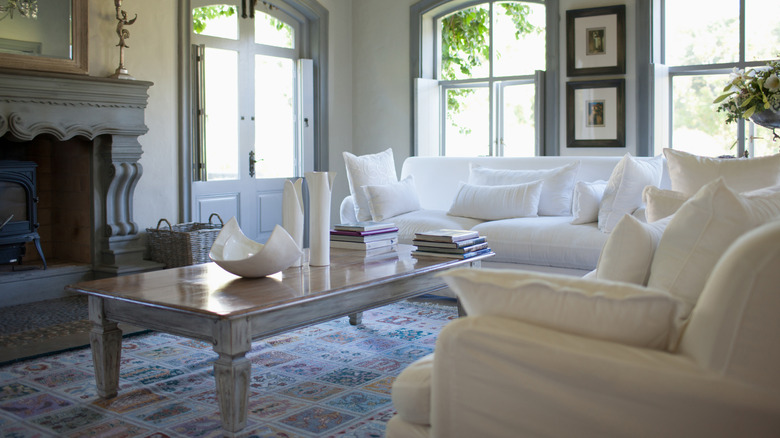
More and more design-savvy home stylers are asking the same question: Are matching furniture sets going out of style? The simple answer is yes, but the answer is somewhat nuanced. As with gray furnishings, matching furniture sets can, theoretically speaking, be layered with accent pieces — like throws and pillows — to mix things up. But on the whole, says Nick Ozemba, co-founder of design studio In Common With, those with a designer eye are no longer fussed about making everything match. On the contrary, as he told Vogue, "I'm seeing folks embrace a mix of period references and materials, rather than pursuing a perfectly coordinated design."
Now, you might be wondering whether this rule is exclusive to the living room, where matching chairs and sofas are perhaps the most obvious example, but it's applicable just about anywhere that good design makes you happy. Let's take the bedroom, where matching dressers and side tables are an easy way to achieve harmony. However, as interior designer Rayana Schmitz told Martha Stewart, "I believe a bedroom should feel collected over time, not purchased all at once." And this is the key reason why matching furniture is out. It's becoming apparent that timeless design is about authenticity. That "collected over time" aesthetic feels personal and intentional — like everything has a place and tells its own story. If the only story behind your furniture set is that you thought it looked nice at Costco, then personal is the last thing it's likely to exude.
Large, square tables lack conversationality
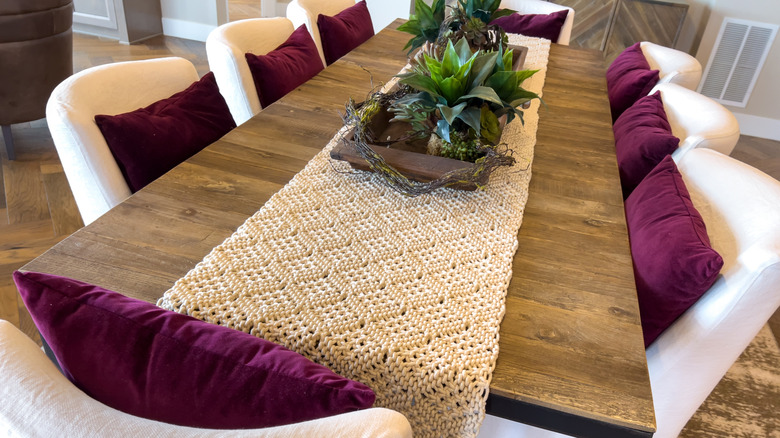
There are actually several reasons why you might want to rethink a large, square table. In general, designers are moving steadily towards softer, more organic forms, which more effectively instil a quiet sense of comfort. It ties, in part, to a growing demand for biophilic design, which allows homeowners to bring a touch of the natural world into their homes. Biophilic design leans heavily on greenery, natural light, and softer, natural materials like wood. But organic shapes and furniture profiles are also an important part. Straight-edged, oversized tables feel clunky and unnatural. On the other hand, smaller, rounder tables feel easier to live with, while reminding us of the circular shapes that are so prevalent in the natural world.
The other reason rounder tables are on the up is that, in dining spaces, they help to facilitate a subtle shift in the way we dine together. As Miranda Cullen, principal designer and owner of Inside Stories told Homes & Gardens, they eliminate the hierarchy of a rectangular table. In her own words, "round tables invite conversation, equality, and connection — reflecting a broader shift towards homes designed to bring people together rather than set them apart." In other words, they inspire cozier, more convivial conversations, whether you're entertaining or simply coming together for dinner as a family.
Bouclé furniture is harder to maintain than some would like
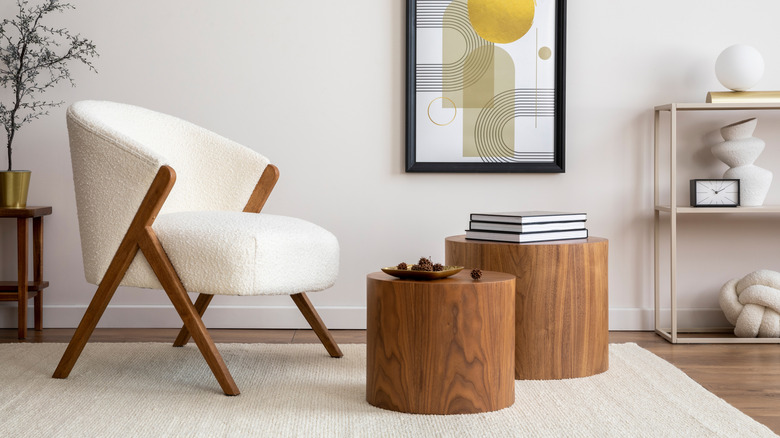
Are you tired of the bouclé furniture trend? If so, you're not the only one. With its tactile, loop-knotted upholstery, bouclé furniture has proven itself a boon to high-end home designers for some time. It's long been loved for its visual depth and appeal, along with its comfort. But according to some, like Jennifer Davis of Davis Interiors, its moment in the spotlight is fading. As she explained to Homes & Gardens, "Its heavy saturation has made it feel less special, and many clients are now prioritizing fabrics that feel timeless, durable, and versatile."
The other thing to note is that, while homeowners still demand a certain level of warmth and comfort, bouclé is surprisingly lacking in the latter department. So says designer Elizabeth Vergara, who explained to The Spruce, "Bouclé furniture (especially the chairs) is hard to maintain, easy to ruin, itchy, and doesn't hold up well with long-term use." In other words, despite its lustrous good looks, it's failing to hold up its end of the bargain. As we move through 2026, Vergara says that furniture trends will be moving towards pieces that are similarly beautiful, but decidedly more functional. Importantly, she says, they'll feature "materials that stand up to everyday use."
In the living room, bigger couches are no longer always better
Once seen as an easy way to make a space feel relaxed and inviting, large, oversized furniture, especially sofas, are now viewed as a limiting factor. First, it limits how a space can actually function. That's annoying in smaller family homes, where rooms must do double duty to accommodate both relaxation and play. It also limits what you can do to personalize your space. Remember what we said earlier about the importance of a collected, personal feel? By letting your space breathe and opting for smaller, non-matching pieces, you can quickly free up space, while adding buckets of character to your living room.
To help with this — and avoid taking the easy route and splurging on a giant sofa — just go shopping. Visit different stores, and try to not furnish the entire space from one showroom. Head to your thrift store to see if there are any interesting chairs, for example. Even if you need a sofa, if you already know which accent pieces it needs to work with, you'll be forced to find something smaller that fits around them. Not only that, but you can easily give your living room an affordable refresh by thrifting your furniture instead of buying it all brand new.
Designers are starting to see through the allure of glass tables
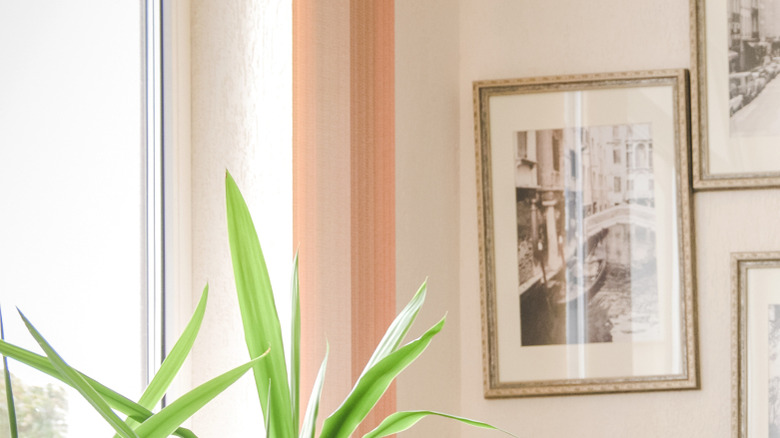
In more minimalist spaces — which, as we've already seen, are falling out of favor — glass tables provide utility without visually overwhelming a space. In other words, they actually do very little to add to a space, and at a time when designers are looking for more collected interiors — where each item feels intentional and has a story — they're losing their place. In fact, rather than feeling chic, glass furniture as a whole is beginning to read as cold and generic.
So, what to do? Well, if you're looking at new tables, then firstly, avoid glass! Instead, look for something softer with inherent warmth. Natural wood tables, for example, bring warm, earthy colors, and a calming dose of texture. Similarly, an upholstered ottoman can lend warmth and texture. Just don't be tempted to ignore function in favor of form. Instead, find something that works hard on both fronts. If your space merely needs storage, an ottoman works. But if you need storage and a table for your morning coffee, a wooden table with drawers could be the more practical choice.
Freestanding bookshelves pale in comparison to built-in features
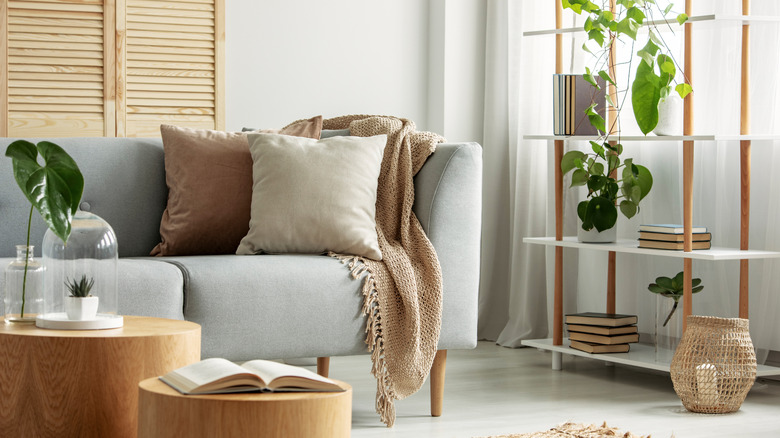
Head over to IKEA or spend some time scrolling on Wayfair, and you won't struggle to find hundreds, if not thousands of freestanding shelving sets. This is reassuring if you need a way to display your books or movie collections. However, like glass tables, freestanding shelves contribute little to a room. On the contrary, they soak up floor space, and while minimalism is on the way out, it's still very easy to clutter up a room with ill-considered furnishings. Alejandro Estrada, CEO of furniture brand Peigatto, told Martha Stewart that in recent years, "Modular bookshelves with laminated finishes have taken over living spaces." He described them as practical, but without presence or real intention. In his own words, he calls them "the visual equivalent of flat-pack furniture."
This may come as an affront to those of you who love combing the shelves of IKEA. But worry not — designers are now increasingly treating storage as part of a room's architecture. This means sculptural shelving designs, and particularly a more built-in aesthetic, which you needn't spend a fortune to achieve. In fact, there are various creative IKEA shelf hacks that you can use to make your storage entirely unique. These include installing shelves between your wall studs, or using them to capitalize on existing recesses. Alternatively, if freestanding is your only option, look for a strong vintage piece. You may even find one at the thrift store. Not only will this save you money, but a piece from a past era will bring bags of interest and presence to your overall design.
Fluted furniture has become a shortcut to sophistication
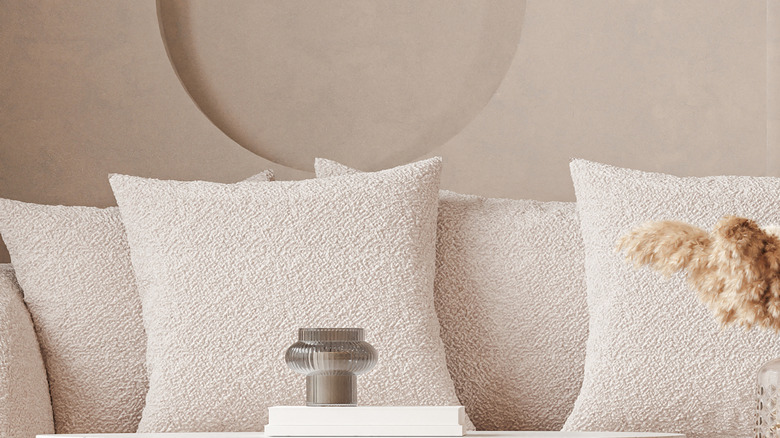
This textured design trend was huge in 2025, and for good reason. Fluted furniture offered home designers a way to lend sophistication and architectural interest to everything from kitchen cabinets to TV stands and tables. Unfortunately, like many of the most popular trends, it's now been done to death. So said Mark Schubert, founder of M2 Design Lab, who told Homes & Gardens, "Once every cabinet manufacturer and furniture company adopted it, the detail lost much of what made it special."
In other words, he says, once a detail becomes a "default," rather than a deliberate design decision, it loses its weight. It also begins to feel dated, and dare we say it, passé. Another consideration is that, as good as it looks, fluting is also naturally harder to maintain than other, less-textured surfaces. That's not to say that you should avoid texture. Far from it. Instead, look for other ways to achieve it. More specifically, look for ways to add visual texture, instead of strictly those that you could reach out and touch. Wood grain, for example, is highly visual, but when you touch the surface, it feels flat. It's also a darn site easier to wipe down, which is something we can all get on board with.
Minimal Scandi furniture designs need layering
Clean, light, and calming, Scandi furniture is another style that's become a default in recent years. In fact, it's been popular for decades. And we're not here to tell you that Scandi furniture is out, because it's not. But it shouldn't be leaned on too heavily in homes where warmth and coziness are the goal. Kailee Blalock of House of Hive Design Co. told Homes & Gardens that Scandi furniture can feel overly minimal, and even generic. As she put it, "they can make homes feel more like a showroom than a space with personality."
That's the key word to bear in mind: personality. If overused, or not duly-layered, Scandi furniture will actually suck the personality out of your space. That's not to say that it's not beautiful. But with current sensibilities shifting towards more collected aesthetics, they're much better used as part of a wider, warmer, and more eclectic design scheme. You could layer those pared-back pieces with texture, using tactile fabric touches to soften their look. Look for Scandi pieces with muted stripes, or with visible marks of craftsmanship, like exposed wood joints. And if you're fond of your local thrift store, keep an eye out for older Scandi-style pieces to pair with your newer furnishings. That mix of old and new will lend your room personality and a feeling of "collection," while still benefitting from that gorgeous simplicity that is the hallmark of Scandi style.
As we crave longevity in our spaces, fast furniture is out

One of the biggest trends in the world of design is a shift towards more sustainable decorative choices. In turn, this means that buying cheaper versions of designer furniture pieces, or saving money by investing in matching furniture sets, is out. Instead, sustainable design is about reserving your money for quality furniture. Equally as important, sustainability means not changing your furniture simply because evolving trends suggest that you should. And that's a key point. Yes, matching furniture sets are, according to many, out. But there are ways to work around these without simply ditching them at the dump, like layering them with interesting patterns and textures with cushions and throws.
For those who are in the market for new furniture, consider looking for pieces that are genuinely high quality, with signs of craftsmanship. Not only are these more durable, thus making them more sustainable, but pieces that truly feel high quality will continue to earn their place in your home decor for far longer than pieces you bought cheap because they matched a passing trend. As interior designer Nicole Gordon told Forbes, "The world is too upside down to consider buying something that will inevitably become landfill ... my clients are more concerned with the heritage of an item and not buying to fit an aesthetic that would look great when photographed."
Austere garden seating feels out of touch with our desire for comfort
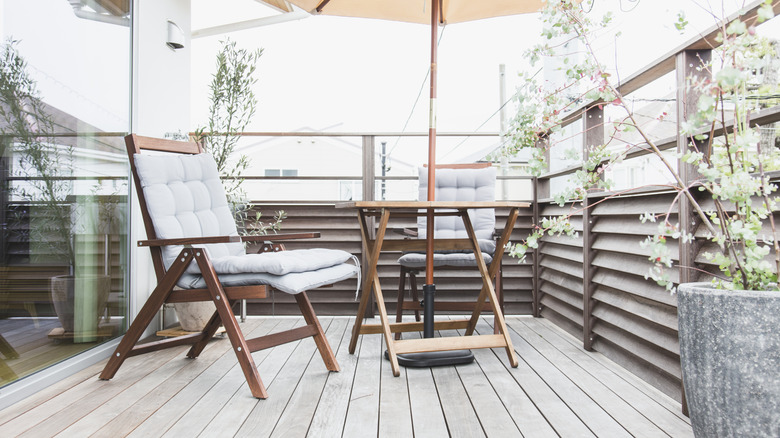
As well as bringing the outdoors into your interior with organic shapes, textures, and earthier colorways, it's important not to ignore your outdoor space. Too often, we pour our attention (and money) into curating gorgeous interiors, while treating the furniture on our decks or patios as an afterthought. But with a rise in indoor-outdoor living, homeowners want to enjoy the same level of comfort in their outdoor spaces. And it makes sense. We are increasingly finding ways to create sanctuaries inside our homes, so it was really just a matter of time before that approach extended to the patio.
So, what does this mean? What exactly is "out" in terms of garden furniture? Well, for a start, it's no longer enough to grab a few fold-away chairs and call it a job well done. Nor does grabbing a large, modular sofa from Costco quite cut it. Instead, outdoor design craves furniture with depth, softness, and visual interest — just like it does indoors. Speaking with Homes & Gardens, Grace Rosenstein of Atelier Roan explained that furniture like this "invites you to stay longer, to entertain more naturally, and to use the space in a meaningful way." And it goes beyond your seating. Soft furnishings like rugs and throws are also being tossed into the mix, along with stylish side tables, accent lighting, and other design-led garnishes that were not so long ago limited to the indoor arena.