

Should You Rake Your Lawn Before You Mow?
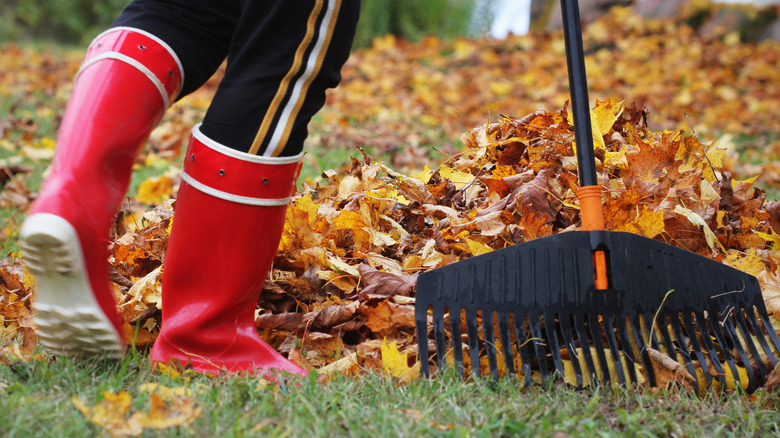
Just when you think the hardest work in managing a garden is over, the trees start to shed their leaves and present you with a new recurring chore. If you're watching those gorgeous fall colors rain down on your lawn right now, you are probably wondering if you really have to rake the dead leaves on your lawn. That might feel like an even more urgent question to answer if your lawn hasn't gone dormant yet. So your grass is in need of mowing, but the leaf layer is blocking you from the task.
The good news is that, in most cases, you don't really need to rake your lawn before mowing it. Most lawn mowers can handle breaking down some leaves as they trim your grass –- though it might take a couple passes if it's not a mulching mower. In fact, taking the lazier route of skipping the rake can actually benefit your grass since you can use leaves as fertilizer in your lawn. Allowing the leaves to decompose in place will add valuable nutrients to your soil that will help your lawn come back stronger than ever next spring.
With that said, there are some situations where the rake might still be necessary and you might not want to shred all the leaves on your lawn with the mower. That's primarily because there is some yard debris your lawn mower can't handle and there are some ecological benefits to keeping your leaves intact.
Why most people shouldn't rake before mowing the lawn
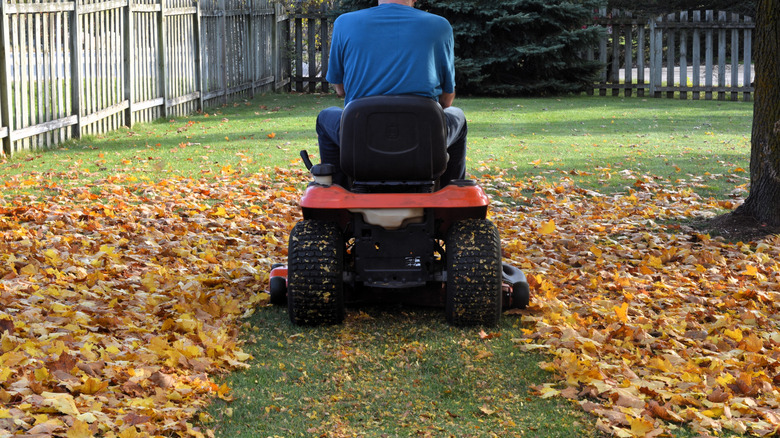
If the bulk of the debris falling on your lawn is just made up of leaves, you probably don't need to rake. Even if you don't care about any of the benefits of leaves to your soil or your garden's ecosystem, simply mowing over the leaves is just easier and faster than taking the time to rake and bag the leaves first. Mowing right over them will shred them so that they filter through your turf and down to the soil.
But it's not just the easier option. It's also the better option for your lawn. The shredded leaves left in your lawn after mowing over them will serve as a mulch for your grass through the winter, retaining moisture, stabilizing soil temperatures and blocking winter annual weeds from sprouting. By spring, the leaves will break down, providing nutrients and adding organic matter to the soil that will help improve soil texture.
You don't need a special lawn mower to mow over the leaves, either. If you have a traditional lawn mower, just raise the deck to the highest setting and make several passes over your lawn until the leaves are finely chopped. Doing this regularly can minimize the number of passes needed by not allowing the leaf layer to get too thick. If you have a mulching mower, you can mow a layer of leaf litter up to 6 inches thick at a time without any special technique.
When you actually should rake your lawn before mowing
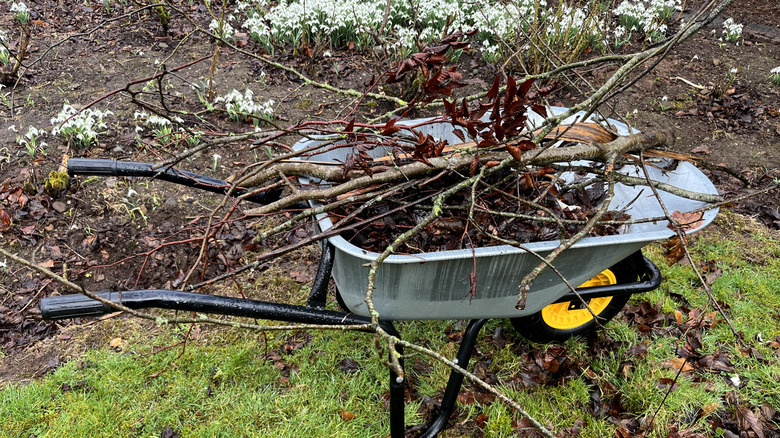
The main situation where you might actually need to rake before mowing is if there are too many fallen leaves in your yard. As mentioned earlier, a mulching mower can typically rip through a layer up to 6 inches thick. If you don't have a mulching mower or your leaf layer is even thicker than that, you should rake enough to get the leaves down to an amount your lawn mower can handle. You might need to rake if your trees also dropped a lot of sticks and small branches into your yard. If the larger debris is easy enough to see, you can simply do a walkthrough to remove any large objects by hand. That way, you leave the bulk of the leaves in place and just remove anything that could become a dangerous projectile.
Another reason to rake the leaves is for the insects in your garden. While mowing over them will certainly benefit the soil and, in turn, your grass, this approach will harm the beneficial insects in your garden. A more ecosystem-friendly method would be to rake some leaves into a pile in the back of your yard or to use as mulch in your garden beds (leaving the leaves intact). The beneficial insects in these leaves will be allowed to finish overwintering. For the rest of the leaf litter, mow over it and allow it to become nutrient-rich compost in your lawn.