

Boomers Aren't Impressed By These Modern Kitchen Trends

If your goal is to design a kitchen that offers broad appeal to boomers, then it's no good trying to guess what they will or won't like. Do that, and you may simply end up with a space that nobody wants to use — you included. So, what then? Should you ask your grandma for her hot take? Well, that would be a start. But to bolster your boomer findings and ensure your kitchen offers the broadest possible appeal, it's unlikely to uncover all the answers. Instead, to make sure your kitchen has greater inter-generational appeal, it's best to consult the experts.
In exclusive interviews, we reached out to interior designers and real estate professionals to see which kitchen trends least impress their boomer customer base. In response, they provided us with some fascinating insights. For example, we learned that completely open kitchens curry little favor among those born between the 1940s and 1960s. We discovered that boomers are often skeptical about smart technology in the kitchen, and that sleek, ultra-minimal spaces lack the warm, lived-in aesthetic that boomers look for. Our experts even provided us with some reasons why you should think twice about open shelves in your kitchen. In other words, whether you're looking to sell your home or are keen to hear the wisdom of a generation that's seen countless trends come and go, you're sure to find some intriguing insights below.
Some boomers tend to avoid floor-to-ceiling cabinetry
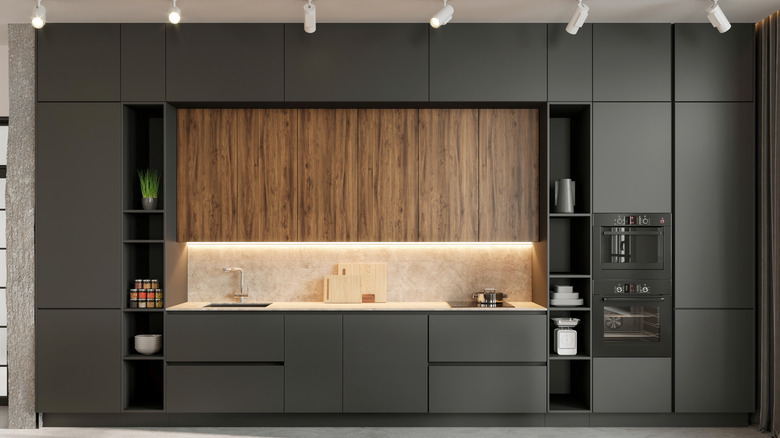
As we'll see later, boomers tend to favor closed upper cabinets versus open shelving. There are good reasons for this, namely that cabinets provide more storage and make the items inside easier to keep clean. However, that's not to say that you should go all-out with floor-to-ceiling cabinetry. Instead, if you're trying to make your space appeal more broadly to baby boomers, you should think hard about accessibility. So says Bilal Rehman, CEO and principal designer of Bilal Rehman Studio. In an exclusive interview with House Digest, he says, "For clients thinking about how they'll enjoy their home long-term, accessibility becomes an important part of the design conversation."
One of the biggest downsides to high kitchen cabinets is that they require shorter people to reach and over-extend themselves. In turn, this can be dangerous, especially if you're trying to lift sharp, heavy, or glass items. For that reason, says Rehman, ensuring things are within easy reach is key. And it's not about sacrificing upper storage. Instead, it's about more considered architectural cabinetry that capitalizes on the available space, while still making the everyday experience comfortable. On his boomer clients, Rehman explains, "They may say, 'I want the things I use every day to be within easy reach.'" If you can keep this requirement in mind when updating your kitchen layout, it's much more likely to appeal to baby boomers should you decide to sell in the future.
Completely open kitchens have too many drawbacks
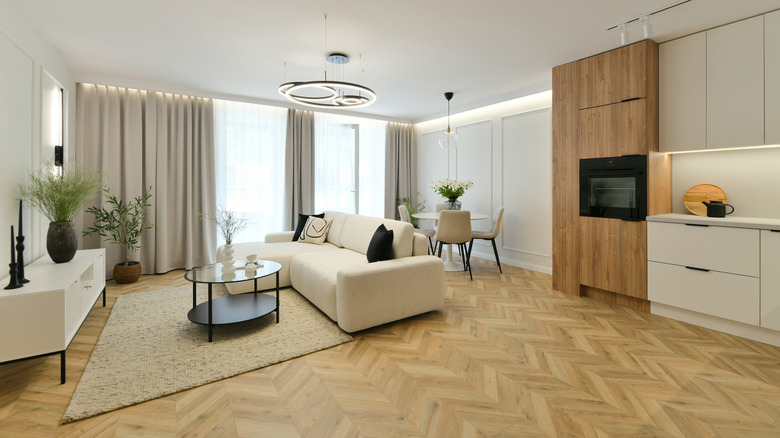
There are several reasons why you might want to avoid an open floor plan in your kitchen. These vary, and as you might expect given their appearance in this guide, they include a lack of appeal to baby boomers. In an exclusive interview with House Digest, Bill Kowalczuk, a real estate broker at Christie's International Real Estate, explains, "Baby boomers tend not to be fans of kitchens that are completely open to the living and dining areas."
As for why, Kowalczuk highlights a few reasons: "The main complaints are that they do not want guests looking directly at dirty dishes or a messy kitchen while they are entertaining." There's also the small matter of cooking smells, and how noise tends to echo and spread to other parts of the house when things are so open. Now, this isn't to say that the kitchen should be closed off. Far from it. Instead, kitchens that have a level of openness, but which retain some separation from the main living spaces, tend to fare better in the minds of boomers. In other words, more traditional modes tend to win out over highly modern, less-defined spaces.
Boomers may appreciate cozy lighting, but not at the cost of functionality
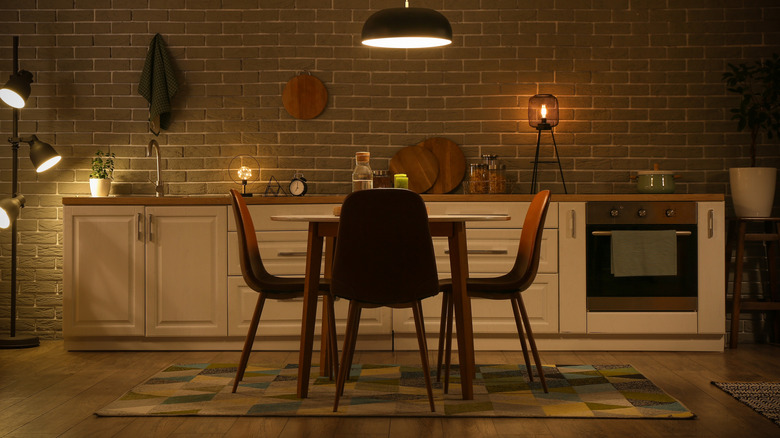
When you're weighing up the best type of lighting for your kitchen, there isn't strictly a "right" answer. But there are some general rules of thumb that can help lend your space a feeling of genuine, intentional design. Layering your lights, for example, with task lighting for cooking, ambient lighting for mood-setting, and accent lighting to highlight features, is a trick most kitchen designs should employ. And if you get that right, then you should have no trouble encouraging boomers to feel comfortable in your kitchen. But if you get it wrong, or lean too heavily on a cozy atmosphere at the cost of practicality, you may run into problems.
In an exclusive House Digest interview, Andrea Wernick, who also works as a real estate agent at Christie's International Real Estate, says, "Boomers want bright, functional lighting that fully illuminates the space, not just decorative fixtures." In other words, even if your kitchen has unique architectural features, or carefully curated artwork on the walls, the lighting shouldn't be solely designed around those. Another way to think about this is that, as Wernick puts it, "It's important to clearly see everything in the kitchen!" If you can't see what you're doing when you're cutting ingredients, or cooking on a hot stove, those tasks can become dangerous. Ensuring that your kitchen has appropriate lighting will make it safer for everyday use — and not just for boomers.
Boomers prefer closed cabinets to open shelving
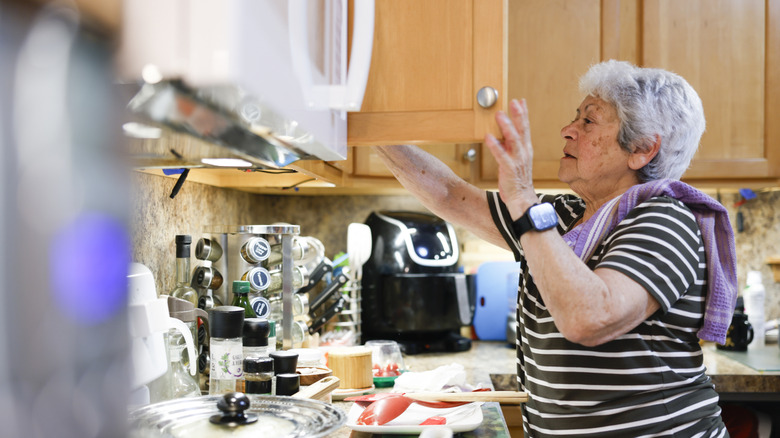
If you're ready to say goodbye to open shelving in the kitchen, you're not alone. Three of our four experts specifically highlighted open shelving as a trend that immediately puts off baby boomers. They include Bill Kowalczuk, who explains that boomers' initial reaction is usually "Where are we supposed to put everything?" That, or they point out how items on the shelves will inevitably gather dust, or become greasy from cooking residue. Craig Gritzen, founder and principal designer at Curated Style Collective, shares a similar experience with boomer clients. In his exclusive interview with House Digest, he says that, while open shelving can create beautiful design opportunities, it tends to demand a certain level of ongoing organization. As far as boomers are concerned, he continues, "I find that older homeowners are often less interested in sacrificing closed storage for a place to display art or decorative objects." Reinforcing this idea, Andrea Wernick adds, "most boomer buyers prefer ample closed storage instead of minimal, exposed shelving."
So, what to do? Well, if you're not aiming to appeal to boomer buyers, then do what's right for you. But even then, try not to overdo it. As Gritzen points out, open shelving can work as an accent, "but I generally don't recommend replacing all of your upper cabinetry with it simply because it's trending." On the other hand, if boomer buyers are your focus, then as Kowalczuk explains, "Older buyers tend to prefer enclosed cabinets so that they can have a lot of storage." In other words, you might be better off shelving the idea entirely.
Ultra minimalist kitchens lack warmth and personality
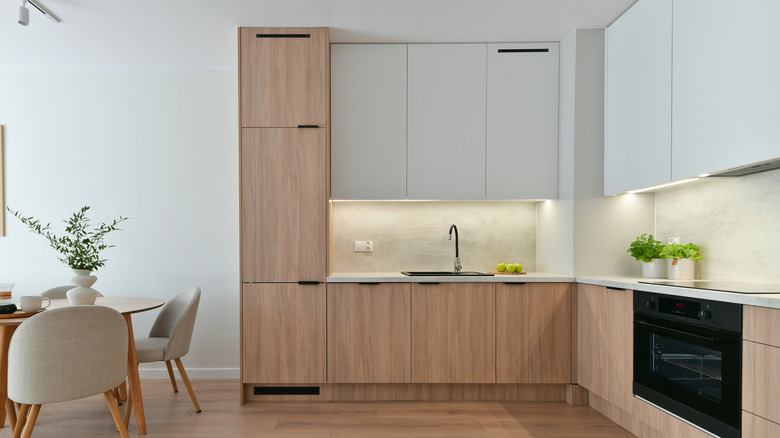
If there's one design trend that boomers agree should make a comeback, it's functional spaces that feel lived-in. Thankfully, this is actually seeing something of a resurgence among contemporary designers, meaning you can, technically, design an on-trend kitchen that also appeals to boomers. The challenge, explains Bilal Rehman, "is creating a clean, contemporary space that still feels inviting and personal."
So, what does that mean, exactly? Quite simply, it means avoiding a spartan, ultra-minimalist kitchen. As Rehman says, many of his clients don't actually mind minimalism, provided that it still has a sense of warmth or character. As he puts it, "They'll often tell me, 'I want it to feel like a home, not a showroom,'" which is a useful point to bear in mind. You don't have to fill the space with clutter, but nor should you feel like the kitchen is devoid of life and personality. It's the heart of the home, after all. Layer it with pieces that add beauty and warmth, and ensure you do so without sacrificing function.
Fully integrated kitchens feel less intuitive to some boomers
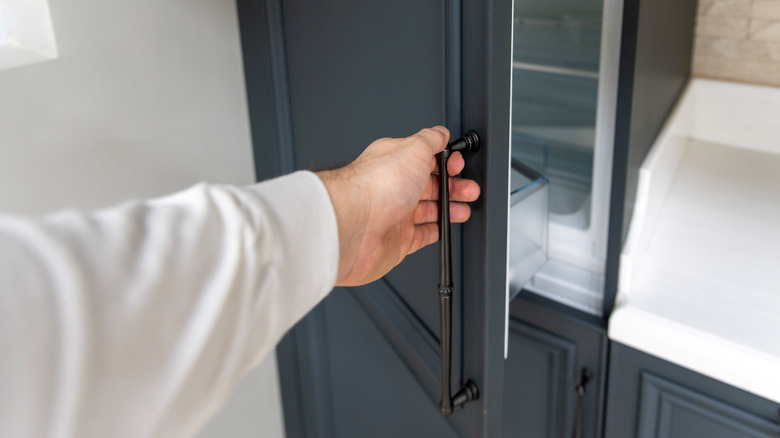
There are various millennial decor trends that boomers can't stand, but one of the most relevant in the kitchen is the use of integrated appliances. Specifically, we're talking about those which are slotted neatly between your cabinets, and then camouflaged with front panels that match the rest of the cupboards. As Bilal Rehman explains, "Clients who have been homeowners for many years often appreciate appliances that are intuitive and easy to identify." He explains that he's often told that boomer clients "love the look," but that they'd much prefer to know where everything is.
So, what does that mean for your kitchen? Again, it depends on whether you're seriously trying to appeal to boomers. Rehman says, "For these homeowners, we focus on integrating appliances beautifully without sacrificing familiarity or ease of use." In other words, you can still slide that dishwasher or refrigerator between your cabinets. You should just avoid trying to hide your appliances with matching panels. The easier and more intuitive your kitchen looks, the better boomers will be able to see themselves using it.
Boomers say handleless or push-open cabinets lack convenience and show marks
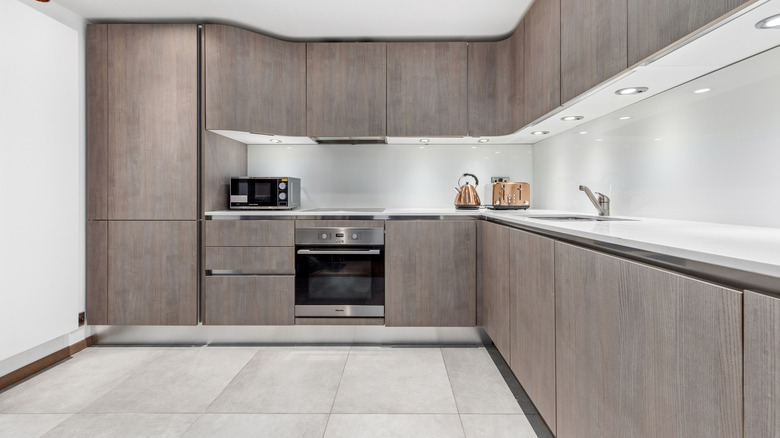
As well as removing the camouflage from your appliances, it's also worth ensuring that your cabinets are easy to use. Unfortunately, handleless kitchens — those with push-to-open cabinets and recessed drawer pulls — are unlikely to inspire boomers. This may seem like a shame. As Bill Kowalczuk says, "flat cabinets with hidden pulls or push mechanisms are very popular in new kitchens right now." The issue is that boomers tend to find them inconvenient and difficult to use. Indeed, Kowalczuk is often asked by boomers in such kitchens where the handles even are. They also point out that cabinetry without traditional pulls tends to show fingerprints, which in turn makes them harder to keep clean.
Craig Gritzen, who has also spotted this boomer bugbear, adds, "Modern kitchen designs that lean more minimalist often eliminate visible cabinet hardware, but this comes at a functional tradeoff." Instead, for both boomers and indeed anyone with an eye to the future, he suggests that cabinets are better paired more traditionally with knobs or clearly-visible pulls. These, he explains, provide a clear cue on how the cabinets operate. Not only that, but, as he points out, pulls and knobs generally read more timeless, and "hardware can be easily changed as taste evolves." Conversely, changing out push-to-open cabinets or drawers with recessed pulls is a much bigger — and, indeed, more expensive — commitment.
Boomer buyers prefer timeless kitchens versus trend-driven designs
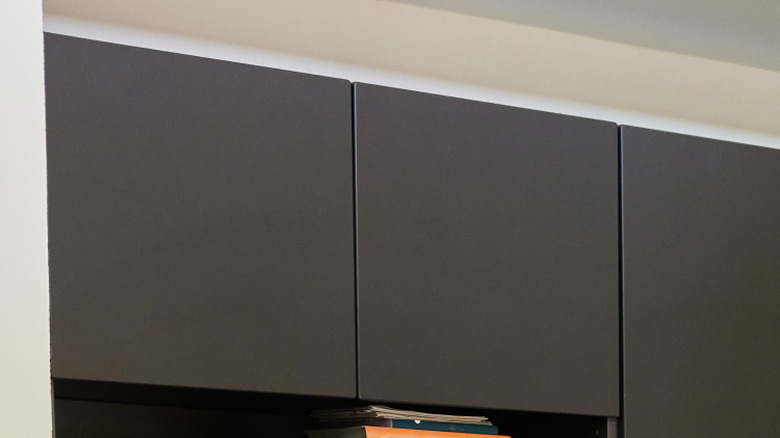
"One beautiful thing about the boomer generation is that they have lived through several design trend cycles," says Craig Gritzen. And in his experience, this makes them highly discerning. With that in mind, he explains that their reluctance to embrace new trends is less about disliking them, and more about avoiding style that comes at the cost of function. Bilal Rehman is inclined to agree here. He explains that many of his "forever home clients" tend to think hard about which trends they do, and don't, invest in. Why? Because they don't want to have to redesign everything in a few years to make up for a passing trend. For that reason, he says, "I like combining current design with timeless materials and craftsmanship that can evolve with the home."
To get a better idea of what this might look like, let's first try to understand which specific trends boomers tend to avoid. According to Andrea Wernick, there are several. She points to black kitchens as an example, particularly those with waterfall-style faucets. More broadly, she says, "They are not interested in trendy or overly modern designs." Instead, the go-to usually feels more timeless. Traditional white kitchens with contemporary hardware, for instance, offer precisely the kind of longevity that Wernick says "strongly influences their purchasing decisions."
Ultra-thin countertops lack substance and feel too delicate for boomer buyers
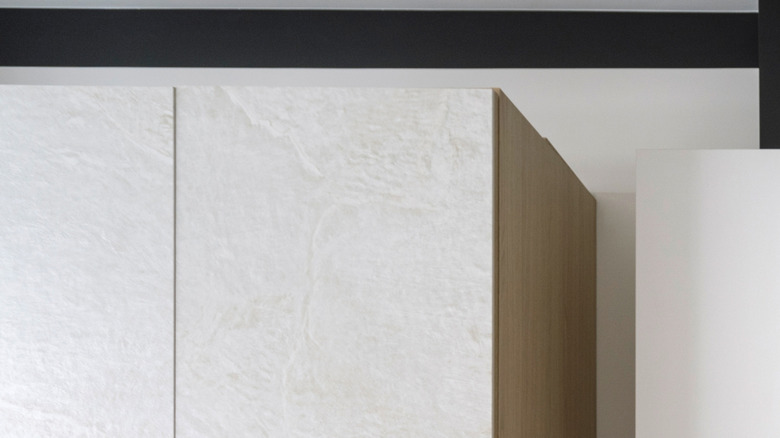
If you've decided to wave goodbye to bulky countertops in favor of something more slimline, then have you considered what future boomer buyers may think of them? This may not be a problem, particularly if you're designing your forever home with no plans to upsize or relocate. But if you're not, says Bilal Rehman, his more traditional real estate clients "tend to gravitate toward countertops that feel substantial and enduring." In other words, those ultra-thin counters may well work against you.
Now, there are some things to bear in mind here that may impact your countertop choice — regardless of what boomers think. For starters, they risk being less durable in well-used kitchens. They don't dampen sound as well, either, especially in more open-plan kitchens, which will certainly be a factor for boomers who are already on the fence about minimal design. And while it's not necessarily true, they could be perceived as lower quality — like the budget didn't quite stretch to regular-thickness countertops. This goes back to what we mentioned earlier about timeless design. Ultra-thin surfaces are a relatively new option for kitchen designers. That brings risk and concerns about running out of room or their longevity. More traditional materials, like chunky butcher block or even thicker stone, lend a greater sense of "permanence," as Rehman puts it, since they've been around — and in style — for centuries.
Boomers are skeptical about touchscreens and smart appliances
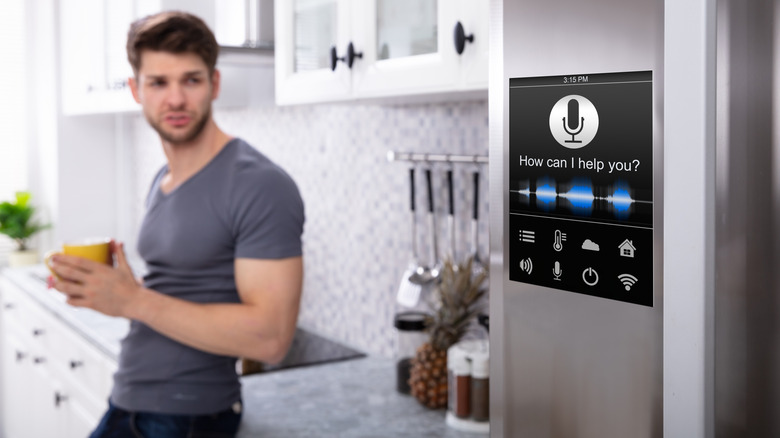
Before we start with this one, let us first bust the stereotype. Boomers aren't averse to technology because they don't know how to use it. Instead, according to both Bill Kowalczuk and Craig Gritzen, technology only really has a place if it genuinely enhances the way they use their kitchens. Not only that, but as Kowalczuk points out, there are several hidden downsides to smart refrigerators and other high-tech appliances. Touchscreen panels can stop working, for example, leaving owners wondering why they invested in something that's so expensive to have repaired. Not only that, but appliances hooked up to your WiFi and controlled via apps can actually represent a security risk, providing a potential portal for hackers to access your network.
In other words, boomers tend to consider smart appliances more trouble than they're worth. As Gritzen puts it, "I think they can appreciate modern design, but they are skeptical of upgrades or trends that make everyday life more complicated." To avoid problems, he recommends first designing for functionality, and then layering in technology afterwards. And even if you decide to do away with high-tech altogether, that's okay. In fact, says Gritzen, "I think analog devices are making a big comeback due to our overuse of technology." Not only that, but tech moves quickly, and since appliances don't live forever, they'll need to be replaced eventually, anyway. Why expedite that process with appliances that feel obsolete as soon as the technology becomes outdated?
Oversized islands raise questions around mobility and usability
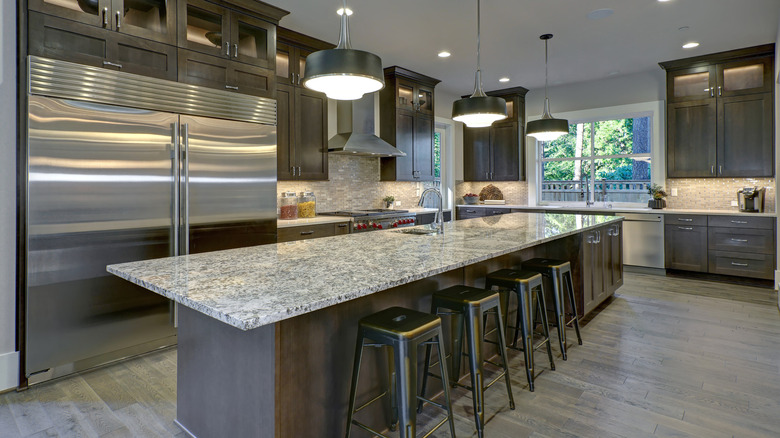
Oversized islands are one of several outdated kitchen trends that home designers from any generation should consider avoiding. Pair them with an ultra-thin countertop, and boy, will you struggle to win boomers around. In all honesty, even with nice, chunky tops, you may still face an uphill battle. Yes, a large kitchen island can make a serious visual statement. However, says Craig Gritzen, it comes at the cost of practicality. "A large island can increase walking distances and increase reach, which is not as ideal for the boomer generation given mobility limitations that come with age."
Generally speaking, Gritzen adds, older homeowners favor kitchens whose islands are sized proportionately to the space. With that in mind, island design for boomers is about striking a balance. There should be enough storage to make it useful, and enough counter space to make cooking and food prep breezy. But it shouldn't take 10 minutes to walk around it, and it shouldn't dominate the space. As Gritzen says, "Appropriate scale is a foundation of good design, and when the room determines island scale, it will always outlast the trend and help keep your kitchen more timeless."