

How To Level A Shed With Concrete Blocks
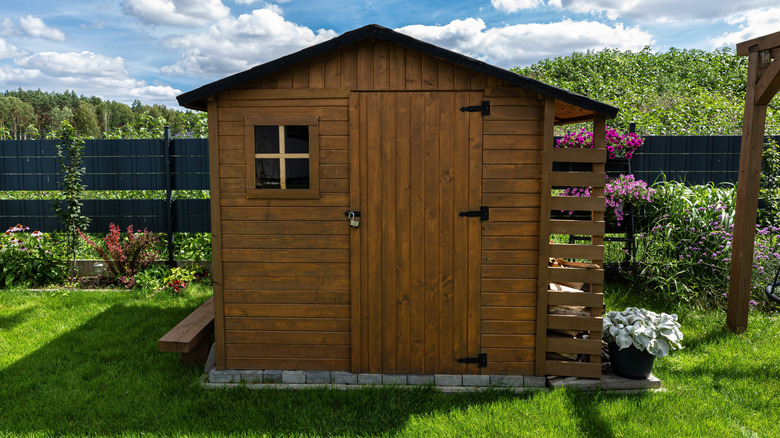
One of the most important things for building a shed is ensuring that the base is level. Even though it's small outdoor construction, creating a level base for this structure not only provides stability for it, but also gives the shed a better chance at longevity. A level ground allows for proper water drainage for when it rains, instead of collecting in low spots, which could lead to rot for the shed's materials. You might even find it difficult to gain access to the structure if it isn't level, as doors can get stuck and may not properly close because of poor alignment,
One option to help you create a level base for a shed is to use concrete blocks. Blocks fit between the grass, dirt, or gravel and the key support points on the shed. Concrete blocks are generally less expensive than pouring concrete slab, especially if it is just for supporting a small structure like a backyard shed. You can complete the installation faster with concrete blocks, too.
However, creating a concrete block base to level your shed isn't as easy as just dropping the cinder blocks on the ground and calling it done. You may need to add shims or a sturdy, flat material, like shingles, under them to account for slight height differences. The time you spend preparing the ground by compacting the soil or adding gravel before installing the concrete blocks will pay dividends by creating a secure base for the shed.
Level the ground before you start
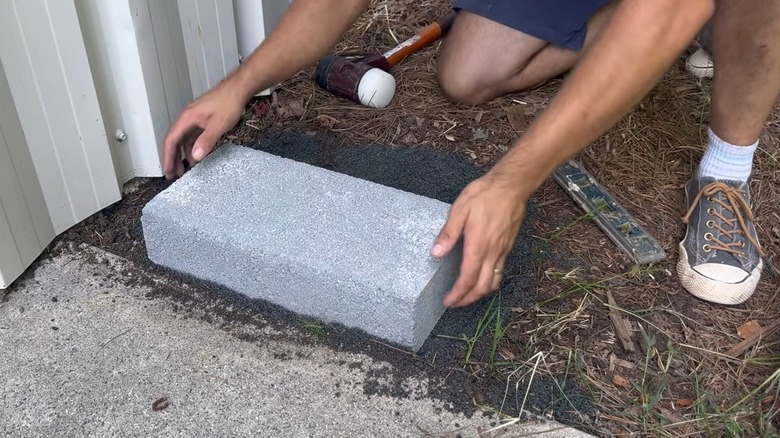
You'll want to assess the ground, remove vegetation, and level any uneven areas before laying out the cinder blocks. If the area is extremely uneven, and is a large job, you'll likely need to have a skid steer available. For slightly uneven areas, you could do the work by hand with a shovel and by adding topdressing with a rake. After making the ground mostly level, use a tamper tool to compact the soil to prevent shifting in the future.
Then finish the job with sturdy concrete blocks. These blocks work well on mostly flat surfaces to level your shed and provide the stability you need. Failing to perform some leveling work before laying out the concrete blocks may cause problems down the road. The ground under the blocks needs work to ensure stability. Without prep work, the blocks may settle unevenly over a few years, eventually leaving the shed out of alignment.
If you're struggling to make bare dirt level enough to support the concrete blocks, consider adding gravel. Gravel or crushed stone should be installed at a depth of at least 4 inches, meaning you may need to dig out some dirt first. Gravel alone won't be enough to keep the ground level on a slope, you'll still have to move dirt.
How to install concrete blocks
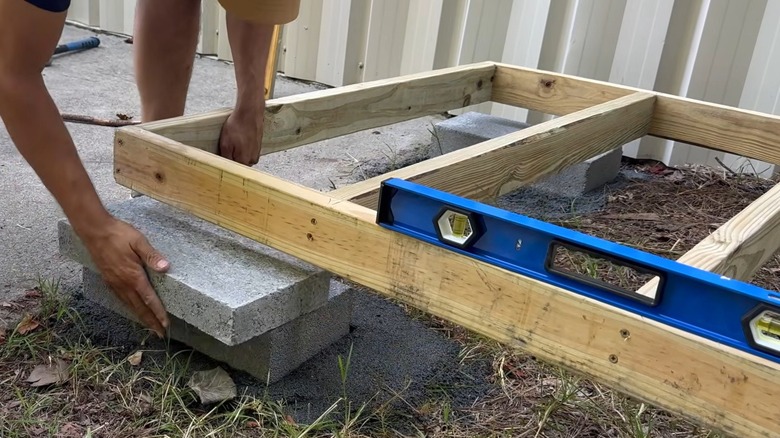
After you've prepared the ground, you can begin laying the cinder blocks. Start by placing the blocks at the corners of the shed's footprint. If you're using rectangular concrete pieces, you'll want to place the long end of the block parallel with the long sides of the shed to provide the maximum support for the longest span. Use a bubble level and a rubber mallet to adjust the positioning of the corner-set concrete blocks. If the pieces shift a lot as you're adjusting them, the ground beneath may be too soft, meaning it probably needs more gravel or extra compacting work.
Next, add blocks every 3 to 4 feet along all four sides to provide additional support. Again, make sure each one is level. You should then make sure the span between concrete blocks is level. You could place a straight 8-foot or longer board atop the blocks and measure it with the level. Just make sure the board is perfectly straight. A laser level may also work over longer distances.
If you need to make slight adjustments to any of the concrete blocks, you will need some shims. (You may want to use two stacked thin blocks to simplify adding shims.) Using leftover roof shingles as shims is one option. They're thin enough to allow for minimal adjustments, and they can withstand tough weather. Just cut the shingles to fit underneath without having any visible overlap. Once your foundation is leveled, you can move on to building your own DIY shed.