

He Uses Basic Whittling Skills To Create Restaurant-Quality Wood Utensils
We may receive a commission on purchases made from links.
Nobody really knows where whittling originated, but it has been around for hundreds of years. It might have started with people making toys. Whittling is arguably as popular today as it has ever been, allowing people to unplug and experience the satisfaction of creating something with their own hands. Over on TikTok, the hotdillpickle channel shows the creator's husband whittling spoons and other wooden utensils to a high standard. Let's take a closer look.
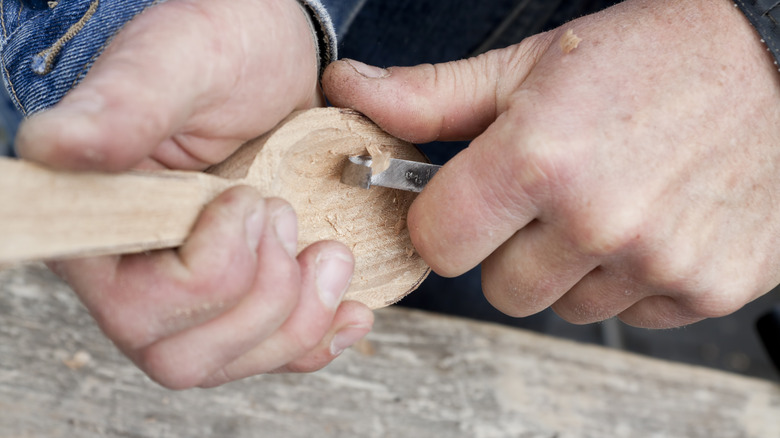
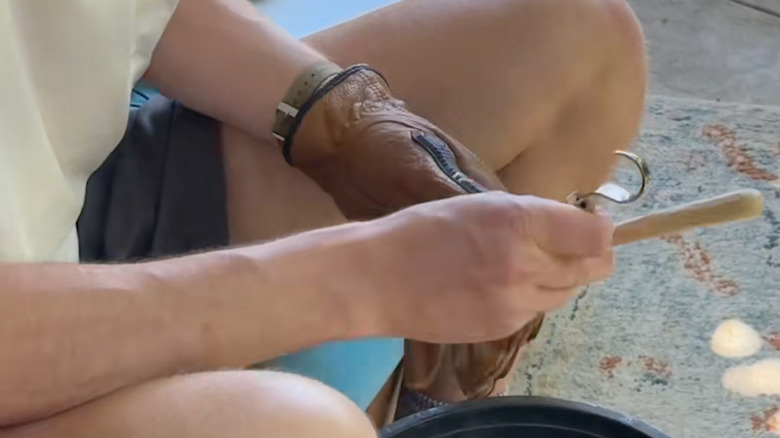
You might typically think of whittling as something that's done with a pocketknife, and it is certainly a versatile carving tool. However, they aren't suited to carving the inside bowl of a spoon. For that, you need a hook knife, and you can see one in use in the video. High-quality hook knives can be expensive, but if you just want to try your hand at whittling wood utensils, the BeaverCraft Spoon Carving Knife is currently just $20.99 on Amazon.
There are no hard and fast rules about how to whittle wood utensils, although it's common to start with the bowl when making spoons. Work slowly. You can always cut a little more off, but it's hard to put the shavings back on! There are a number of safety precautions you should take when woodworking, and you might want to invest in a carver's glove to protect your hand in case you slip. You can find one for around 10 to 15 bucks.
Which wood to whittle for kitchen utensils and how to finish them
The type of wood used for kitchen utensils is important. Things like ash and oak have open grain that can trap dirt, so they aren't suitable for food use. Yew contains a toxin. Softwoods are ... too soft. Woods with a dense grain like cherry (and other fruit woods) are usually a good choice, as are birch, maple, and walnut. If you're unsure, it's always worth checking online sources first.
Some people like to leave whittled utensils looking a little rustic so it's clear they are artisan-made. Others prefer to sand them to a fine finish. While you can do this by hand, it can be tedious, and there are tools that make sanding quicker and easier. Work through grits in stages from around 150 up to as high as 400, depending on how smooth you want the surface. Dust off (a slightly damp cloth helps), and when dry, apply a couple of coats of oil to penetrate and protect. Linseed oil has long been a favorite wood finish. In the video, walnut oil is used. Avoid food-based oils, as they can become sticky and rancid.
You could carve wood utensils with a rotary tool. You can use an angle grinder to make beautiful bowls. However, there's a certain satisfaction in whittling wood by hand that mechanical methods never quite match.