

Why Do So Many Professional Painters Rarely Use Painter's Tape?
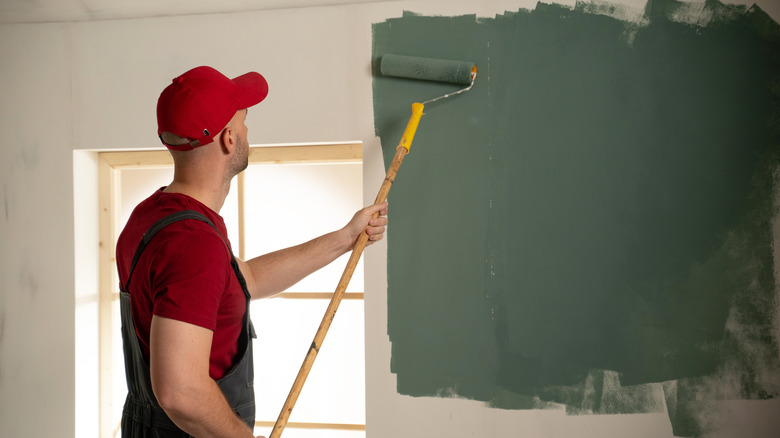
If you've ever hired a professional painter to freshen up a room in your home, their skillset becomes immediately evident. From the efficiency with which they set up to the flawless finish they leave behind, it's hard not to look upon the process in awe. One thing that might set an interested homeowner on edge, however, is the fact that a lot of painters don't use painters tape to get a precise finish on corners and trim. This can be for several reasons that range from increasing the speed of the job to minimizing the risk of potential flubs, but at the end of the day, the decision on whether or not to use tape comes down to the painter's preference.
Painter's tape is intended to create picture-perfect lines, but things don't always work out that way. Even if you choose the right kind of painter's tape, there's still a risk of paint bleeding beyond the edges on textured surfaces, the tape ripping during removal, or damage to the wall — risks that many pros aren't willing to take. There's also the time efficiency aspect — if you're using tape, the preparation process can take longer than it does to actually paint. Tape needs to be applied precisely around the entire room in order to ensure that the lines come out straight, and even if you've hit the ball out of the park on the prep, there's no guarantee that the tape will peel off smoothly. As a result, plenty of painters have decided that using painter's tape really isn't worth the hassle.
How professional painters get by without tape
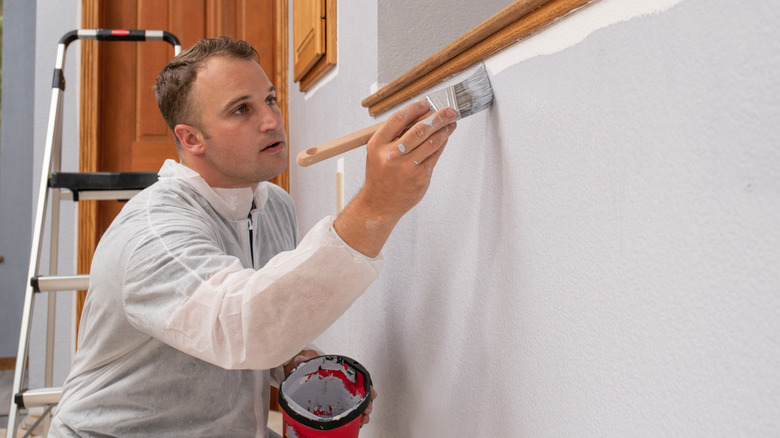
Professional painters who don't want to rely on tape really only have one other option to achieve precise edges: free-handing or, more specifically, using the cut-in method to paint with clean lines. Before jumping into the bulk of the wall, the painter will go in with a brush at an angle and use it to get the paint right up to the edges. This provides much more precision than they would get with a traditional roller. Plus, by starting with the detail work, the painter has a buffer that makes filling in the rest of the wall a breeze.
This technique is commonly used around light fixtures, door and window frames, baseboards, and corners — just about any edge or obstacle that might interrupt the movement of a paint roller. It may seem like a stressful and labor-intensive job, but if a painter is experienced, they can cut-in significantly faster than taping and achieve similarly crisp results.
There are situations where tape still reigns supreme, even for professionals. If you're creating a two-toned wall or a linear pattern, taping beforehand is absolutely necessary. The same goes for walls painted with a sprayer — it's necessary to mask nearby surfaces to protect them from overspray. Some professionals swear that taping is the only way to get a truly sharp line, and it's more than worth the effort if you pride yourself on a perfect job, but at the end of the day, both techniques can provide great results if they're done carefully and precisely.