

Boomers Can't Stand These Modern Appliance Trends
We may receive a commission on purchases made from links.
It's always interesting to see how members of different generations look at home design. For example, there are myriad home decor trends that every millennial has likely had at one point, but which, for boomers, feel as far from "good design" as it's possible to get. And it's not just decor that divides opinion. It's exactly the same with appliances. Smart appliances, for example, while satisfying and convenient for some, feel frustrating and complicated to others. Certain modern finishes lack the timelessness that baby boomers crave from their kitchens, and as for appliances with touchscreen displays (or worse, without handles), well. It's best not to ask what boomers think about those. Or is it?
In exclusive interviews, we reached out to interior design, home staging, and appliance experts to see what, in their experience, boggles the minds of boomers when it comes to kitchen appliances. Some of their answers were unsurprising, especially given some of the other home design trends that boomers can't stand. Others were genuinely eye-opening. As you'll see below, we learned the types of appliances that boomers prefer to use, along with where they prefer them to be placed. We learned the kinds of technology that owners of this generation are happy to live without, and gained some insight into where boomers prefer to buy their appliances. We even discovered the types of finishes that boomers crave in their kitchen appliances, and spoiler: it's not matte black! Whether you're selling your house, or are simply curious to know what makes baby boomers buy appliances, we're sure you'll find our experts' insights every bit as enlightening as we did.
Smart appliances and AI feel far from an intelligent choice for boomers

If you've recently come to the conclusion that there's simply no need for a smart refrigerator, you're not alone. That's certainly the viewpoint of the baby boomer generation. So says Amy Chernoff, appliance expert and vice president of marketing at AjMadison. In fact, in an exclusive interview with House Digest, she explains, "The biggest pushback I hear is that appliances are becoming more complicated than they need to be." Not only that, but they're often more expensive up front, too. And for those who really only need their fridge to refrigerate, then such appliances beg the question: are they really worth it?
As for what specifically puts boomers off, Chernoff points to things like app controls, voice command, and AI-powered cooking or laundry assistance, which tend to be viewed as more trouble than they're worth. They can be useful, she says, "but some shoppers see them as more technology to set up, learn and potentially repair." The reality, she adds, is that "they really just want the appliance to perform its basic job well." In other words, if you're buying appliances with boomers in mind — and you, yourself, are unsure whether you need smart or AI-powered technology — you're probably better off saving your money.
Appliances without traditional handles are more problematic than practical
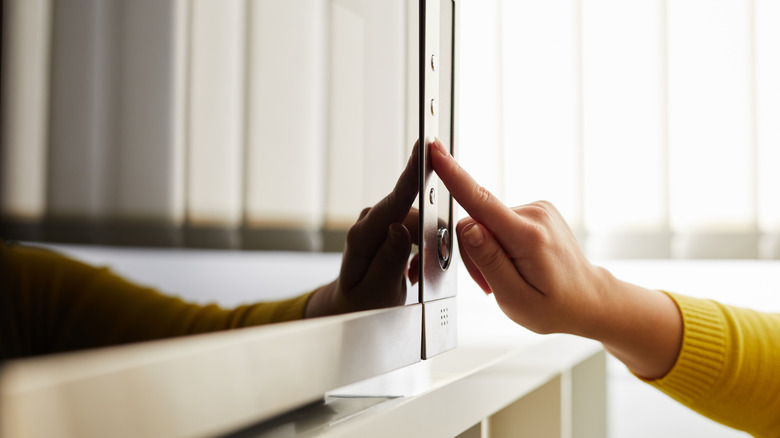
Handleless or push-open cabinets are high on the list of modern kitchen trends that boomers can't stand, and the same can be said for appliances. That's according to Cara Woodhouse, founder and chief creative officer at Cara Woodhouse Interiors. In her exclusive interview with House Digest, she explains, "Many of my longtime clients don't love appliances with no handles." Instead, they prefer a visible handle, which makes an appliance easier and more intuitive to use. Not only that, but as Woodhouse puts it, "a push-to-open door doesn't always cooperate when your hands are full or wet."
Another reason that handleless appliances rankle the sensibilities of boomers is that they lack character. Sure, they're sleek and minimal. But that's not really what most boomer homemakers want in their kitchen. Instead, says Woodhouse on how she approaches appliances in her boomer clients' designs, "I'd rather choose beautiful hardware, even something vintage-inspired." That way, she explains, the appliance remains easy to use while layering much-needed character into the kitchen.
Appliances bought from big-box stores often lack the service and warranties that boomers prefer

They don't make them like they used to. Does that sound familiar? According to Whitney Vredenburgh, owner of Nested Spaces Home Staging & Design, this is a common observation from baby boomers. In an exclusive interview with House Digest, she says how clients of this generation often talk about appliances whose shortcomings (and, indeed, short lifespans) make them feel disposable. This is echoed by Woodhouse, too, who explains how her clients often feel frustrated by appliances that feel flimsy or seem built to be replaced in a few years. So, what? Should you equip your boomer-friendly kitchen with vintage appliances from the thrift store? Well, no, not quite. Instead, says Vredenburgh, you may be better served by purchasing appliances from a local independent store, rather than somewhere like Lowe's or Home Depot.
The reason is an interesting one. It's not that the appliances from big box stores are strictly less reliable than those bought from a local retailer. Instead, it's about the warranties, as well as the way in which those warranties are serviced. As Vredenburgh puts it, "If an appliance has an issue, the client is not calling the manufacturer but the local company who sends someone out." In other words, problems are likely to be solved more quickly versus pressing 2, then 4, then 2 again in order to reach an anonymous customer advocate. As for the warranties themselves, boomers can also gain an edge sticking with the most trustworthy and reliable appliance brands. For example, says Vredenburgh, "My boomer and generation clients prefer a Speed Queen washer and dryer. They are one of the few manufacturers with a 5- to 7-year warranty."
Low-level appliances are a pain to use
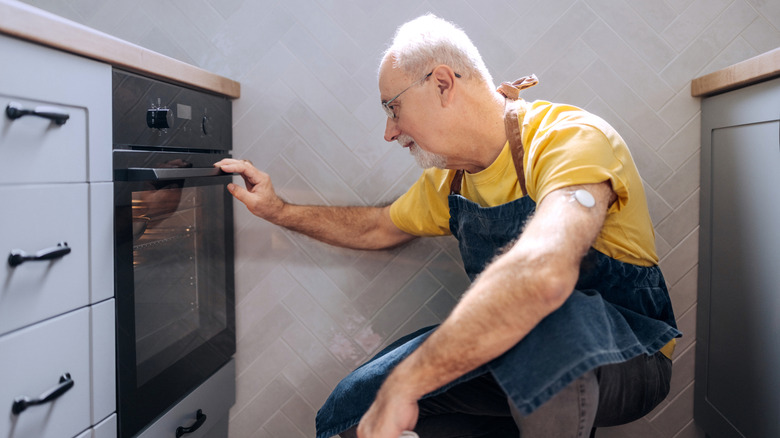
Another practical pet peeve for boomers as far as appliances are concerned are those which are situated at low levels. In an exclusive interview with House Digest, Craig Gritzen, founder and principal designer at Curated Style Collective, says it's a common pushback from baby boomers, who often feel they're far too low for daily use. It could be a traditional range with an oven below the cooktop, a microwave drawer below the counter, or large drawers right at the bottom of a freezer. All of these, he says, require bending in order to use them. "Some of these movements can become less comfortable as we age, so ergonomics is an important consideration, especially for boomers thinking about aging in place."
So, what to do instead? "A separate cooktop with a wall oven, for example," says Gritzen, "can make cooking more enjoyable by allowing the oven to be installed at a more appropriate height." Vredenburgh weighs in here, too, explaining that she works with a cabinet maker who regularly adjusts the height of appliances to meet their clients' needs. For example, she says, "We had a client who viewed the initial renderings for their wall oven. They requested that we add a second drawer below the wall oven to raise up the oven so that less bending was required."
Touchscreens and digital controls look sleek, but feel far from simple
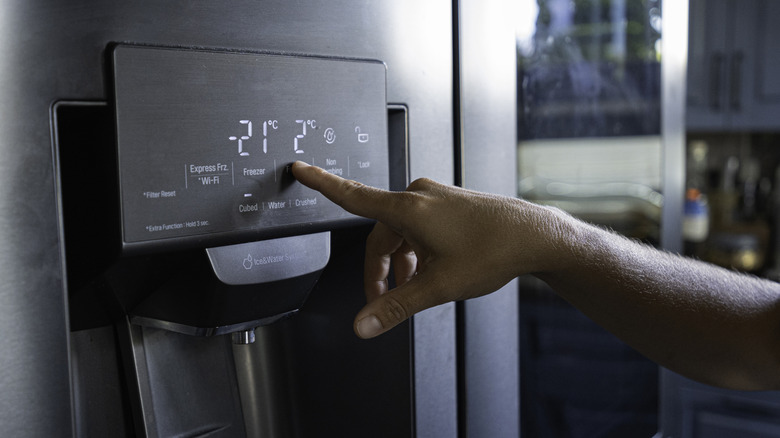
Like handleless appliances, Gritzen explains that many boomer shoppers also tend to steer clear of digital controls. It's not just boomers, either, in fact this modern appliance trend is already going out of date in the wider world of appliance design, with many questioning such devices' long-term durability. That's good news for boomers, who, according to Gritzen, seem to lean towards everyday usability and comfort in their design choices. "They often shy away from designs that add complexity at the expense of ease of use," he explains, adding, "They have a strong sense of what makes a kitchen easy to live with."
Chernoff is inclined to agree on this point, saying, "A lot of boomer shoppers still prefer a knob they can turn and a button they can physically press." Yes, she admits that touch panels look sleek. The trouble is, those small icons, control locks, and myriad settings hidden inside menus can make simple tasks unnecessarily complicated. That's especially true, adds Chernoff, "when the panel doesn't respond immediately and the solution starts to sound like rebooting a computer."
Appliances in trendy colors feel anything but timeless
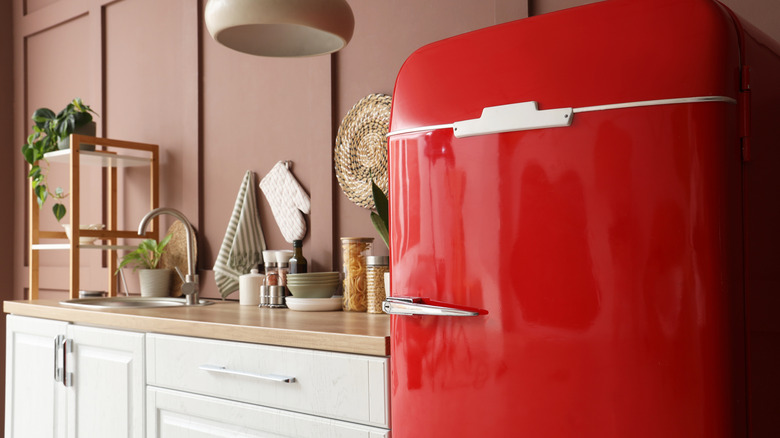
There are plenty of home trends to avoid falling for in 2026, like going overly bold with patterns or defaulting to matte black fixtures and hardware. It's even more important to avoid them if you're designing your space with boomers in mind. Nowadays, appliances are available in myriad trendy colors, which is great for creative homemakers. The problem, says Gritzen, is that "Boomers have lived through many appliance color cycles, and I see hesitation around very specific finishes, especially statement colors." He adds that older homeowners have seen colors ranging from avocado green to glossy black come and go. In turn, that means that any appliance in a rad new color is sure to be met with skepticism.
Another point to bear in mind here, as Gritzen points out, is that large-scale appliances are expensive to replace. Instead, if you're creating a space with boomer buyers or household members in mind, he suggests stainless steel. Vredenburgh agrees, explaining that her boomer clients "are not, generally, looking for a matte white or black appliance." Instead, she says, "Many of my clients prefer a stainless or paneled appliance option." The risk with bolder finishes is that they can become dated, and according to Gritzen, many boomers have experienced just how quickly this can happen.
Boomers prefer the look and power of traditional hoods over downdraft vents
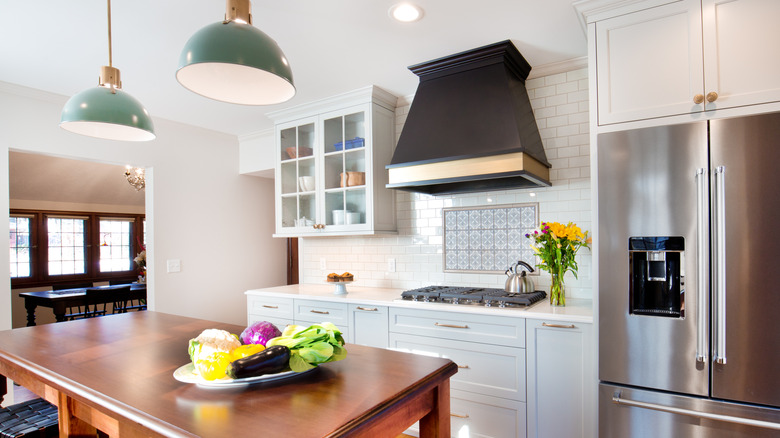
If there's one kitchen detail that's often overlooked but which can have a major design impact, it's the range hood. Nowadays, technology gives modern homemakers various choices when it comes to cooking ventilation, including modern and sleek downdraft systems. Built directly into the cooktop (or just behind or beside it), these systems pull fumes downward. The issue with these, says Woodhouse, is that according to boomers, "they don't clear steam and cooking smells the way a proper hood does, especially in an open kitchen."
It's not only boomers that think so, either. In fact, in kitchens where a pared-back look is not required, it's widely agreed that hoods are the more effective, functional choice. For this reason, Woodhouse explains that boomers tend to appreciate a statement range hood, which brings us nicely back to the point on design. While downdraft systems are better suited to sleek, ultramodern, and minimalist kitchen spaces, that's not really what baby boomers like in their kitchens. Instead, they favor fixtures and appliances that contribute to the design rather than trying to hide themselves from view. As Woodhouse puts it, "a hood that works hard and becomes a design moment is far better than ventilation that disappears and underperforms."
Induction cooking feels unfamiliar and can render cookware ineffective
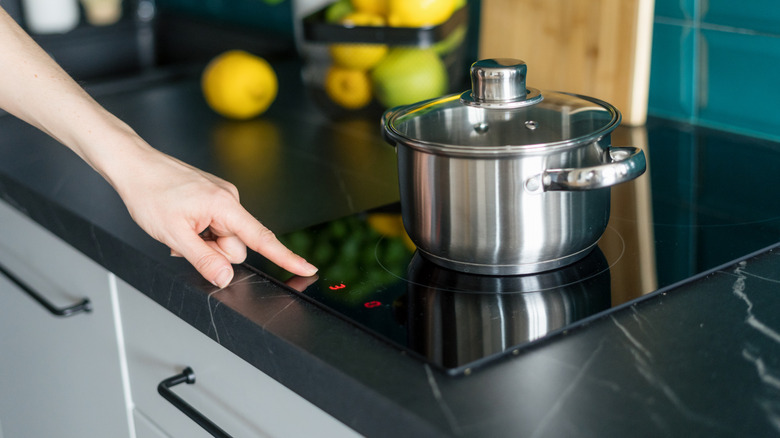
One downside of switching from a gas to induction stove is that, in many kitchens, you may need to have costly wiring installed in order to run it. Another is that, if you want your kitchen to appeal to boomers, this generation appears reluctant to adopt such modern kitchen appliances. As Chernoff explains, "Induction tends to have a slower adoption curve with this group." And it isn't that they don't trust induction to cook well. Instead, she explains, there are two separate problems.
Like any appliance type, there are pros and cons to induction cooktops, and they're applicable to any generation. Yes, they heat quickly, and as Chernoff points out, they offer precise cooking control. "But there's no visible flame," she says, and for boomers, "the response feels different from gas or traditional electric." Not only that, but for those who have been used to cooking on gas for decades, a switch to induction can feel unfamiliar, with no significant "upside" to make it worth the switch. It can also render certain cooking equipment, like pots and pans, incompatible. This is not only annoying, but such equipment is also potentially expensive to replace — frustrating for those who invested in premium gas-compatible cookware. Add to all this the fact that boomers generally don't gel with touch-screen displays (which describes most induction stovetops), and it's really little surprise that they have little interest in induction.
Invisible, integrated appliances feel less intuitive
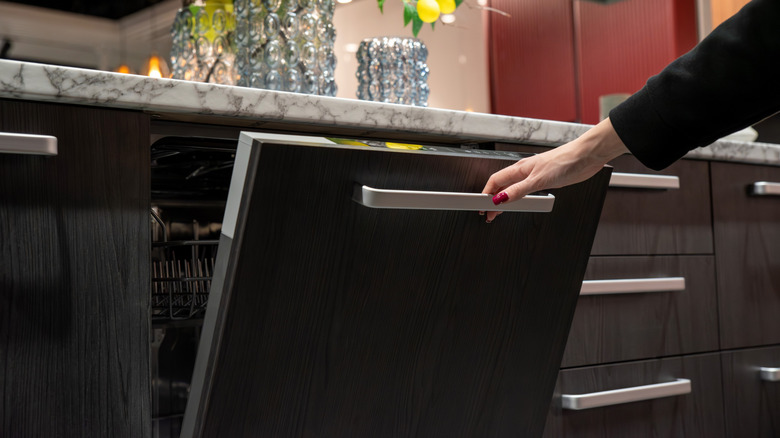
If you're starting to sense a pattern here, then ditto. As well as handleless appliances and those without easy-to-use knobs and dials, invisible kitchens are another modern trend that boomers could happily live without. This may be difficult to swallow for modern homemakers with more minimal sensibilities. After all, integrated appliances can lend a space a sleek and architectural look, and what's not to love about that? The problem, says Gritzen, is that it makes a kitchen feel less intuitive for many of his baby boomer clients.
It could be a refrigerator fronted with panels to match your pantry cupboard. Or you might choose to hide away the front of your dishwasher in the middle of your main run of cabinets. In Gritzen's experience, he says, "some boomer clients dislike taking this minimalistic trend too far." Instead, they favor kitchens where the function of the space is visually clear, and therefore easy to use. "Visual minimalism can reach a point where you are wondering which cabinet pull opens the refrigerator and which one opens the pantry."
Many boomers struggle to use oversized professional ranges to their full potential
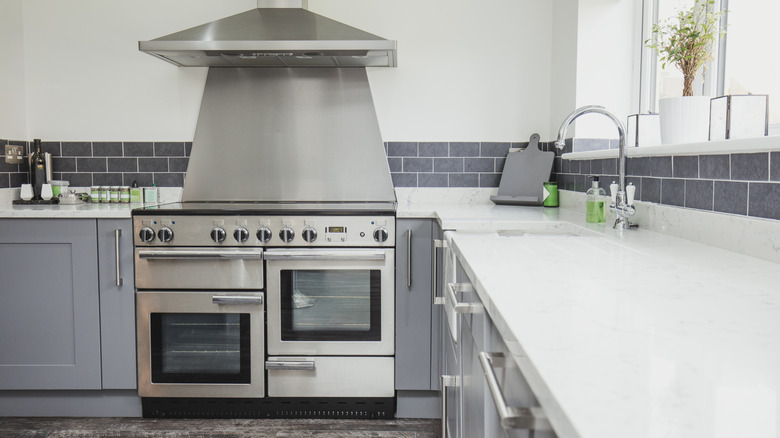
Premium, professional-grade appliances are surely high on the list of anybody shortlisting the features of a dream luxury kitchen. Or are they? The answer is that it depends, to an extent, on the appliance. In the case of oversized, professional-grade ranges, they tend to fall rather short of the hype as far as baby boomers are concerned. As Woodhouse puts it, "A huge pro-style range can look impressive, but many of my clients find it's more than they actually use day to day."
This makes sense. Larger appliances naturally require more upkeep and daily cleaning, since there's more of them to wipe down. Secondly, and perhaps more importantly, they're rather pointless for those who only need a couple of burners and a single, reliable oven. It should also be said that a pro-level range is eye-wateringly expensive compared to a standard domestic-grade appliance. As Woodhouse says, "If it's hard to clean and most of it sits unused, it isn't doing its job." And if it's not doing its job, then all it's really doing is soaking up space. Instead, Woodhouse's baby boomer clients tend to prefer a range size that matches how they cook. This, she explains, "frees up space and budget for the things they use every day."
Single-purpose specialty appliances take up space unnecessarily
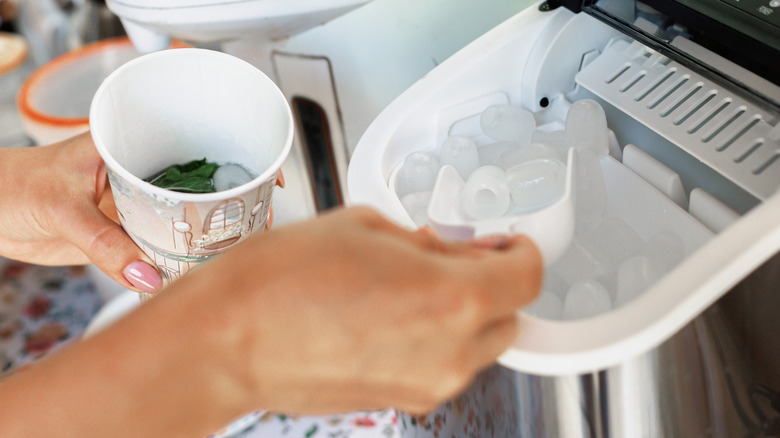
Some of the hottest luxury kitchen trends right now include things like separate beverage centers, ice makers, wine fridges, and more, many of which serve just a single purpose. Such appliances have a place in certain households, and far be it from us to put you off that temperature-controlled wine wall that you've been dreaming about! All we're saying is that, in the minds of many baby boomers, they're often seen as unnecessary. Instead, they tend to value flexible storage over specialty appliances. As Gritzen says, "A refrigerator can chill wine, make ice, and keep other beverages cold, so separate appliances for these functions can be harder to justify."
Once again, it boils down to the fact that baby boomers have seen a great many trends come and go. Because of this, they have a strong understanding of which appliances they will actually use, and more importantly, which ones they simply won't. Now, that doesn't mean homemakers from this particular generation avoid innovation. It's more that they're selective about what will actually enhance their daily lives. Importantly, adds Gritzen, they most value appliances that will prove useful "without the hassle of taking up valuable storage space or creating additional maintenance or repair costs."