

Make Handleless Metal Files Easier To Hold With An Item That Usually Ends Up In The Trash
We may receive a commission on purchases made from links.
Metal files are essential for at-home projects, but while you're shopping around for the right metal file for every job, you might be shocked by what you find. Quite a few brands forgo the included handle and sell just the file, leaving the tang exposed. This doesn't mean that the file is safe to use without a handle — it's just an invitation to buy this part separately. Investing in a cheap universal option, like internally threaded screw-on handles or wood handles, is a popular choice, but if you want to skip the trip to the hardware store, a wine cork can provide the cushioning you need in a pinch.
Handles are important to have mainly for safety and comfort. If you attempt to use your file without anything covering the end, the constant pressure of metal on your palm won't be particularly pleasant. There's also a chance that you'll apply too much pressure to the base of your palm and send the metal end straight through your hand. So it's safe to say we don't recommend utilizing one without a handle. Installing a wine cork on the file is similar to setting up a wood handle, and the process is fairly simple. To make the tool every DIYer needs to own, make sure you have a cork, your file, a drill, and a bit smaller than your file's tang.
How to use a cork as a metal file handle
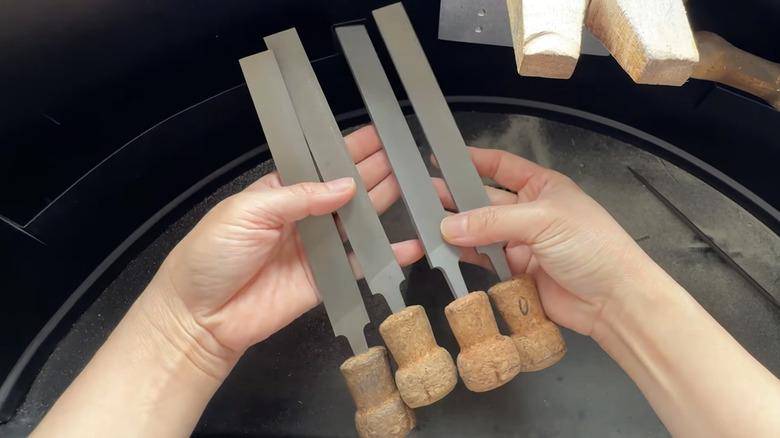
You'll want to start this process by selecting the right kind of cork. While any cork is better than nothing and lets you repurpose a common household item that would otherwise end up in the garbage, champagne corks with a wider design and rounded top will be much more comfortable for this job and will rest in your palm during use. Plus, since they are a bit bulkier, if you have smaller hands, you may find it easier to grip champagne corks than regular handles that are longer and slimmer. If you don't drink, you can also find sparkling juices that come capped with corks, or pick up Widgetco Authentic Champagne Corks online.
From there, all you need to do is drill a pilot hole into the flat surface of your cork. Make sure to measure exactly how much of the tang you want to cover to figure out how deep to go. Too shallow, and the cork might fall off. Too deep, and the cork could start to split. Once it's drilled, gently work the tang into the hole until it feels secure. Some DIYers choose not to pre-drill and instead use a hammer to force the cork onto the file, but drilling the perfect pilot hole makes the process a bit simpler, protects the cork from splitting, and ensures the handle goes on straight. You can skip this step if you don't have a drill on hand, but you'll need to use a lot more manual force (and caution) to get the job done.