

Cleaning Your Waxed Furniture With Vinegar: Why It's Not Recommended
We may receive a commission on purchases made from links.
Furniture wax is a simple product, but if you're refurbishing wood furniture or attempting to seal the finish on a painted item, it can make a big difference in the overall appearance and durability of the piece. It's applied over an existing layer of finish, similar to floor waxes, and helps to boost the sheen and smooth out any small imperfections that might have an impact on the overall look. While furniture wax is easy to apply and often seen as a budget-friendly add-on that will make your items look better, it does come with some specific care instructions that are necessary to keep in mind when it comes time to actually use the piece. You shouldn't clean waxed furniture pieces with harsh cleaners, and despite the fact that it's a natural cleaning ingredient that's gained a reputation for being safe, that includes vinegar.
Vinegar might be non-toxic and fairly gentle compared to store-bought cleaning products like bleach, but that doesn't mean that it can be used on every surface. Furniture waxes are most frequently carnauba- or beeswax-based (some also utilize petroleum-based ingredients like paraffin), but across the board, acidic cleaning products like vinegar will break them down and undo the work you did to apply this layer in the first place. With that being said, there are situations where vinegar can come in handy for restoring wax furniture or removing unwanted wax, though it's not seen as the best treatment. For regular cleans, stick with products that are specifically known to be safe for use on these surfaces.
When vinegar can be used — and what to use to clean waxed furniture otherwise

Vinegar will break down the waxed finish on furniture items, and while this is a negative characteristic during routine cleans, it can be a pro if you're intentionally trying to strip away old wax. Coats of wax can build up throughout the years and create a dull shell that detracts from both the feel and the appearance of the item, so using certain solvents can help to cut through this layer and bring the item back to its former glory. A diluted vinegar and dish soap solution is often recommended as a DIY alternative to store-bought products, but mineral spirits or specially formulated solutions, like Mowhawk Wax-Wash Remover, are generally seen as more reliable and safe. While vinegar will likely do the job, it could cause damage to the underlying finish if you go too deep due to its acidity.
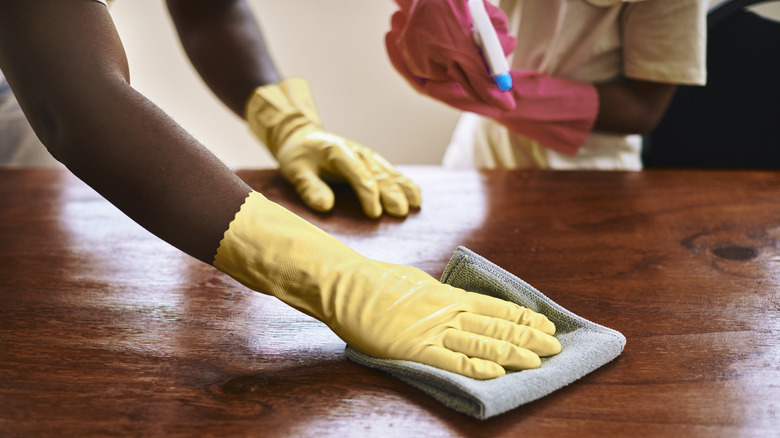
For regular cleaning of waxed furniture items, all you really need is a soft cloth. Wipe the surface of the material to clear away dust or grime without any potential for causing damage to the wax layer. If there's a more stubborn spot or stain, you can go in with a slightly damp cloth and some mild soap. Gentle cleaning shouldn't disrupt the wax coating at all, but if you've previously used vinegar or another harsh product to clean wood furniture, you can always undo the damage by lightly buffing on some additional wax to affected areas.