

How To Reduce Wasted Paint Using A Roller Grid And A Bucket
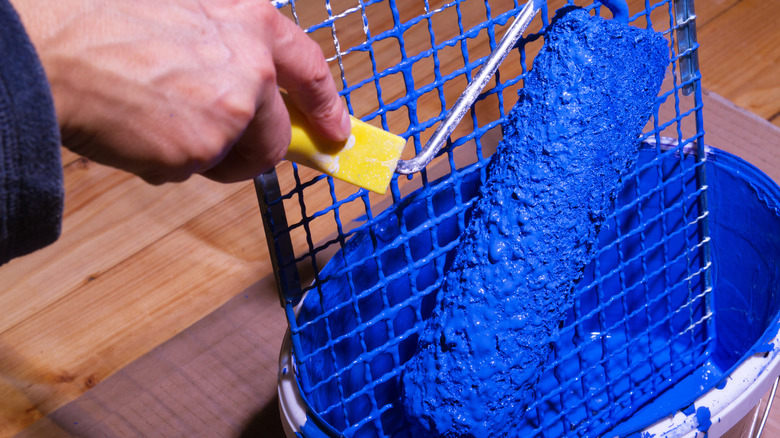
The actual process of painting your home like a professional isn't all that time-consuming or difficult — it's the prep and cleanup that really start to dig in to the day. While there aren't many ways to cut down the amount of time you have to spend on priming or taping (beyond trying out the cut-in method), there are some steps you can take to minimize cleanup. Forgoing the paint tray and opting for an in-bucket roller grid is one of the best ways to keep paint contained and make the end of your project much more efficient.
Essentially, roller grids clip right on to the rim of your paint bucket, giving you a surface to remove excess paint from your roller. This eliminates the need for a paint tray entirely — no paint needs to be poured out of the bucket, and therefore, significantly less of it will be wasted. Once you're done for the day, all you need to do is remove your roller grid from the bucket and replace the lid to keep the remaining paint from drying out.
Roller grids are most commonly used alongside 5-gallon paint buckets, so you'll frequently see products that are about 9 inches wide, but there are also 4-inch and 6-inch grids available if you're using a 1- or 2-gallon bucket with a smaller roller. Regardless of the size you choose, this add-on won't cost you an arm and a leg. You can pick one up for between $3 and $5, and it can be reused for several projects if you want to save some cash.
How to properly use — and reuse — a paint roller grid
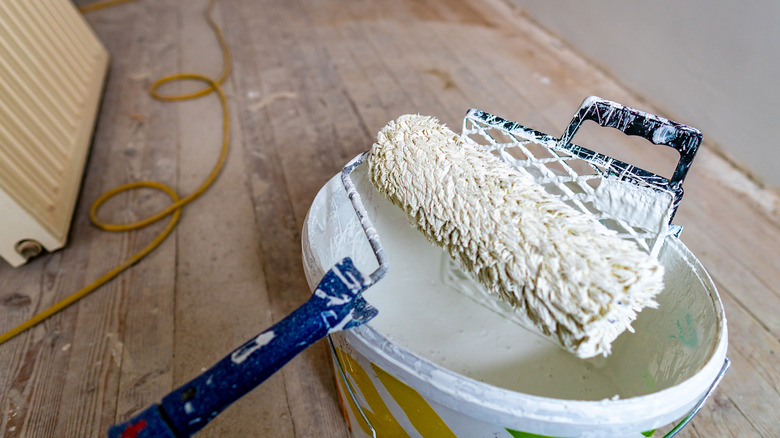
Paint roller grids are pretty simple to work with. Clip your grid onto the inside of your bucket full of paint. Once it's time to get going, slightly dip the roller into the paint and use the grid as a surface to work the liquid into the fibers, spread it evenly, and remove excess. Try to avoid fully submerging the roller in the paint to minimize drips and mess. As you run the paint roller against the grid, make sure you're only applying pressure in a downward motion — applying pressure upward could lead to splatters outside of the bucket. If you accidentally make a mess as you get the hang of the technique, remove any paint spills right away with a clean cloth.
That's really all you need to know — repeat the process throughout the paint job, and make sure your pressure on the grid is light and controlled every time you use it. Large buckets of paint are much more difficult to accidentally step on or tip than basic trays, but you should still be careful to not push too hard on the bucket while you're using the grid. Once you're done, remove the grid and pop the lid back on to save the paint for touch-ups or your next job.
Not every professional painter will reuse the same grid for multiple jobs, but if you bought a durable product, there's no reason to waste it. Let the paint dry on the material and store it away if the grates aren't too clogged, or give it a wash along with your roller covers and brushes.