

Why Do Professional Painters Add A Conditioner To Paint?

We may receive a commission on purchases made from links.
Whether you're painting trim, a single room, or your entire house, achieving a streak-free finish can be one of the most challenging — and frustrating — aspects of any painting project. Luckily, a simple hack can help eliminate unsightly roller marks and brush strokes for good. In order to paint your home like a professional, do as the pros do and add conditioner to your chosen paint.
This little-known trick is simple and affordable, but it makes all the difference. Just like some professional painters add water to paint to help ensure a smooth finish, many rely on the power of paint conditioners to do the same. These thin out the paint, thus helping it roll on more smoothly. What's more, a conditioner keeps the paint wet longer, so you can say goodbye to ugly overlap marks. Thanks to the increased dry time, no single section will dry out before the rest, giving you added time to work over edges and blend various sections of color together, banishing visible divides or blocks of paint.
Simply add the conditioner to your chosen paint according to the label's instructions, mix thoroughly with a stir stick, and get to work. Just keep in mind that any conditioner labeled "floetrol" will not be suitable for oil-based paints or clear varnishes since it's water-based — for those, you'll need an oil-based "penetrol" conditioner.
Why you should use a conditioner for your next paint project
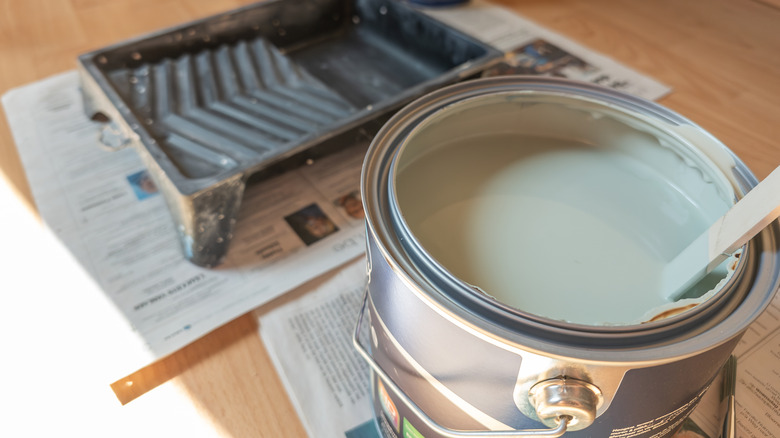
Achieving a pro-level paint job isn't as intimidating as it sounds. The key is to start with high-quality supplies and follow all the necessary steps without cutting corners. Start with the best brushes and rollers, making sure to wrap painter's tape around the new rollers to pull off any excess fuzz. Equally important is priming the walls and using a trusted paint supplier for your chosen hues. Conditioners won't change the color or finish of most paints, but it's a good idea to mix a small test amount together first to be absolutely sure.
Paint conditioners are suitable for both indoor and outdoor paint projects and are particularly helpful when painting trim. Regardless of the size of your undertaking, a good conditioner will ensure a smooth finish with no visible strokes or overlaps on a multitude of surfaces, from drywall to wood. One highly-rated option used by pros is Flood Floetrol, which costs just under $12 for 32 ounces on Amazon (though as a reminder, this should only be used with latex or acrylic paint). This amount is enough for four gallons of paint if you're using a brush or roller, or one gallon if you'd rather use a sprayer. Shake it up well, stir it into the paint, then continue as normal — but not before rubbing some conditioner onto the top of your paint brush. Pros rely on this trick, coating the bristles near the handle with conditioner, to stop the brush from getting crusted up with dry paint as they work.