

No Sanding Necessary: Give Painted Wood A Distressed Look With A Pressure Washer
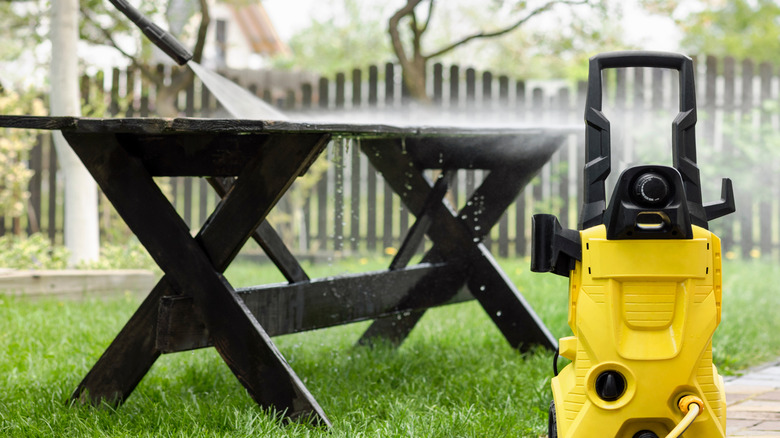
Perfectly painted, polished, and finished wood is great in most cases, but not all. If you want to enhance your home with a farmhouse aesthetic or love boho and vintage inspired interiors, then you might like how painted wood looks when it's a bit distressed and worn down. But instead of waiting for the paint to naturally chip and fall off (this could take years), you need clever DIY ways to speed up the process. One way to do it is with a pressure washer, and it's beyond easy.
The hack intentionally weathers wood for a more rustic look by stripping the paint in some areas. It's a simple trick: just use a pressure washer as you would if you were planning to completely strip the paint from the wood, but instead work on the area unevenly so that the paint only lifts of in some spots, while other parts of the wood remain painted and untouched.
You can use this hack on all sorts of painted wood pieces. For example, use it on wooden furniture like a dresser, table, or credenza. You can also do it on smaller pieces, like wooden frames or a small stool. Or, you can use this technique to give a distressed and rustic look to a wooden fireplace mantel, which during the holidays, is the perfect place to hang stockings from. This is a great way to effortlessly add vintage decor into your home, turning something you just painted or acquired at the thrift store into a piece that looks like it's been in your family for generations.
How to distress painted wood with a power washer
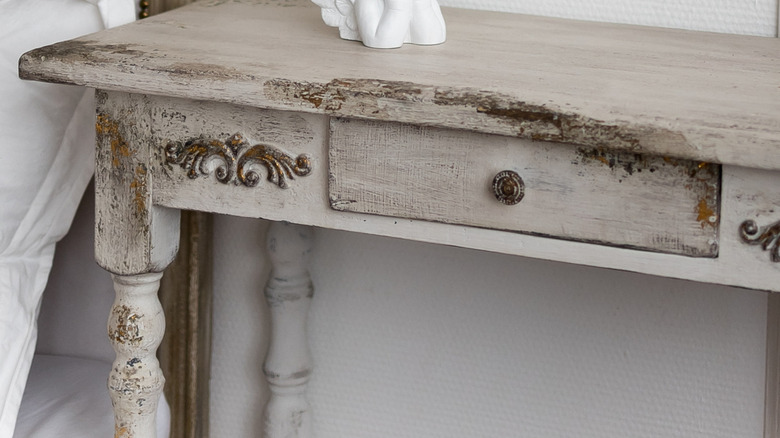
For this DIY, the first thing you have to figure out is which pressure to use. If you want to gently strip the paint, as you would with sandpaper, start with lower pressure and a 15 to 25 degree nozzle tip. If you want to deeply distress the wood to give it a worn-out look, then higher pressure will be best. Generally speaking, different types of wood and paint react differently to pressure washing, so there isn't a magic PSI number. Instead, start low and work your way up in intensity based on the look you're trying to achieve and how the wood reacts.
This process gets water everywhere, so it's best done outside. Before you get started, make sure to wear protective gear, including safety goggles and shoes. This will protect you from the high-pressure water (which is strong enough to break skin) and from any wood or paint chips that could come flying in your direction. Then, hold the pressure washer at a 40- to 45-degree angle with the nozzle between 8 and 12 inches away from the surface where you want to remove paint. Work in the same direction as the grain, and linger on areas you want particularly distressed. Where you want the paint untouched, move the nozzle further away or stop the pressure washer.
It's worth noting that pressure washing comes with risks, especially with wood. Pressure washing may cause streaking and the wood grain to come undone or splinter. Therefore, use this hack on pieces that aren't sentimental or highly valuable. Cheap thrills from the thrift shop or DIY projects are ideal.