

The First Thing Professional Painters Do To Get A Smooth Edge On Popcorn Ceilings
We may receive a commission on purchases made from links.
A fresh coat of paint is one of the best ways to transform a room. Whether you go all white, color-drench, or somewhere in between, you'll want to tackle the task with a few tips to paint your home like a pro. One challenge many DIYers run into is the popcorn ceiling. Even if you're leaving it intact, it can be tricky or nearly impossible to get a smooth, even paint line at the top edge of the wall. Instead of leaving bumps that will drive you crazy every time you look up, do what professionals do and use the edge of a screwdriver to scrape a ridge along the perimeter of a textured ceiling.
While you'd normally use blue painter's tape to line the border of whatever area you're painting, there's no way to create a flat, thorough seal on a bumpy surface. When you make the ridge, though, it naturally captures the edges of the paintbrush bristles and delivers a straight line along the top of the wall, sparing your ceiling from spillover if you keep a steady hand. The ridge should be narrow enough to be unnoticeable, and a ¼ inch flathead screwdriver, held nearly parallel to the wall, should be slim enough to do the job. Alternatively, you could use a putty knife or a painter's tool, like the Bates Choice 10 in 1 Paint Scraper. These items are among the must-have tools for a flawless home paint job.
Protecting your health and your walls as you paint popcorn ceilings
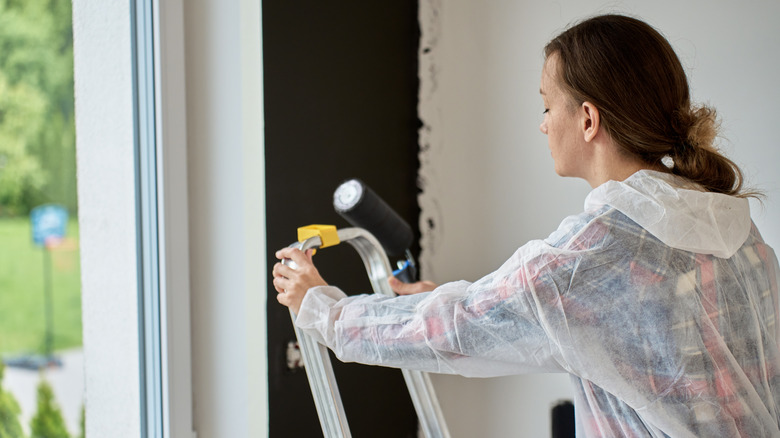
There are a few crucial things to keep in mind if you decide to take this approach: Be careful with the texture itself, remove any remaining debris before you proceed, and wear the right protective gear to work with a popcorn ceiling. When running the screwdriver along the joint of ceiling and wall, press lightly against the corner. You don't want to accidentally puncture the drywall paper tape beneath the existing paint. Remove any dust by gently running a vacuum wand with a brush head attachment around the perimeter. Your paintbrush will stay free of debris so all that's left on the walls is whatever paint color you've chosen.
As for the ceiling material itself, you will need to take basic safety precautions. In homes dating to the late 1970s and early '80s, their textured ceilings may contain asbestos, and even the smallest amount can endanger your health. It's a good idea to test your popcorn ceiling for asbestos first with a kit like this Pro-Lab Test Kit for home that includes lab analysis and results within three to five business days. Move your furniture to the center of the room and use canvas drop cloths to protect the areas where you're working. Lastly, be sure you're physically covered, too. Professional painters wear PPE, and so should you. Coveralls protect your clothing and skin. Safety glasses, disposable gloves, and a reusable respirator mask will protect your eyes, skin, and lungs as you work. You'll be ready to tackle the job and stay safe and healthy.