

Forget Curtains Or Blinds: There's A More Creative Way To Decorate Windows
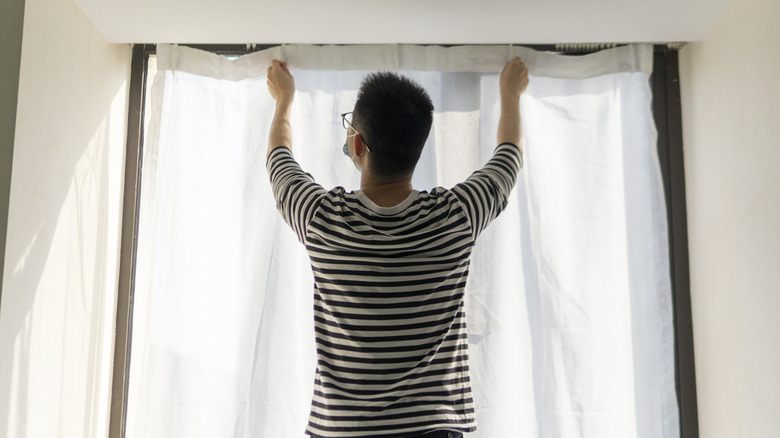
Curtains and blinds aren't just for light-blocking — they have a massive impact on the overall look of a room and can act as one of the quickest ways to bring some variation in texture, pattern, and color to a space. If you're a lover of natural light, however, installing heavy drapery over all your windows simply won't cut it, and in high-traffic areas or cramped corners, a massive curtain is more of a hindrance than a help. Luckily, there's a solution that can still bring some interest to your windows without obscuring the view or blocking out sunlight: Paint.
Painting a decorative border around your window isn't unheard of, but we think it should be much more common. This little accent is incredibly easy to DIY and highly customizable, so whether you're going for a quirky maximalist vibe or a more subtle sprinkle of pattern, you're sure to find an approach that will work for your style and home's design. This affordable paint project instantly adds a pop of mood-boosting color, so if your space is feeling a bit drab and you have a free afternoon, there's no reason not to try it out. If you're not a fan, you can always paint over it — that's the magic of a paint-based DIY!
For this project, all you'll need is your paint (or paints) of choice, some painter's tape, and a few brushes that will allow you to achieve your desired level of detail. If you're not feeling all that confident in your hand-painting abilities, this is also a great opportunity to try out some smaller stamps or stencils.
How to paint your own window border
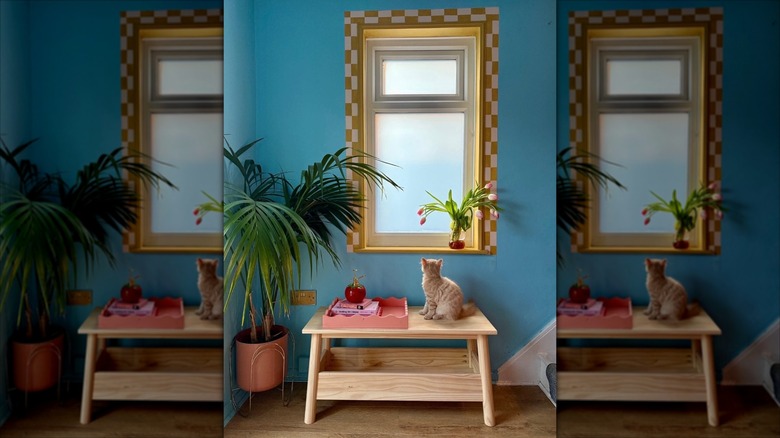
The exact way you'll go about painting your window border will depend on your intended design, but after you've settled on the overall look you want, the first step should be taping the edges. Unless you want your design to flow freely into the wall, tape will help to create those lines and form a more frame-like look. Paint the area sectioned off by the tape with your base color of choice, and allow it to dry. Follow up by using some low-adhesion painter's tape to make a checkered design, hand-painting some folky florals, or using your stamp or stencil to create a regular, consistent pattern. While many professional painters rarely use painter's tape for basic projects, a floating design like this will really benefit from the additional crispness and protection.
After the paint starts to dry down and you gently peel off your tape, you'll reveal the gorgeous design you've created. There's a chance things won't be perfect, though. If you ran into some issues with bleeding around the edges or inconsistency in the design, now is your chance to go in with a smaller brush and do some touch-ups. A little imperfection along the edges might not seem like that big of a deal, but when you're working with a design that's inevitably going to become a focal point in the space, it pays to be a bit of a perfectionist.
How to style this accent and make it your own
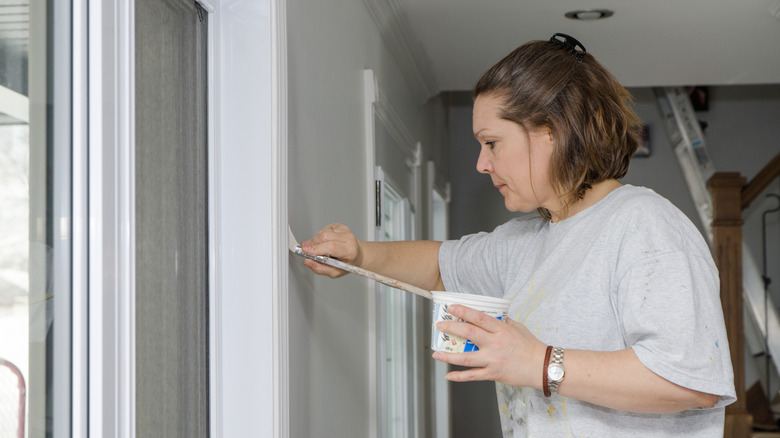
While this window trim accent is stunning on its own, there are plenty of ways to give it even more of an impact. One of the simplest options is carrying one of the colors you use in the design into the windowsill itself. It might seem like a small addition, but the little touch of extra color can make everything look more cohesive and even have an impact on the tone of the light coming into your room. While you still have your paints out, also consider carrying the same pattern down to the baseboards, around the edges of doorways, or even on the often-concealed edge of a door. All of these ideas present a great way to add a trendy, whimsical accent to your home.
This little painted accent will do a lot of heavy lifting in terms of sprucing up the design and adding interest, helping to minimize the need for a patterned or colorful curtain, but it doesn't mean that you necessarily have to forgo window coverings if you want to try out this hack. If you're working with a small space, window films are a great, low-profile option for adding more privacy. An inset Roman blind in a color that you included in the painted design is also fantastic if you're in need of some more intense light blocking and it won't cover your gorgeous paint job. DIYs like this are very easy to customize, so don't be afraid to adjust to your preferences or use an idea as a jumping off point for your own decisions.