

Kitchen Cabinet Trends That Are Unfortunately On Their Way Out In 2026
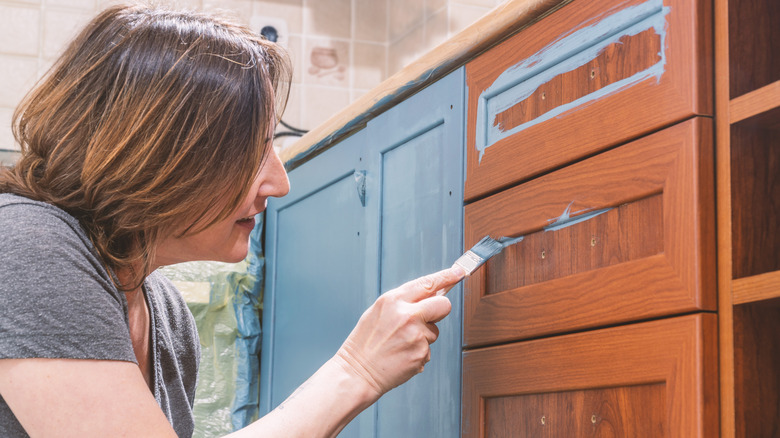
Given how much the average household uses the kitchen, remodeling it represents an exciting opportunity to elevate the time we spend at home. It's a chance to finally do away with those outdated kitchen trends that make your space like a nod to the noughties. It's also a good time to improve your kitchen storage and make it match the way you like to use your space. In both cases, your cabinets play a big part. Get them right, and you'll have a kitchen that feels both on-trend and genuinely useful. Get them wrong, and you'll almost certainly rue the money you spent to install them.
To help ensure you make the most of your kitchen remodel budget, we've pulled together just some of the kitchen cabinet trends that are on the way out in 2026. You'll find guidance on aesthetic choices, including outdated kitchen colors, as well as more architectural choices, like fluting and glass doors. We'll explore the types of finishes that are slowly but surely losing their shine among home designers. And if you suspect that open shelving may not be the best alternative to long runs of upper cabinets, you'll find that interior designers are, on the whole, inclined to agree. In other words, whether you're ripping out the entire kitchen and starting afresh, or simply re-paneling a couple of cupboards to bring things up-to-date, this guide has everything you need to keep your kitchen cabinets current.
All-white or gray cabinetry is best enjoyed on social media
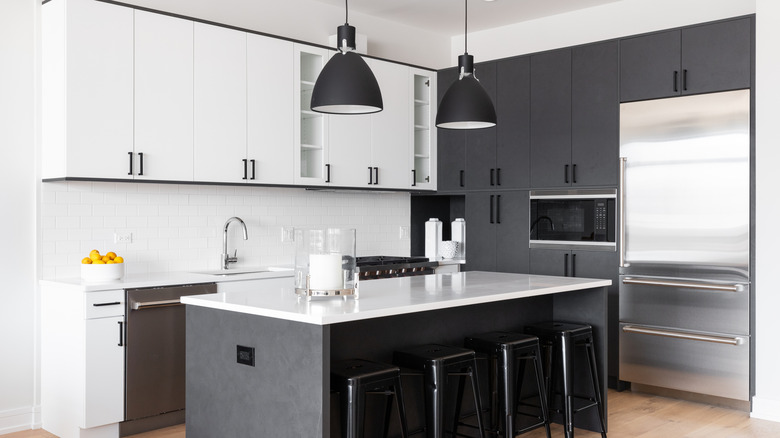
If there's a kitchen color trend that promises to suck the life out of your space, it's all-white, all-gray, or white-on-gray. While they promise a crisp, clean, neutral palette, and have been on-trend for years, designers are starting to feel such cool finishes are lacking in some needed warmth. They look great on socials, but with white cabinets especially, they can be hard to keep clean, especially in busy households. As for gray, there are simply better, more trendy neutrals out there that can work just as well for layering, but which also bring more warmth.
Speaking with Forbes, interior designer at Arterberry Cooke, Emily Carlin, explained, "We are continuing to evolve from stark white and grey kitchens and continuing to adopt bolder warmer colors." In fact, even this trend has begun to evolve, said Carlin, with soft sages and earthy mushrooms giving way to deeper tones like terracotta, brick red, and even plummy browns. You could pair your choice of cabinet color with warm hardware, like raw brass or warm nickel. The resulting design should feel layered and lived in, and importantly, it should feel more timeless. It'll certainly be easier to maintain than white, which is tricky for even the most fastidious cleaner.
Glossy finishes lack texture and feel overwhelming
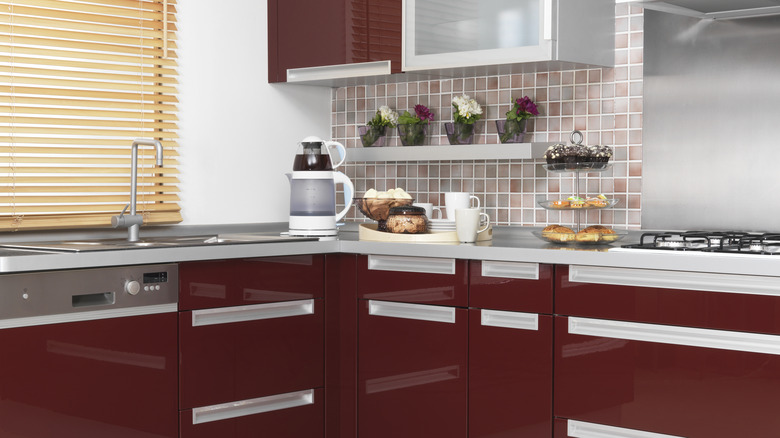
Another cabinet design choice that can quickly outdate your kitchen is high-gloss. As for why, there are actually several things with which style-savvy home designers are starting to take umbrage. Firstly, like stark white cabinets, glossy cupboards are trickier to keep in good condition. They show fingerprints and smudges more easily, for starters. Not only that, but if the finish becomes chipped — which, let's face it, is likely in a busy kitchen — they're trickier to rectify than, say, regular wood, which can be sanded.
Now, it's important to say that you shouldn't strictly avoid gloss altogether. Sarah Kuchar, owner and creative director of Kuchar Studio, explained to Martha Stewart that it can still be a trendy choice. However, she added, if you intend to use it, it's important to be conservative. In her own words, "Real luxury is layers of materials; gloss is best used sparingly, like jewelry." In other words, specify one or two cabinets in gloss — ideally those away from the busiest parts of the kitchen, where smudges and damage are more likely. More importantly, pair them with more rustic, textured cabinet materials, like wood. By mixing and matching this way, both the gloss and the more natural wood cabinetry will both stand out, rather than one or the other dominating the space.
Kitchen islands deserve better than navy blue
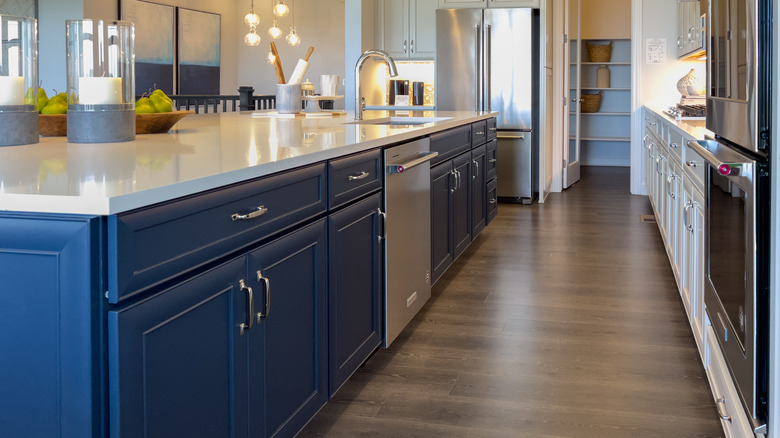
Not every kitchen has one, but for those that do, there are certain outdated kitchen island trends that designers say are now worth avoiding. One is navy-colored island cabinetry, which, for a long while, has been deemed an easy and beautiful way to lend a kitchen contrast. Unfortunately, just like anything else that becomes normalized in the world of fashion and design, the idea now feels done.
So said Tracee Murphy, founder of Trade Mark Interiors. Speaking with Martha Stewart, she noted a shift away from navy and white contrasts. "Homeowners are gravitating toward softer, more tonal color palettes that create a warmer, more cohesive feel while adding depth and personality." As for what that could look like on your kitchen island, Murphy highlighted colors like earthy greens or warmer, more saturated tones like muted plum. If there's one rule here, it's that designers want more warmth. But it's not a prescriptive trend. Instead, it's about finding it in a palette that suits you, which should be reassuring for those who crave creativity when it comes to designing their kitchen.
Walls covered in cabinets lack dimensional depth
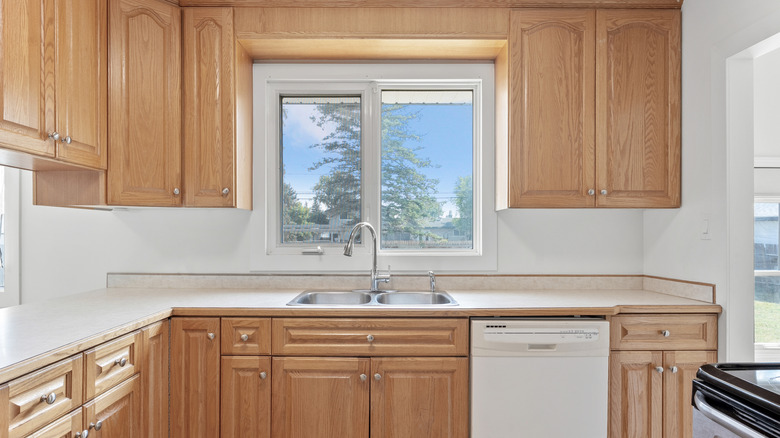
While there are lots of ways to maximize kitchen storage without upper cabinets, using them has long been considered an easy way to make the most of the available space. This is important, particularly in smaller kitchens, but the approach has lost its allure among designers. The reason is simple: Long, continuous rows of uniform cabinets lack character and design intention. In other words, they feel one-dimensional, which flies in the face of an increasing desire for more layered, textural designs.
So, what should you do? Should you do away with upper cabinets entirely? Should you replace them with long, open runs of shelving instead? Well, you could, but as we'll discover later, there are also some strong, trend-based arguments against open shelving, which presents something of a pickle for kitchen remodelers. One idea is to replace just one or two of those cabinets with shelves, depending on how many you currently have. You could also play with different materials and colors on your wall cabinets, which could help to make things feel more layered and interesting. Alternatively, try experimenting with the paneling, perhaps incorporating tamboured doors on one or two of the cupboards.
Designers have moved on from monochromatic kitchen designs
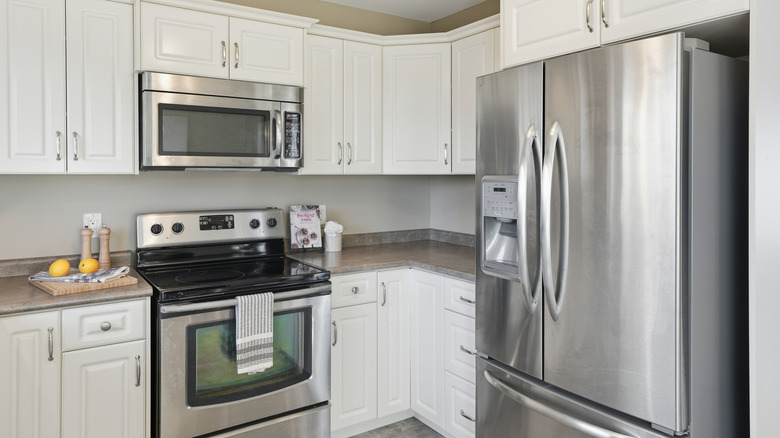
As we dive further into what's hot and what's not in the design world, it becomes clear that the time has come to ditch monochromatic kitchens. It goes against the grain of what homemakers increasingly crave from their spaces — that is, a collected, lived in feel. Matchy-matchy cabinets feel like they were bought and installed in one fell swoop, rather than designed and curated over time. As Jill Siegel, chief inspiration officer at Lavish Kitchen + Bath told Martha Stewart, "Using one neutral finish now feels one-dimensional because there's no contrast or interest."
Of course, this begs the question of what you should do instead. One way to add interest, said Siegel, is "Mixing in another finish, such as wood." This, she explained, lends a space the contrast necessary to make a neutral kitchen shine." It also helps to make a kitchen feel more curated. And, according to Jessica Barrett, interior designer and founder of Jessica Simone Designs, this is important to avoid a space feeling flat. Speaking to Ideal Home, she said, "I much prefer kitchens that feel as though they have evolved over time." By layering in a mixture of materials, instead of building out your entire kitchen in a single block of neutral color, you can easily make it feel more intentional and collected, rather than bought as a set from Home Depot!
Glass-fronted cabinets require too much work to make them worth it
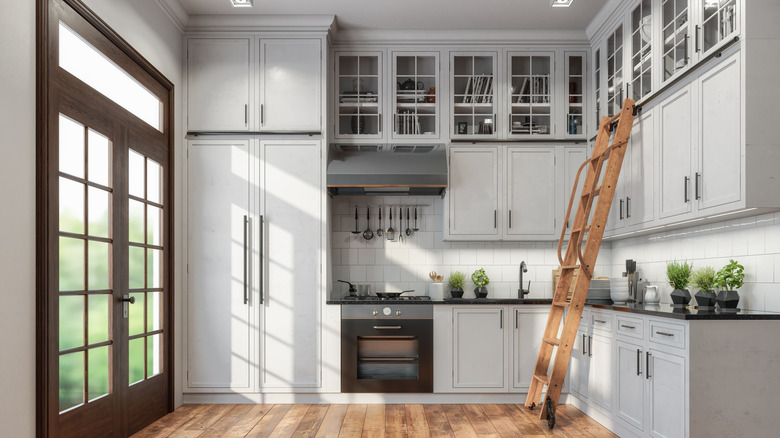
If you're wondering whether glass cabinets in the kitchen are beautiful or a pain in the neck, ask yourself: How will you use them? If you're displaying your "King of England" china, or a gorgeous set of plates that you snagged from the thrift store, then it could be worth it. Usually, though, the reality of glass-fronted cabinetry is far from what people expect. It's often impractical in smaller spaces, where every piece of storage needs to work hard. In such scenarios, the glass simply makes the clutter inside the cabinet visible, making your kitchen feel messy even if it's technically not. For this reason, some designers are steering well clear of this once-popular cabinet trend. As interior designer Marika Meyer said to The Spruce, "there's a clear shift away from kitchens that require constant styling to feel finished."
But what should you do instead? After all, as we've seen already, it's no longer enough to hide everything away with a block of uniform door fronts. Speaking with Livingetc, John K Anderson of JKA Living offered an intriguing alternative. He suggested metal mesh cabinetry, which he said "brings both performance and personality to a kitchen in a way traditional glazed uppers simply can't." Another idea, this time from Meyer, is not necessarily to avoid glass, but to specify the right type. "Opaque cabinetry," she explained, "offers something glass cannot: visual containment."
Replacing cabinets with open shelves adds too much pressure
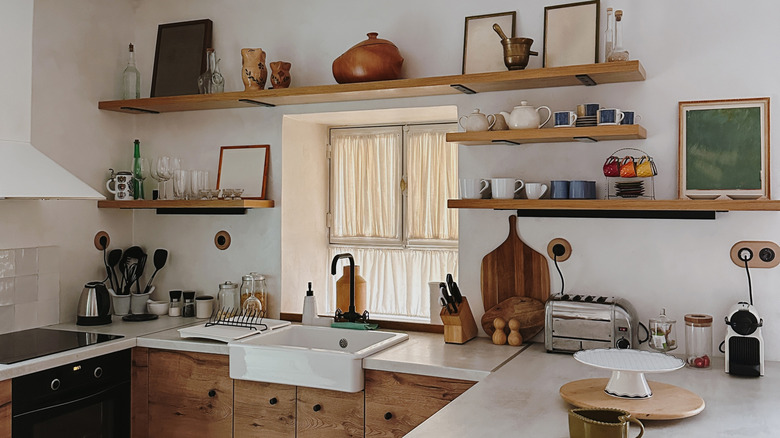
While we already said that long, uniform rows of upper cabinets are out, you should, at the same time, think twice about installing open shelves in your kitchen. We don't mean to be contrary, and we promise, we're not trying to make your design-life difficult. It's just that, according to some designers, those shelves could create more problems than they solve. So said Tom Howley, creative design director of his eponymous kitchen company. Speaking with Ideal Home, he explained, "using it extensively in place of more considered storage can leave a kitchen feeling visually busy."
Now, that's not to say that you should avoid open shelves altogether. In fact, you may just get away with a single shelf, especially if you commit to keeping it tidy, or reserve it for decorative elements only. As Howley put it, you could "Try using it more selectively, perhaps to showcase a few favourite pieces." The trick, he said, is to balance it with generous closed storage. That one shelf will provide the necessary relief to otherwise monotonous runs of uppers, but will remain easy to maintain.
Timelessness is no longer strictly neutral
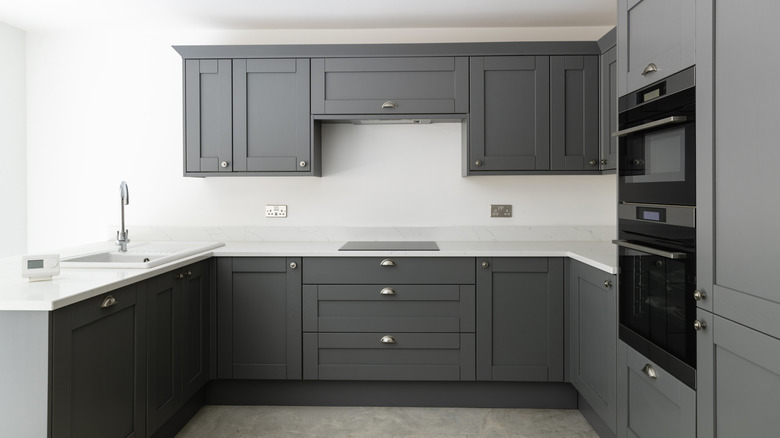
Going completely neutral with cabinet colors was once considered a safe choice, and it makes sense that designers would use it. Neutral colors provide an easy backdrop to work with when it comes to layering other elements in the space. Unfortunately, what is "safe" is rarely exciting, and in this case, all-neutral cabinets miss an opportunity to infuse a space with character. Not only that, but in smaller kitchens, where there's naturally less space to layer extra elements around neutral cabinets, it can be a tricky mistake to make up for.
Returning to Howley, he explained to Ideal Home how "Some of the most enduring kitchens are full of personality, bold colour, and character." As for how you might go about avoiding an overly neutral scheme and achieving that all-important character, there's no one-size-fits-all approach. And that's the beauty of it. What character and personality looks like is actually deeply personal, which in turn means there are loads of ways to do it. You could use two-tone cabinetry to make your kitchen more timeless and interesting, for example. Or you could mix in statement hardware with more traditional materials for a curated look. The key is to look for materials, colors, and hardware that appeals to you. As long as you love it, you'll be more inclined to live with it for years to come.
There's a surprising movement away from Shaker cabinets
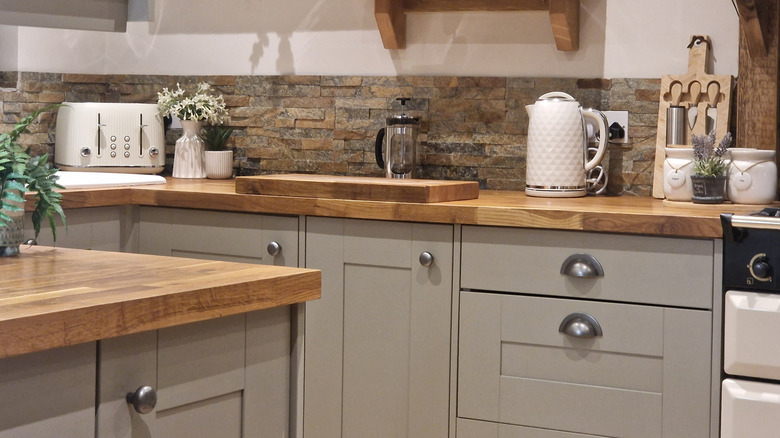
This came as a seismic shock when we first read it, and honestly, we're still not quite sure what to do with it. Shaker-style cabinets have long been considered one of the most timeless kitchen choices of all. But according to Liz Hoekzema from KLH Homes, going Shaker is no longer a deal breaker. As she explained to Forbes, "Clients are more open to mixing materials and custom details in lieu of a standard shaker scene."
What's really interesting here is the alternative that Hoekzema proposed. Offering a reprieve to overdone Shaker kitchens, she said that glass-fronted cabinets are having something of a moment. At first glance, this rather contradicts what we said earlier about actively avoiding glass. But it depends on the type of glass that you use. In this case, Hoekzema specifically highlighted more texturized materials, like reeded, seeded, and colored glass. This is an important distinction. Such choices can actually help to bypass the clutter problem that led designers like Marika Meyer and John K Anderson to advise against regular glass.
Toe kicks are no longer deemed necessary
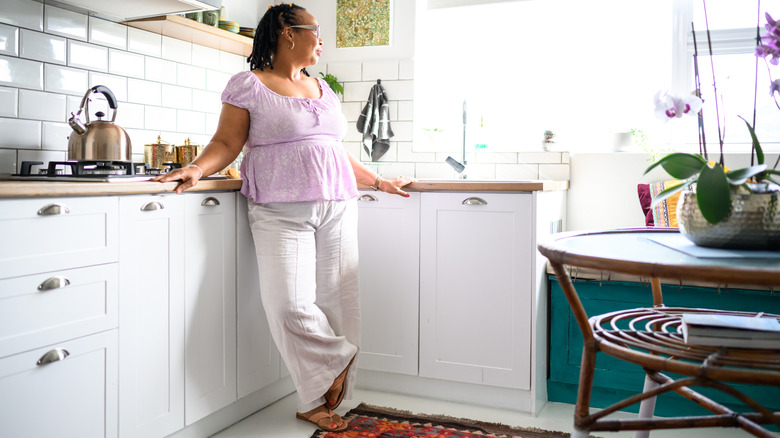
Another kitchen cabinet feature that has stood the test of time is the humble toe kick. It's taken somewhat for granted, providing just enough space beneath the doors for users to stand comfortably close to the counter when preparing food or washing the dishes. But are they really necessary in the modern world of design? Well, surprisingly, some designers are actually starting to question that.
It's not that they're not viewed as practical. Indeed, there's a very strong case to be made for adding hidden toe-kick storage beneath your cabinets. But is that space for your toes really needed? If so, is it necessary across the entire run of cabinets, or does the traditional default of toe kicks miss an opportunity for a more seamless design? Speaking to Real Simple, interior designer Kailee Blalock from House of Hive Design Co. said, "I think this is where we have to stop treating design rules as absolutes and actually think about how a space is being used." In other words, if you don't like the look of toe kicks — and you don't strictly need them — then feel free to be without them.
All-fluted cabinets feel overwhelming and hard to maintain
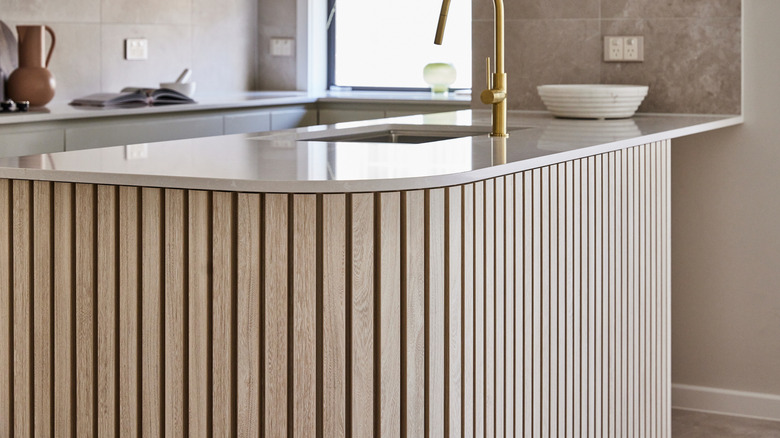
Those paying attention to home design trends over recent years will no doubt have found themselves at least intrigued by the look of fluted furniture. The style once felt novel and unique, however, because it's now become a default, rather than a considered choice, designers now suggest avoiding this kitchen trend. As for why, there are two reasons.
The first is practicality. Speaking to The Spruce, design expert Teri Simone explained, "The grooves of fluted cabinets are notoriously difficult to keep clean, especially in a working kitchen where grease, dust, and food splashes are part of daily life." That leads us to the second point, which is why the look of fluted kitchen cabinetry is waning. Used sparingly, fluted cabinets can still lend a kitchen a beautiful layer of architectural texture. But when every cabinet has flutes, there's nothing to stand out. Not only that, but if the cabinets closest to the stove, sink, and oven are fluted, they're almost guaranteed to get dirty. With that in mind, don't ignore flutes altogether, but at the same time, don't specify them for every single cabinet. Instead, opt for just one or two, and place them strategically. Used as an accent, and placed far from your kitchen's riskiest splash zones, and a few flutes can still work wonders.
Pale wood cabinetry lacks the warmth that current sensibilities crave
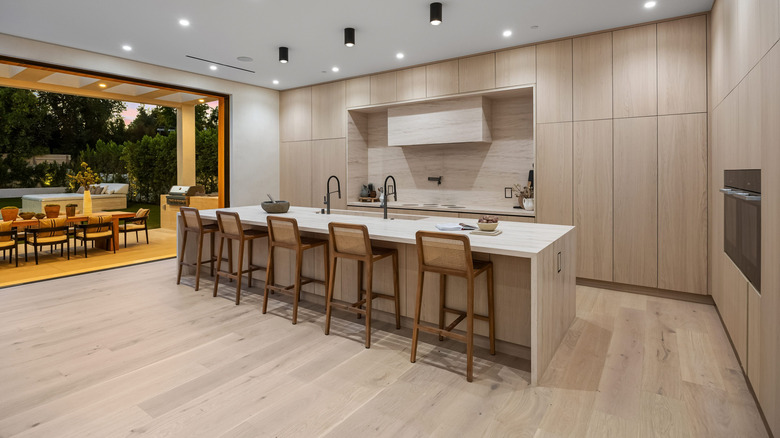
Given the movement towards deeper, warmer cabinet colors, it probably comes as little surprise that pale wood cabinetry is on the way out. As Katerina Tchevytchalova, director at K'Arte Design, said to Livingetc, "There's a noticeable shift away from very pale Scandinavian woods towards richer, more characterful finishes." She continued, "Warmer wood tones are really leading the way." Reinforcing this point, Richard Davonport, Managing Director of Davonport, suggested to Ideal Home that dark oak is a very strong choice right now. The key, he said, is "harnessing the grain, texture, and depth of the timber as much as the color." Doing so lends a kitchen a sense of calm. Not only that, but it allows the wood to age gracefully, which in turn helps make it a more timeless choice.
Of course, you may want to err on the side of caution, particularly in smaller spaces where overly-dark finishes could risk visually cramping the kitchen. But remembering the earlier advice to mix colors, there's actually an opportunity to benefit from the warmth of dark wood while still imbuing some lightness from other materials. You could specify a more buoyant countertop color, for example. Alternatively, you could retain some lightness with your walls, perhaps opting for a bright, but textured limewash finish, which would balance the darker wood beautifully.