

Your Leaky Air Ducts Could Be Costing You Money. This Fix Can Cut Utility Bills By Up To 20%
We may receive a commission on purchases made from links.
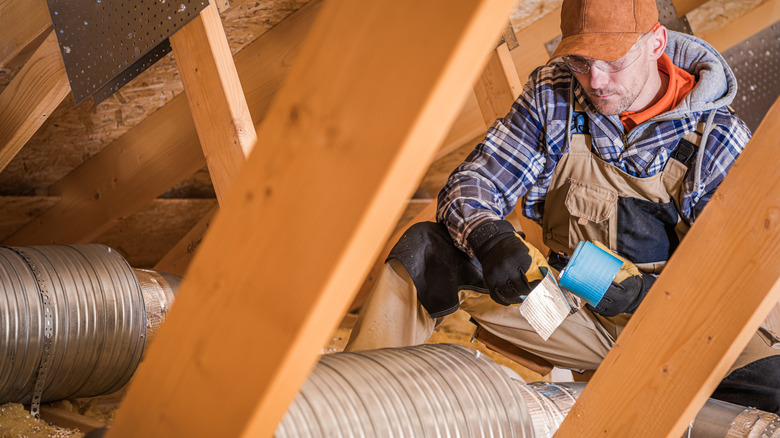
As air ducts start to age, it's common for them to wear out and break down — which often results in leakage. And while that might not sound like a huge deal, it can pose some pretty frustrating problems. For example, if you have a particular room that's always hotter or colder than others, that could indicate that hot or cold air is seeping out of holes in your ductwork — and may be a sign that your HVAC system is in trouble. In addition to uneven temperatures, you may also find excessive dust around your home. Perhaps the most frustrating consequence, however, is that leaky ductwork can lead to higher-than-normal energy bills. According to the U.S. Department of Energy, a properly sealed duct system can lower utility bills by as much as 20%. When air moves more efficiently, you won't need to run the HVAC as long in order to cool or heat a space.
For all of those reasons, it's a good idea to seal cracks or gaps in your air ducts as soon as possible. You can hire an expert for the job — but it won't come cheap. On average, the cost of professional duct sealing is around $2,250, according to Angi. Around 90% of that goes toward labor and professional inspection fees, which can be worthwhile in some cases. However, if you're willing to invest in a few supplies and put in the work yourself, you may only need to spend a few hundred dollars, per Angi's data.
Required tools and supplies for DIY air duct sealing
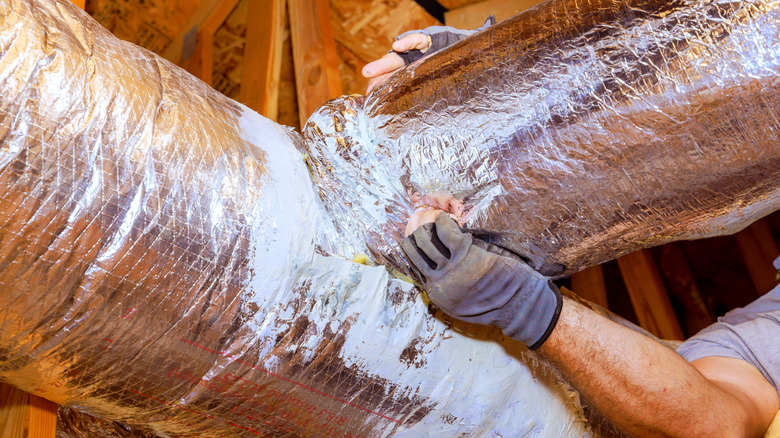
Let's begin with the basics of what you'll need for this project — starting with safety gear. To protect yourself from fiberglass, dust, and other debris, you'll want to wear a mask, gloves, and goggles or glasses. You'll also want to grab a cloth, mild soap, and water to clean the outside of the air ducts.
Next, let's talk supplies. Even though it might sound like exactly what you need for this job, you can't just stick regular duct tape on your leaky air ducts. Instead, you should use UL-rated tape or mastic sealant. According to the National Air Duct Cleaners Association (NADCA), foil tape is good for cracks and tight spots, while mastic sealant is better for seams and joints in the ductwork. If you have multiple leaky areas on your ductwork, you can use both products as needed. For gaps larger than ⅛- inch in width, the U.S. Department of Energy recommends using a fiberglass mesh tape, then coating with mastic.
Finally, to make sure your ducts stay sealed and work as efficiently as possible, you'll also want to grab some fiberglass insulation wrap. Often sold in rolls by the square foot, you can find this type of product at home improvement stores or from online retailers. For example, at Home Depot, you can pick up 60 square feet of Master Flow R-6 Insulated Duct Wrap for $86.64. You'll need foil tape to secure it, so make sure to buy that, too — even if you're using mastic as a sealant.
How to seal leaky air ducts to improve your home's energy efficiency
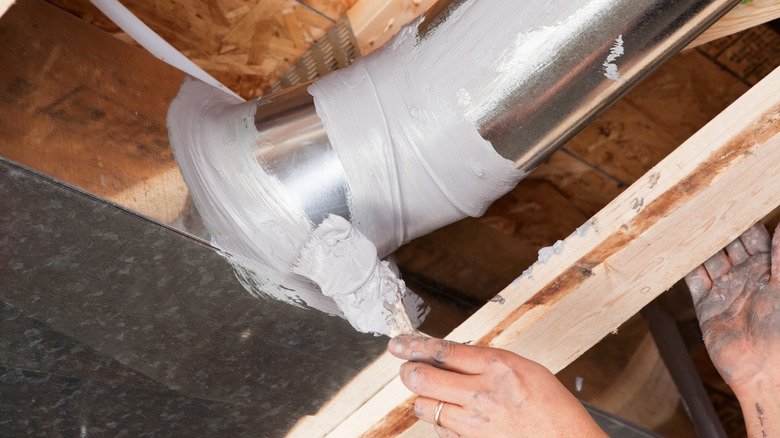
Ready to close those pesky gaps and lower your energy bills? After putting on your safety gear, explore around the attic or duct space while the HVAC system is running. To find leaks, listen for soft whistling sounds and feel for airflow and condensation around the outside of the ducts, particularly around the seams and joints. When you find a leak, use a damp cloth to wipe the exterior of the ductwork so the mastic or tape has a clean surface to adhere to. Then, dry it with a fresh rag.
The next instructions will depend on whether you bought tape or mastic to seal the leaky areas. If you're using tape, all you have to do is cut it to size and stick it over the cracks. Going the mastic route? First, cover any large gaps with a product like RCD Corporation Glasscoat Fiberglass Mesh Tape, then apply the mastic over it with a paintbrush or putty knife. Before moving on to the next step, be sure to let the mastic cure for a day or two, based on the packaging's instructions.
Finally, wrap the fiberglass insulation around your ducts and secure it along the seam with foil tape. To finish up, run your HVAC system to test for any lingering leaks. Still feel air coming out of the joints, seams, or other areas? Add more sealing product or have a professional come take a look.