

Do Metal Files Work On Wood?
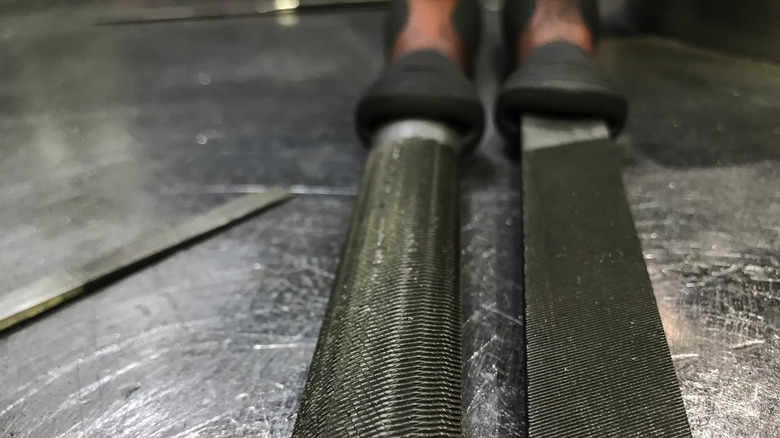
If you've ever found yourself wondering if you can use metal files for jobs on wood, the short answer is: yes. However, there is a longer answer. And that is that, truthfully, metal files might not be the best tool for the job. While a metal file will remove wood or smooth out any rough parts, it has been designed to work on much harder materials, and so it can become clogged with the softer fibers of wood. This can ultimately make the job much slower. You just need to do a little research into the right metal file for the job so that you end up buying and using the right tools.
It's all in the design of metal files. These files have very closely spaced teeth which are arranged in straight or crisscrossing rows, which scrape away small amounts of material every time you stroke them over a surface. And so when you're using them on metal, the little shavings they generate can easily be cleared off, but wood is a bit of a different beast. The fibers of wood are much softer, and they break up in more stringy pieces, which can get stuck in the teeth in what woodworkers call "pinning." So if you're trying to choose between metal and wood files, you really just need to understand the job you're about to undertake. A metal file can be fine for a smaller job like a little adjustment or finishing, but if it's a bigger task ahead, then a woodworking rasp could be the better tool for you.
Why a wood rasp is often better
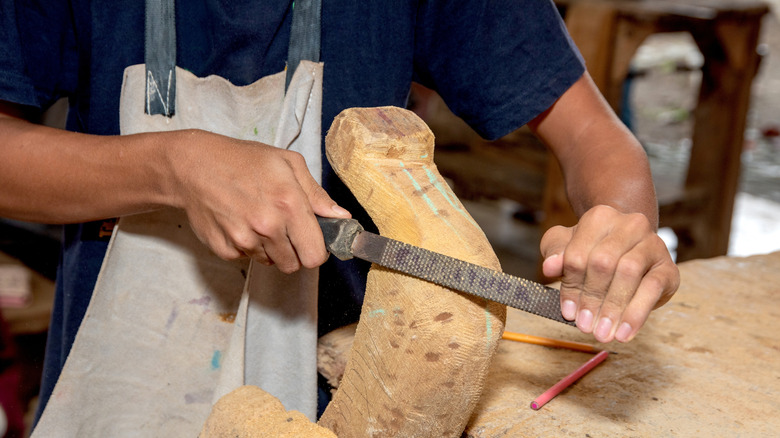
Unlike a conventional metal file, a wood rasp has been designed for wood, with individually raised, pointed teeth that can remove small wood chips and big enough gaps between them so the wood can escape rather than getting all packed together. They also come in different shapes and sizes, including flat and round. The flat versions are better for straight edges and broad surfaces, and the round rasps are good for holes or areas where you need to work against a curve. There are even half-round rasps, which offer both functions in one tool, as well as cabinet rasps, which are smoother than the coarser versions. There are also the files that come with fitted handles because handleless metal files need to be made easier to hold, otherwise, they can cause an injury.
Properly filing wood is all about technique as well. The pressure needs to be applied on the forward stroke, not the backward stroke. In fact, on the backward stroke, you should ease off the pressure altogether so as not to dull your file. Once the job is finished, use proper nylon or wire file brushes to remove wood fibers from the teeth, so they're ready to use again.