

Not Vinegar: The Affordable Solution That Helps Reduce Paint Fumes Faster

We may receive a commission on purchases made from links.
Painting your walls can already be a daunting task — even when you rely on DIY paint hacks worth trying in your home to make the process smoother. Pair that with the sharp smell of paint fumes, and you may end up with a headache. The go-to DIY advice for removing indoor odors often involves setting out bowls of white vinegar, since the acetic acid in this common kitchen ingredient does a decent job of neutralizing offensive smells.
However, the most sensitive of noses will tell you that the overpowering scent of white vinegar isn't much better than that of paint fumes. Even worse, that harsh paint smell can linger for days in poorly ventilated spaces, especially when cold temperatures make cracking a window unappealing. Instead of trading paint fumes for the smell of salad dressing, reach for some activated charcoal. This handy material is affordable; from Amazon, for just about $20, you can get as many as 10 bags containing 100 grams of charcoal each.
Paint fumes contain a mixture of airborne compounds, including volatile organic compounds (VOCs) — some of which produce noticeable odors, while others have no detectable smell at all. While vinegar helps mask paint smells, it replaces them with another scent; activated charcoal, on the other hand, traps airborne molecules through adsorption. Its porous surface contains millions of microscopic pockets that lock in odor-causing compounds so they can't keep circulating. Because molecules must physically reach this surface to be trapped, maximizing air exposure is key. Scent-free and non-toxic, activated charcoal pouches can even be used to rid your basement of that damp and musty feeling.
How to use activated charcoal to clear the air fast
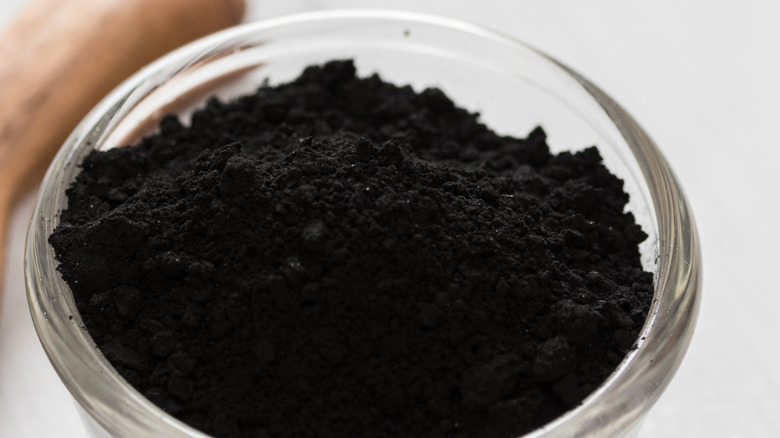
Using charcoal to eliminate odors takes a little strategy, starting with picking the right form of activated charcoal. This product comes in different forms, most commonly powders, blocks, pellets, loose granules, and pre-filled bags. However, sticking with loose granules helps avoid the mess of fine powder or the lower surface exposure of solid bricks. Whatever you pick, setting everything up correctly will help your charcoal trick stand alongside other clever deodorizing hacks for a fresh-smelling living room.
Allow sufficient contact by spreading out your activated charcoal. If you're using loose granules, put them in shallow, wide containers to maximize surface exposure so more charcoal can meet the surrounding air. Do not place them in areas where they may be knocked over, since black dust may fall onto drying paint. If you're using pre-filled linen bags, spread them out on tables and shelves to maximize their coverage area.
Because the U.S. Environmental Protection Agency stresses that ventilating with fresh outdoor air is essential for reducing indoor VOC levels, don't seal yourself inside a stuffy room. Instead, crack a window or run a fan during painting, then close the door once the paint is dry. That way, you'll allow the charcoal to tackle lingering odors overnight without fumes drifting down the hall. Note that many reusable bamboo pouches can be recharged in direct outdoor sunlight for a few hours, though you should always check the manufacturer's label first. Keep expectations realistic, too; as DIYers point out, passive charcoal helps soften lingering smells, but it isn't a standalone fix for heavy VOC elimination while paint is actively drying.