

Think Twice About Using Old Landscape Fabric To Replace Your Garden's Shade Sails. Here's Why.

Even in the plant world, you can have too much of a good thing. While light is an essential ingredient in photosynthesis, intense sunlight can lead to stressed, discolored, or even physically damaged plants. One way gardeners work around this issue is by installing shade sails over particularly vulnerable species, but for the thrifty reader, it's probably tempting to DIY one with something on hand. As tempting as that pile of old landscape fabric is, we have to warn you that repurposing it to shade your garden is probably not a good idea long-term.
Sunscald, or sunburn, is physical damage to plant tissue caused by excessive sunlight. It can manifest as light tan spots or dark, mushy patches. While common on vegetables, sunburn can also affect plants that prefer low-light conditions. A well-planned garden, where the right plants are put in the right place, helps prevent sunscald, but shade sails also come in handy when you need to bring the intensity down a notch or two.
Landscape fabric, on the other hand, is designed to smother weeds. Made from either woven plastic or spun polyester, it is meant to let some air and water through, but not any light. While different types of plants need different levels of light, using a material that totally blocks the sun isn't a viable long-term option even for shade-loving plants. Plus, the sun will hasten the fabric's deterioration. If you do use landscape fabric to replace a shade sail, use it for brief periods only. You can avoid the headache altogether by using something else.
Landscape fabric will do in a pinch, but only temporarily
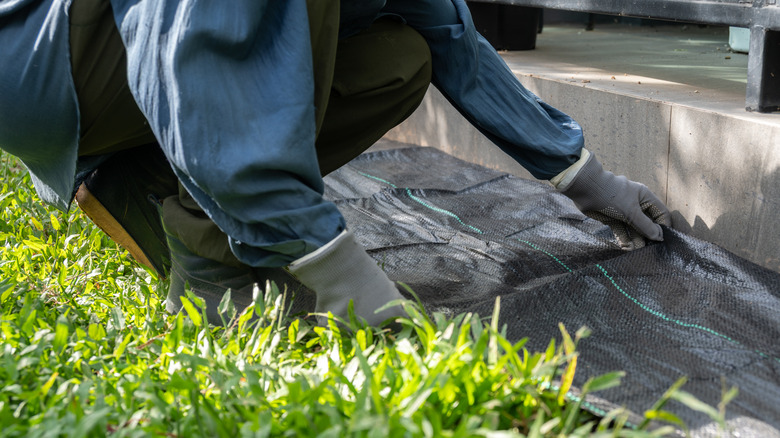
If you see signs your garden plants are getting too much sunlight, installing permanent shade sails is a good idea. However, for sun emergencies on your more delicate plants, you could get away with temporarily using old landscape fabric. Importantly, you need to raise the landscape fabric high enough above the plants to avoid smothering them. The goal is to block the light, not the airflow. Dense, often dark-colored plastic landscape fabric holds heat, so it's essential to make sure there's plenty of space below the fabric for air to move around the plants. Shade sails are often hung high on a building or draped over a structure that stands well above the garden, and the same approach could temporarily work for landscape fabric.
You could simply drape the landscape fabric across patio furniture, or build a dedicated frame. One way to build a frame is to use 1/2-inch PVC pipes and connectors. This is especially useful for raised beds or small spaces. For more stability, place rebar in the soil first before sliding the PVC over it. Use 3- or 4-way connectors and more PVC up top to create a box shape to drape the fabric over. If you're an especially crafty gardener, you could also try reusing old pallets for an incredibly easy-to-build pergola that looks good all year long — with or without the landscape fabric.
Once you ditch the landscape fabric, you have other options. Old mesh screens from windows and doors are a nice shade sail substitute, and in a pinch, you can even use an umbrella!