

Steel Wool Vs Insulation Foam: Which Wins Against Mice Entering Your Home?
We may receive a commission on purchases made from links.
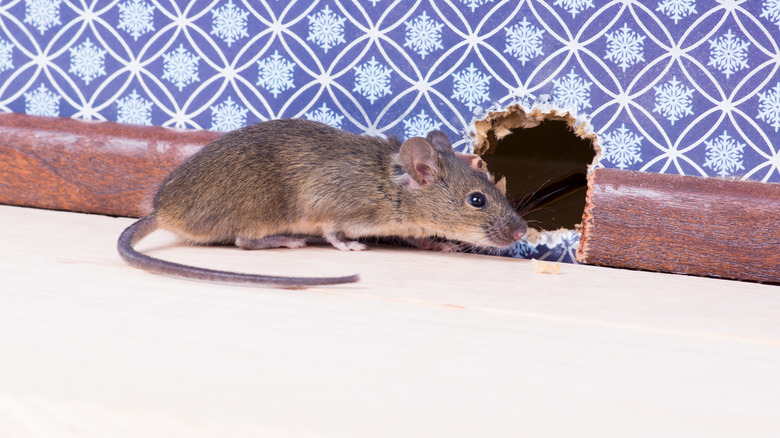
It's quite disconcerting to find mouse droppings in your kitchen, and apart from trapping any rodents that have found their way into your house, you'll want to find the best way to keep them out. This usually involves a good deal of investigation, looking for small gaps that are at least ¼ inch in diameter where these rodents can easily enter. Then you'll need to plug these holes, but you may not know whether steel wool or insulation foam is better for the job. While both products will seal the gaps, only the steel wool is tough enough to resist those sharp and gnawing teeth, so it wins as the best deterrent. The most important place to use steel wool is in the holes and gaps around your home to keep unwanted visitors out.
While insulation foam is also really good at filling in all those gaps and plugging up the holes, mice can very easily chew through this material and make their way into your home. Even spray foams that are marketed as "rodent barriers" suggest that you put steel wool or copper mesh into the hole first before sealing it with the foam to form an impenetrable barrier. On the other hand, while steel wool will deter rodents because they'll find the metal fibers impossible to chew through, it may eventually rust and disintegrate, leaving the gap exposed once again. That's precisely why a multi-pronged approach is the absolute best way to go. In fact, even the U.S. Centers for Disease Control and Prevention (CDC) recommend filling holes with steel wool and then using caulk or spray foam to keep it in place.
How to stop mice from entering your home
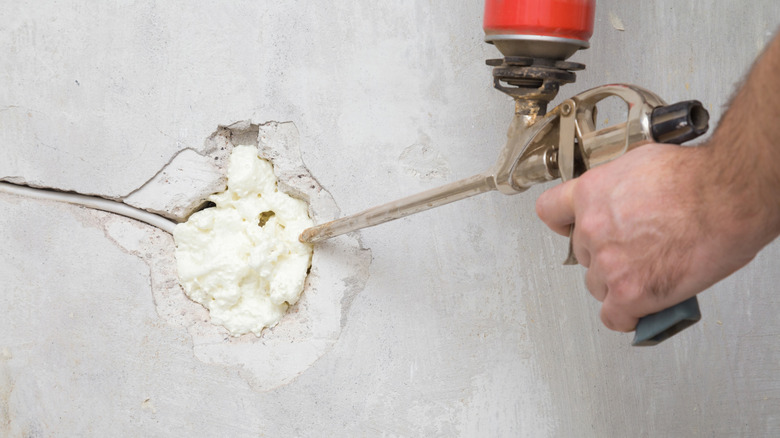
To keep those pesky rodents out of your home, you'll want to arm yourself with a roll of steel wool and a spray can of insulation foam. You could even purchase them in a bundled, like with this Pamazy Rodent Barrier Kit, or check what's available at your local hardware shop. You'll also want some sharp scissors to cut the steel wool and a pair of gloves to prevent those steel fibers from cutting your fingers. Even though spray foam can be useful for insulating your home against cold weather as well as sealing mouse holes, you'll want to wear a dust mask because it can release irritating chemicals before it's fully cured.
Once you've found the gaps or holes that rodents can get through, stuff them with the steel wool and then use the spray foam to completely seal them over. Alternatively, you could spray some foam into the holes first, press the steel wool into it, and add more foam to create a good seal. If you have larger holes that need to be filled, use hardware cloth or copper mesh to cover the hole and then finish it all off with spray foam. Making sure you fill all those holes is one of the most effective ways to keep mice from making your home their winter retreat, as well as keep your house well insulated.