

Why Do Some Gardeners Cover Their Gardens With Cardboard In Fall — And Should You Try It?
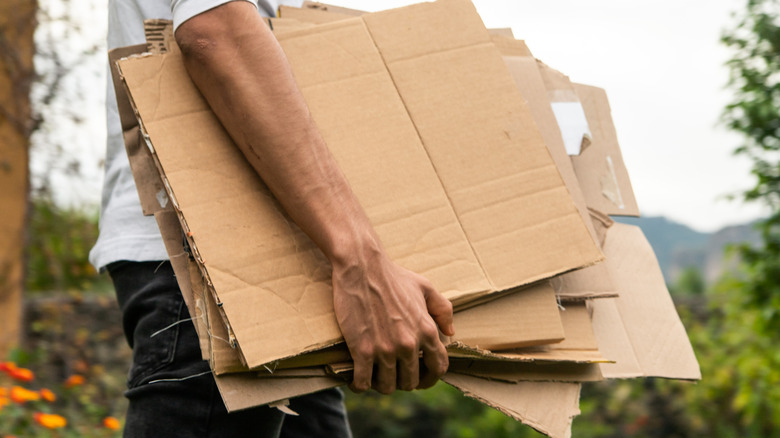
Have you gotten a head start on your online holiday shopping? Don't toss the delivery boxes those presents came in! Instead, lay down flattened, clean cardboard in strategic parts of your yard to get a jump-start on next year's growing season. In fact, consider setting it out as part of your fall to-do list for the garden of your dreams next season.
Fall is an ideal time to lay down cardboard in the garden. Between now and spring, the ground beneath the cardboard will soften and become enriched by the layers above. This is part of the simple sheet mulching process, in which you lay cardboard on top of soil, then cover it with ornamental mulch for a tidier look. You can also use this method to start a no-till garden.
One of the benefits your garden will experience from using cardboard is reducing the growth of pesky fall weeds and next year's seeds. In addition, as earthworms eat the cardboard, they also aerate the soil, making it even richer and healthier. The cardboard itself adds carbon as it breaks down, so if you're transforming a space, such as a neglected bit of yard, into a garden bed, this kind of sheet mulching allows you to prep the soil without chemicals or even much elbow grease! Even better, this no-till, layered approach helps prevent erosion during heavy winter precipitation.
A few simple steps get you off to the right start
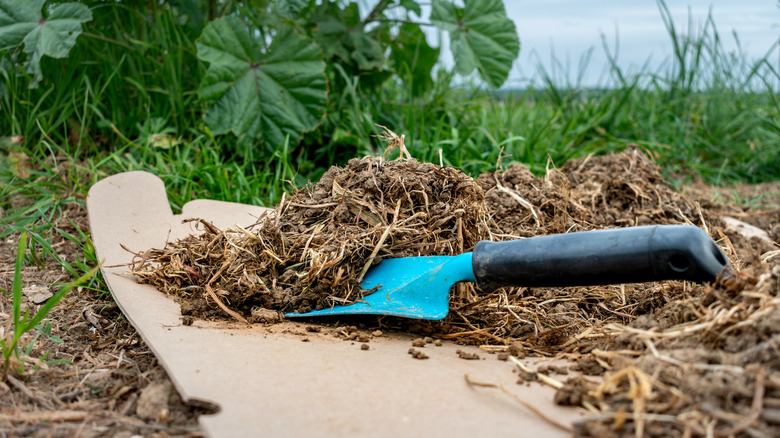
To get rid of weeds with a simple cardboard hack, use a basic sheet-mulching approach. Start by stripping the cardboard of any tape, labels, and staples. Lay it in the area you want to protect and improve. Soak both the ground and the cardboard with a hose for better coverage and to make it too heavy for the wind to blow away. Then, cover the cardboard with about 4 to 6 inches of mulch or shredded leaves.
For the somewhat more involved process, like lasagna gardening, follow the same initial steps, but pile a nitrogen-rich layer directly onto the wet cardboard, such as manure or grass clippings. Top this with a carbon-rich material like leaves or hay, and continue alternating layers of nitrogen and carbon as high as you'd like. Finish with a layer of burlap or black plastic to speed decomposition between fall and spring and prevent flies from entering.
Remember that to keep chemicals out of your garden, it's important not to use shiny, coated cardboard or heavy-duty types with chemical glue at the seams. Instead, always stick with plain brown box material. In addition, make sure to overlap each piece of cardboard by several inches, so that no weeds will poke through. If you're using it as a weed deterrent near existing plants, such as shrubs, it's even more important to wet the cardboard down after setting it in place. Otherwise, the dry material can wick away moisture that those plants' roots need.