

Don't Just Throw Out Lawn Mower Blades: How To Recycle Them
We may receive a commission on purchases made from links.
Even if you stay on top of sharpening your lawn mower blades and properly maintaining them, you'll eventually reach a point where you're in need of a replacement. Luckily, new blades aren't all that expensive, typically only running around $30, but once you've made your swap, it can feel wasteful and dangerous to just toss the old ones in the garbage. If you want take a more environmentally friendly approach, consider recycling them. Mower blades are typically made of 100% steel, so they can be recycled, but it's important to properly prepare them, handle them safely, and bring them to a metal-specific recycling facility.
While normal recycling centers are well-equipped to handle some metal items, like aluminum and steel cans, simply dropping your mower blades in your recycling pickup bin is a recipe for disaster. These large, sharpened pieces of metal can cause harm to both workers and equipment at recycling plants. Because of this, you'll want to head somewhere that will allow you to dispose of old yard tools and equipment the safe way. If you've decided that your lawn mower blades have reached the end of their life and you're not planning to use the material in a DIY of your own, like making wire cutters, start by looking up metal-specific recycling plants and scrap yards near you. If you're lucky, you might even have access to a municipal bulk collection event for scrap metal. Be sure to do some research on your recycling plant's website or give them a call to confirm whether or not they accept mower blades and if there's anything specific you need to do to prepare the metal ahead of time.
How to safely remove, transport, and recycle mower blades
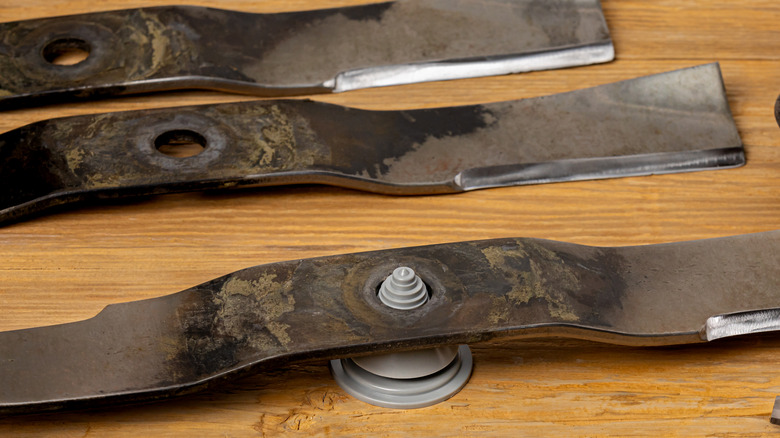
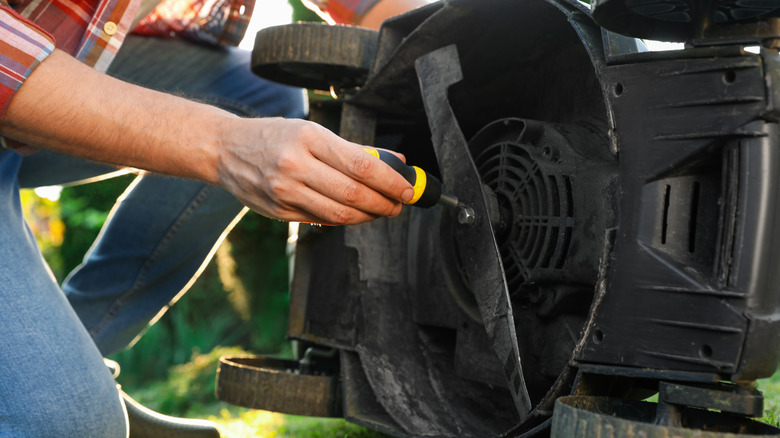
While lawn mower blades shouldn't be very sharp, especially if they need to be replaced, it's still smart to handle them with caution. Make sure to wear A5 cut-proof gloves like the Cooljob fiberglass-free gloves when you're removing your mower's blade to minimize the risk of injury during handling. Once you've removed the bolt and separated the blade from the mower, store it in a safe place until you're ready to recycle. If you find yourself working with a lot of metal, you can also take this opportunity to collect everything you need to dispose of in one place to minimize the number of trips you have to take to the recycling facility or scrap yard.
Make sure your blade is free from debris and any non-metal components are separated before it's time to drop it off to ensure the recycling process goes smoothly. During transit, also consider keeping your blade wrapped in a packing blanket, covered in a piece of cardboard, or stored inside a closed container out of an abundance of caution. It might seem a bit silly, but extra safety precautions are worth considering when dealing with large blades of any kind.
Once you're at your recycling facility or scrap yard, your blades will be collected, sorted into the proper category, cleaned, and crushed. After preparation, they'll be transported to a larger-scale facility where they will eventually be melted down and transformed into something new. Metal can be recycled over and over again, almost infinitely, so keeping it out of the landfill is a great way to cut down unnecessary waste and minimize the need for new materials.