

12 Most Embarrassing Furniture Recalls In History

It's nearly impossible to go through your day without using a piece of furniture. You wake up and get out of bed, head down to the kitchen table for breakfast, and maybe leave for work in an office, where you sit in a chair at a desk. Because these pieces are such a normal part of life, we rarely pause to consider that something as simple as a bed or dresser could actually be dangerous. Nobody is perfect, including manufacturers. While recalls happen from time to time, some are so wild, preventable, or obvious that they become straight-up embarrassing for the brand.
Recalls are issued when a product has a defect or hidden hazard that could put people at risk, and the Consumer Product Safety Commission (CPSC) is responsible for alerting the public. Sometimes there's an easy fix, like installing a repair kit. In more severe cases, the only solution is to discard the item and get a refund. Once announced, a recall can expose the kinds of mistakes companies hoped no one would notice. Some of them clearly cut corners or failed to do basic safety tests. Others might have avoided attention entirely had they not handled the situation so poorly. Shockingly, many of these brands are trusted names, which makes it even more surprising that products with design flaws ever reached consumers.
Ace Bayou bean bag chairs were easy for children to unzip
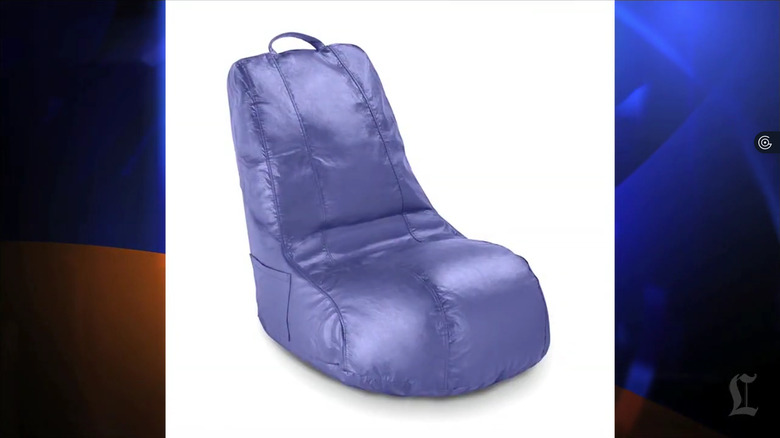
As kids, there's no cooler piece of furniture to have in your room than a plush bean bag chair. For parents, nothing matters more than safety. Since these types of chairs are known for being soft and lightweight, they seemed like one of the safest, most kid-friendly furniture options for a little one's room. Ace Bayou is known for its innovative, casual pieces, from trendy gaming chairs to ergonomic office chairs. With a reputation for producing a variety of children's furniture, parents had no reason to suspect how dangerous these bean bag chairs could be.
Although it seems like a harmless addition to a kid's room, the issues came to light when parents realized their children could easily unzip the chair and crawl inside. Once in, kids could either become trapped or inhale some of the thousands of small beads. This made it an extreme choking hazard and also put children at a severe risk of suffocation.
Unfortunately, multiple children died due to this design flaw. Looking back, it seems like it should've been common sense to make it impossible for tiny fingers to access a zipper that could put them in harm's way. Ace Bayou's bean bag chairs were sold from 1995 until 2013, with millions in circulation. By 2015, the company had issued a voluntary recall, urging anyone who had purchased these chairs to obtain a free repair kit to disable the zippers.
IKEA Malm dressers and chests tipped over easily
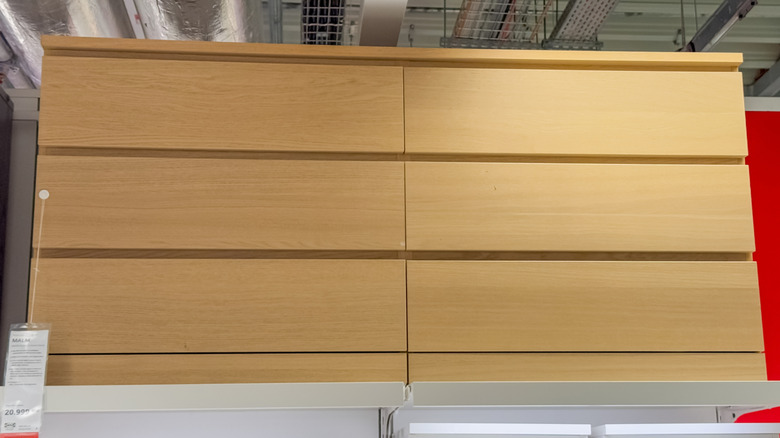
IKEA got its start over 80 years ago, dating back to the early 1940s, and is now a leading brand of self-assembly furniture for nearly every room of the house. It's a company that worked hard to build a reputation for quality pieces while maintaining affordable prices. In 2002, IKEA began selling its MALM line of dressers and chests. These storage staples were sleek and easily blended into any aesthetic, whether set up in an adult's minimalist bedroom or a colorful kid's room. Unfortunately, what they'd be remembered for is being a part of the biggest recall in IKEA history.
With a total of 186 reports of tip-over incidents, concerns over the MALM dressers became impossible to ignore. Criticism unsurprisingly intensified, and the public urged the company to resolve this ongoing safety risk. IKEA spent years dodging a recall and instead focused on warning customers about the risks, rolling out a safety campaign urging people to anchor the dressers to the wall. It seemed like brushing off the very real danger these dressers posed, which wasn't a good look for this major brand. Finally, in 2016, IKEA recalled 29 million dressers and chests after tip-overs tragically claimed the lives of six children.
Simplicity cribs collapsed and trapped infants inside
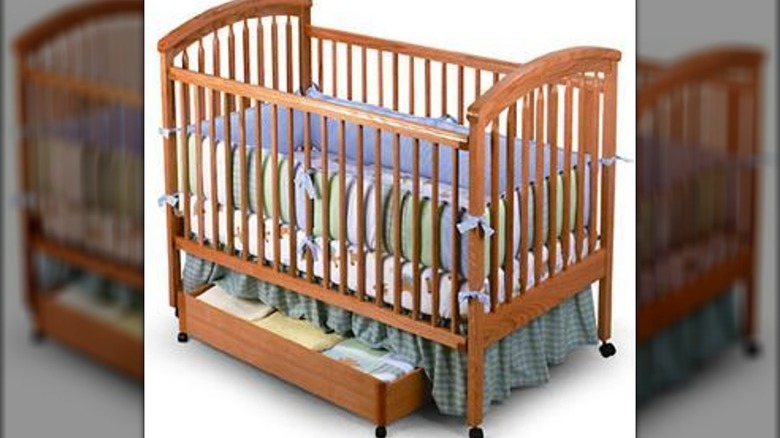
What was once considered a go-to brand for cribs has lost its credibility after major safety issues across several of its models. Simplicity for Children Inc. got its start in 1988, quickly becoming a familiar name for parents looking for affordable nursery furniture. Simplicity began manufacturing drop-side cribs in 1998, selling them nationwide through major department stores, like Target, Wal-Mart, and Babies 'R Us, until 2007. At the time, the drop-side design seemed to be an innovative feature that made it easier for parents to lift their babies in and out. And it may have been, had there not been a serious design flaw.
The drop-side panel on these cribs slid up and down, making it easy for parents to reach the baby. However, the moving side could come off track, loosen, or completely detach from the crib frame. When that happened, it created a gap between the mattress and the side of the crib where an infant could get trapped. Simplicity faced several recalls, with the first issued in 2005. In total, 11 babies lost their lives due to these defective cribs. Because of the significant backlash, Simplicity was unable to regain the public's trust and is now out of business.
Graco Harmony high chairs had faulty parts that made them susceptible to tipping over
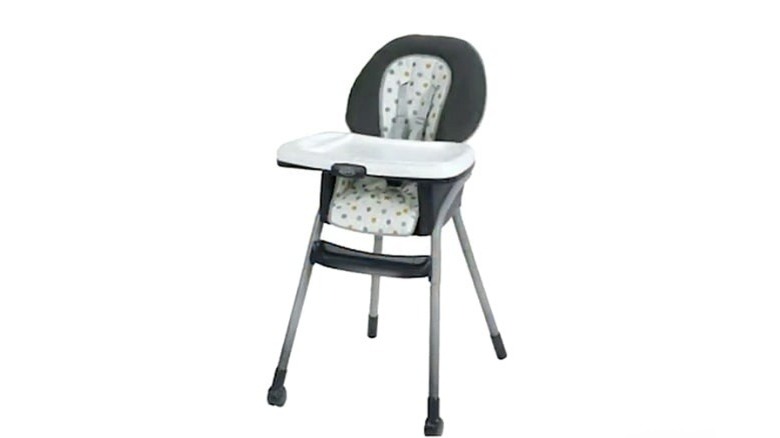
Graco is a well-known brand among parents, as it's a top producer of high chairs, car seats, strollers, and other types of baby gear. As an industry leader for decades, it was only natural for parents to trust that its products were thoroughly tested to keep children safe. In fact, a big part of Graco's identity is the promise of safety, reassuring new parents that its products exceeded industry standards. Between 2003 and 2010, these high chairs were sold at major retailers such as Sears, Target, Walmart, and Toys 'R Us.
In 2010, this once-trusted brand became the center of backlash after its Harmony line of high chairs was found to tip over. Even worse, there wasn't one, but two issues with the recalled models. The screws on the front leg were susceptible to loosening over time, falling out, and becoming unstable. There was also a bracket on the legs that could crack and break, making the chair even more prone to tipping over. These issues were reported a whopping 464 times, and there were 24 reports of injuries as a result of tip-overs, including a hairline fracture to a child's arm. Graco voluntarily recalled all models in the Harmony line, totaling roughly 1.2 million units.
Big Lots metal futon bunk bed had a design flaw that put children at risk of trapping their heads
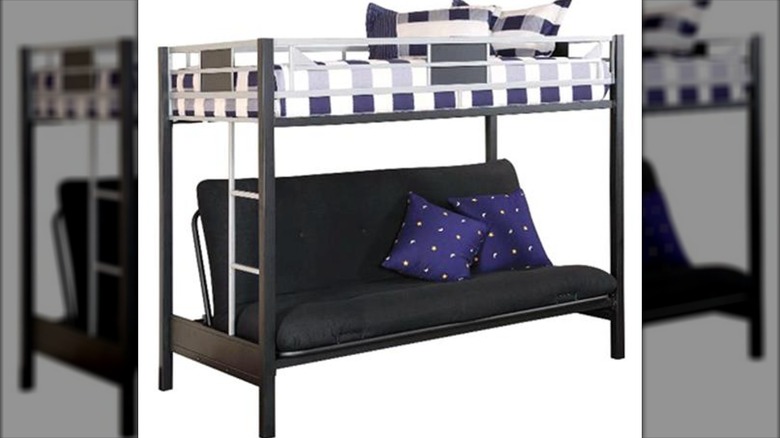
Big Lots was founded in 1967, and it didn't take long for consumers to notice the great deals the company had to offer. Its mission was simple: Sell name-brand products at lower prices by purchasing discontinued, out-of-production, or end-of-season inventory. While most customers didn't mind snagging out-of-season deals, it's a whole other issue if the products weren't properly tested before being released to the public.
The metal futon bed hit the shelves in January 2009 and was only sold until April 2010. Although it seemed like the perfect choice for a kid's room, the seemingly obvious design issues quickly became apparent. When the futon was moved from a seated position to a flat one, the heavy metal frame could swing down and trap a child against the bed or wall. Unfortunately, this was the case for a three-year-old in Iowa when his head and neck became trapped, tragically suffocating him. Additionally, the narrow gap between the ladder's bottom rung and the futon mattress could allow a child's body to slip through while the head stays stuck, creating another potential entrapment hazard. Big Lots recalled 30,000 metal futon bunk bed units as a result of the death.
Target Circo and Do Your Room stools would collapse under a person's weight
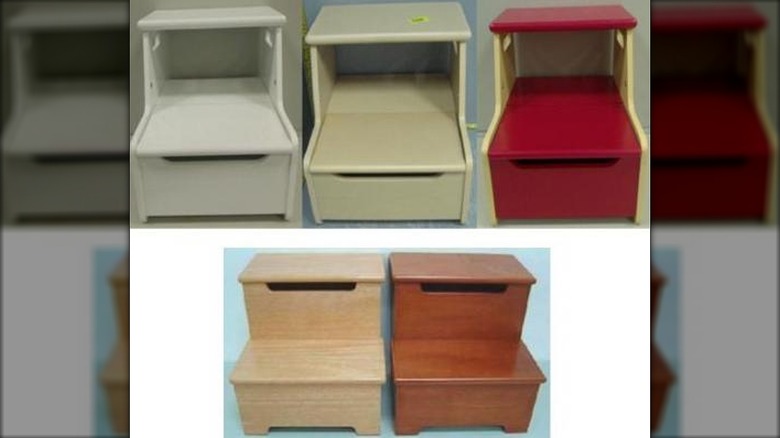
The first Target opened its doors in 1962 and is now known as a go-to store where you can pick up everything from groceries to furniture in a single trip. Over the decades, this major retailer has built a strong reputation for offering quality products while making it easy to decorate your home on a budget. In 2007, Target released the Do Your Room (DYR) stools, which had the added feature of storage in one of the steps. They later came out with Circo stools, which were similar in design and included the same built-in storage area.
When choosing the right step stool for your home, the last thing you expect is to worry about whether it will collapse under your weight. Unfortunately, that peace of mind wasn't guaranteed with these models. Target received a total of 26 reports involving at least 14 children and seven adults who were injured when the stools broke or collapsed. One of the consumers fractured her wrist, hip, and pelvis after falling, and six kids were scraped and bruised. For such a prevalent retailer to release a step stool that couldn't safely support even a kid's weight was a pretty humiliating failure. Target recalled 206,000 wooden step stools on August 4, 2011, offering a full refund to anyone who had purchased them.
IKEA MYSINGSÖ beach chairs amputated fingertips when they unexpectedly snapped shut
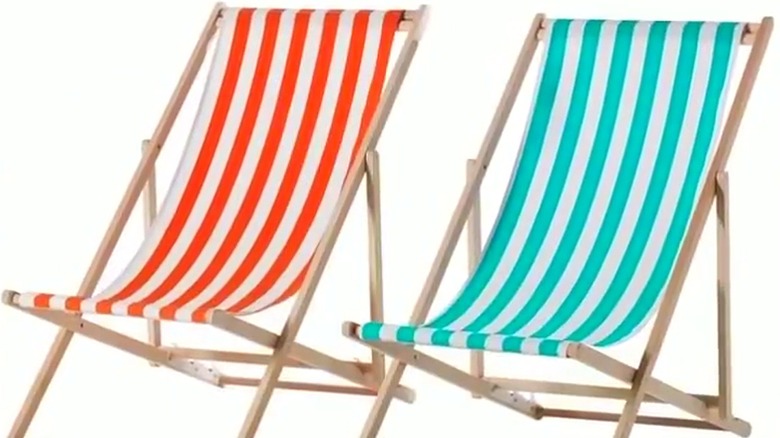
IKEA is making another appearance on this list, but not for a product you'd have to put together yourself. The first versions of the MYSINGSÖ beach chairs were released in February 2013. They had a simple design, with a wooden frame and a fabric sling seat that folded out in seconds. Initially, these seemed like a great find. Rather than carrying a bulky beach chair through the sand, IKEA's version was designed to be lightweight and easy to transport.
Although seemingly convenient, using the MYSINGSÖ beach chairs came with serious safety concerns. Reassembling the chair after the fabric had been removed could put users at risk of the chair abruptly snapping. There were 13 reports worldwide, including three in the U.S., with six of the injuries being fingertip amputations. Given the chair's simplistic design, its ability to cause such intense injuries seemed like a difficult-to-excuse oversight. After being sold for about three years, IKEA took them off the shelves and issued a recall in 2017. To make up for it, they offered those who purchased them a replacement that had plastic stoppers that prevented the chair from being reassembled the wrong way.
Bestar Wall-Mounted Murphy Beds would detach from the wall
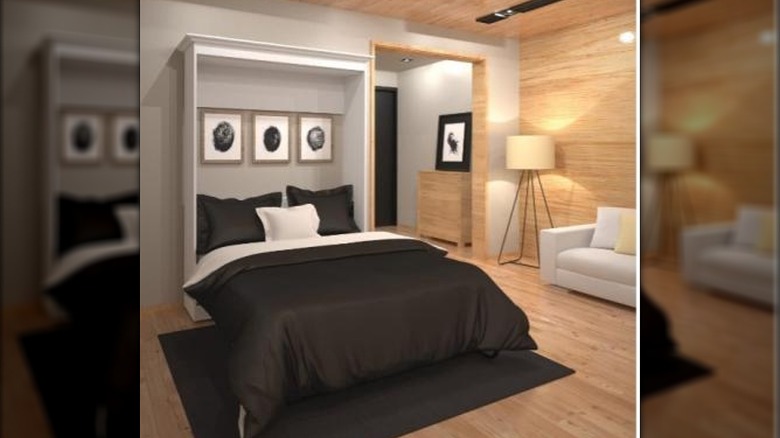
Bestar's history dates back to its founding in 1948. In its early years, the company produced fully assembled coffee tables, bookshelves, and other finely crafted furniture pieces. Now, they sell primarily space-saving furniture, like closet organizers, cabinet beds, and most notably, Murphy beds, which are sold online through retailers like Wayfair, Amazon, and Costco. The now-recalled wall beds went on sale in 2014, providing consumers with another solution for maximizing small spaces.
The main attribute of the Bestar wall beds became their biggest flaw. Rather than securing to the wall as they were supposed to, these Murphy beds could unexpectedly detach and hit the consumers. There were over 60 reports of injuries due to this malfunction, including a 79-year-old woman who lost her life after the bed fell on top of her and injured her spine. As if the egregious design flaw wasn't embarrassing enough, Bestar came under fire for failing to promptly report the hazard to the CPSC, despite being legally required to do so. In 2022, Bestar agreed to pay a $16.025 million penalty and recalled the wall beds.
Office Depot Gibson Leather Task Chairs broke easily and caused dozens of injuries
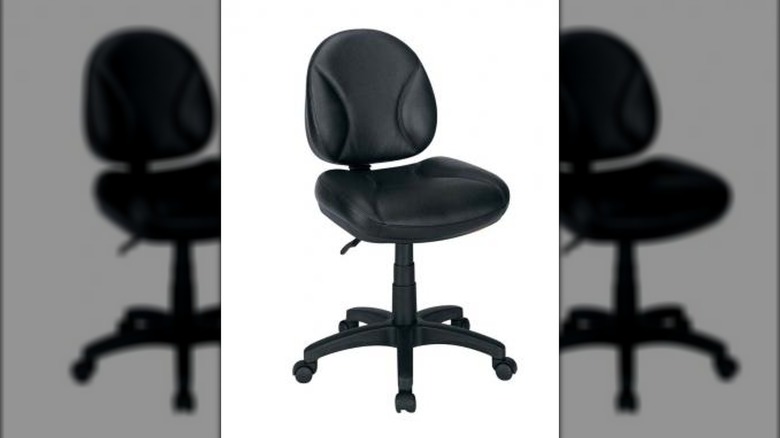
As Office Depot's name suggests, it sells everything you'd need to supply an office, from pens to laptops to rolling chairs. The company was first founded in 1986, and it didn't take long for it to get the reputation as the go-to spot for students or professionals to set up and restock their workspace. The Gibson Leather Task Chairs became available in stores and online in 2003, surprisingly remaining on the shelves through 2014.
What seemed like the average rolling chair you'd see pushed into a desk was actually a disaster waiting to happen. Over time, the weld underneath could crack, causing the seat to suddenly separate from the base and putting users at a serious risk of injury. There were over 153 consumers who reported this issue over the years, 25 of whom suffered injuries ranging from cuts and bruises to a fractured back and hip that required medical treatment. On May 22, 2014, Office Depot finally recalled about 1.4 million Gibson Leather Task Chairs. Considering it was designed to support people for hours at a desk, its failure to simply stay intact made this recall especially embarrassing for the company.
Pier 1 Imports Swingasan patio chairs and stands caused tipping injuries
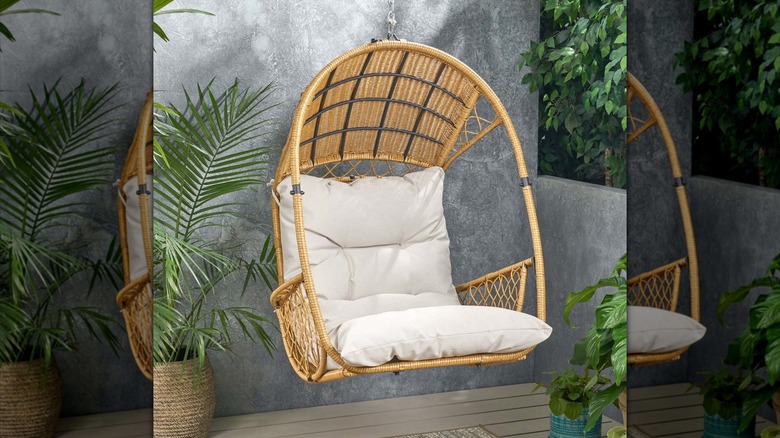
When searching for trendy ideas for designing your perfect patio, Pier 1 Imports was usually one of the first places people turned to. Founded over 55 years ago, Pier 1 Imports made a name for itself by offering beautiful, globally inspired furniture and decor you couldn't find anywhere else. It began selling the Swingasan chairs and stands in January 2010, and the cozy, bohemian hanging wicker seats scored an instant hit with shoppers looking for an outdoor statement piece.
Shockingly, it wasn't just the seat or the stand that put consumers at risk — it was both. The stand wasn't stable, putting it at risk of toppling over when someone sat in it. There were 93 reports of it tipping over, including 23 people who were injured as a result. Even worse, the suspension hardware also failed in eight incidents, resulting in four additional injuries. For a piece of furniture designed for comfort, the number of ways it could injure someone was especially concerning, and even the most basic safety testing should have revealed these issues. By January 2016, Pier 1 Imports was forced to recall roughly 260,000 chairs and stands in the U.S. and about 16,000 in Canada.
Lane and Virginia Maid cedar chests posed a deadly risk with their self-locking lids
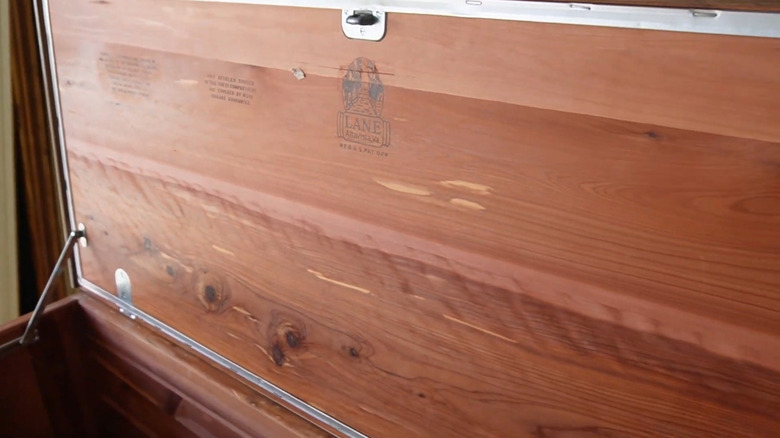
Lane was founded over a century ago and quickly became known for its beautifully crafted cedar chests, and soon became the go-to gift for young women thanks to a successful ad campaign. By the mid-1900s, they weren't just popular; They were proudly featured in nearly every home throughout the U.S. With so many gifted, purchased, and passed down over the years, they're still somewhat easy to find even decades later.
Unfortunately, what was once among the most popular furniture pieces is now known for a hidden and potentially deadly flaw. Lane and Virginia Maid chests have self-locking lids, which are inaccessible from the inside. This means that anyone who climbs in, especially children, can easily get trapped with no way out. Between 1977 and 2015, fourteen children suffocated while trapped inside the chest. Lane recalled a staggering 12 million cedar chests in 1996, but with so many still in circulation, countless remain in thrift stores or attics. Initially, Lane administered replacement locks and latches, though they're no longer available as of now. If you happen to have one of these chests, remove the existing latch entirely so the lid can't lock shut.
Crate and Barrel Ana dining chairs would collapse while in use
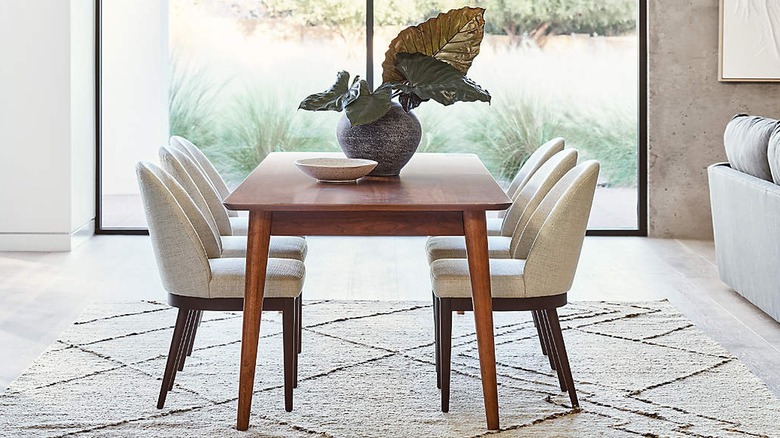
Crate and Barrel has been producing stylish furniture since its founding in 1962. It aimed to offer pieces that stood the test of time. True to its mission, Care and Barrel introduced the chic Ana line of dining chairs, a clean, modern style intended to blend seamlessly with a variety of interior designs. Despite their simplicity, they had one major design flaw.
Although this is a newer issue, Crate and Barrel's Ana dining chairs are already joining the ranks of embarrassing recalls because they struggled to do the one thing a dining chair is supposed to do. The chairs' legs broke easily, putting anyone who sat in them at risk of suddenly falling over mid-bite. With 149 reports of broken chair legs, including 10 injuries, it became clear this was far more than a handful of isolated cases. As if the obvious flaw wasn't bad enough, the company didn't remedy the mistake by issuing refunds. Rather than giving consumers their money back, Crate and Barrel directed buyers to request a replacement chair, a solution that didn't exactly restore confidence in the design.