

11 Appliance Storage Ideas To Try Out In Your Kitchen
We may receive a commission on purchases made from links.
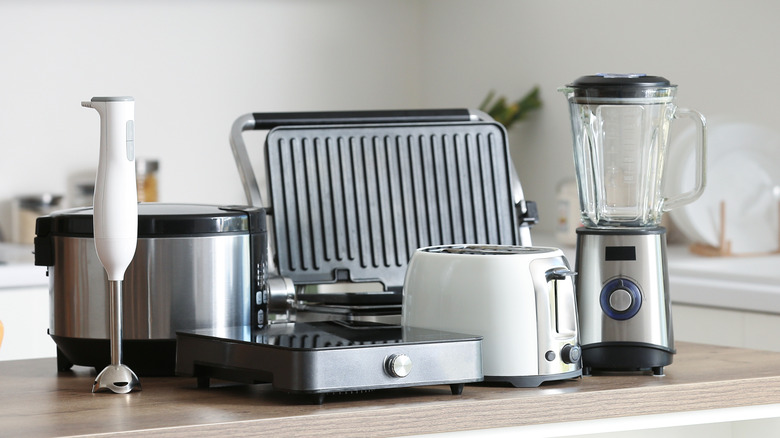
Whether you're an old-hand or are new to the world of kitchen design, chances are that you already know the myriad of easy-to-use home appliances that make life in the kitchen a little more effortless. The difference, if you're just starting out, is that you may not yet know just how irritating it can be when those appliances start to eat up your kitchen counter space. This is especially annoying when it comes to the holiday season and you have countless pots and pans to contend with — not to mention a turkey that needs regular basting. Then, you're likely to require every inch of space you can get your hands on.
With this in mind, organizing your appliances — from microwaves and coffee makers to rice cookers and kettles — is crucial to making life in your kitchen easier. Fortunately, there are plenty of ways to do it. Some are easy wins, like hanging shelves and incorporating nifty, readily-available, and, crucially, cheap accessories that help to both organize and free up more space. Others are more involved and are perhaps best employed by those either building or remodeling the heart of their home.
Store appliances in your kitchen island
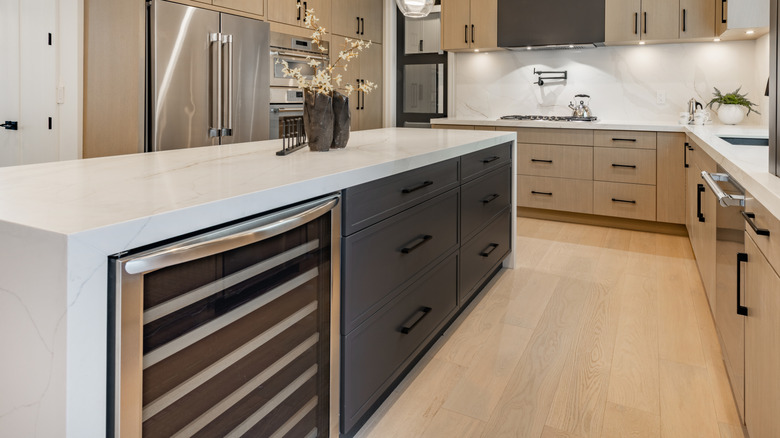
If you're lucky enough to have a kitchen island already, then you're armed with an easy appliance storage solution. Many kitchen islands have cabinets or deep drawers, which many homeowners tend to reserve for bulky cookware like pots and pans. However, if you have space to store these items elsewhere that's still convenient for you to use them every day, then your island could be a quick and easy solution for decluttering the appliances on your counter. This is especially useful for bulky items that you'd rather not haul across the house every time you want to use them, like stand mixers, provided that your construction isn't too flimsy.
If you're designing a new kitchen, then it's worth considering an island design that provides custom storage before you build it. You can decide on the size and shape of the drawers and cupboards that make the most sense for housing your specific appliances. By doing this, your style and your storage space can go hand in hand. If your preferred appliances truly gel with your wider aesthetic — and you're going to the effort and expense of installing a new kitchen — then it makes sense to take the opportunity to make your kitchen design work for you and not the other way around.
You could even consider using this same idea to house everyday appliances like microwaves by building sturdy shelves (without doors) to tuck them into, freeing up that coveted counter space. Basically, open-fronted shelves allow you to use them just as you would if they were on your countertops, but without eating into your work space. Just make sure you instruct your cabinetmaker to make the shelves deep enough to accommodate and support bulkier appliances.
Utilize hard-to-reach cabinets for seldom-used items
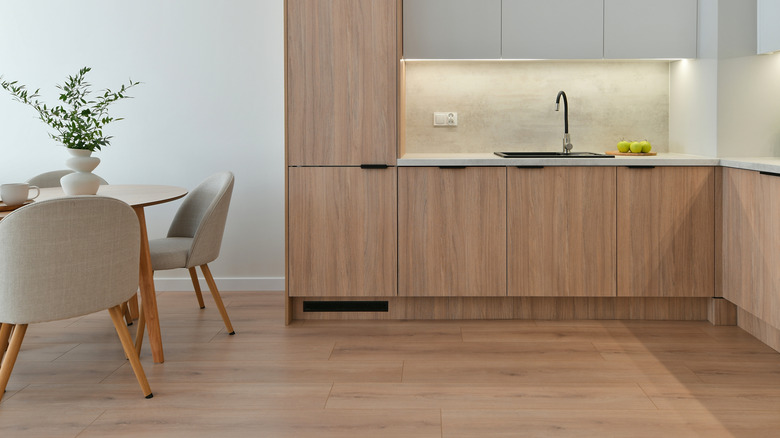
Using high cabinets to declutter your kitchen may not seem like the most practical idea, but bear with us. These cabinets can easily be organized so that one or two shelves at the top remain free, providing you with a useful space to keep more seldom-used appliances. For those who decided to install a corner cabinet thinking that it would revolutionize that awkward space — and have since come to regret it — this could be a useful means of salvaging the situation.
The trick, as mentioned, is to store appliances here that you rarely use. You won't mind pulling up a chair to reach them if you only need to do it once or twice a year. Perhaps you purchased a hot plate for Thanksgiving and that's all you ever use it for, or maybe you can't yet bring yourself to sell the gear you purchased that time you were obsessed with sous vide cooking. Whatever it is you need to get out of the way, it makes perfect sense to reserve them for your most seldom-used appliances since those top shelves are too tricky to reach for things you need every day.
Keep more occasional appliances in your pantry
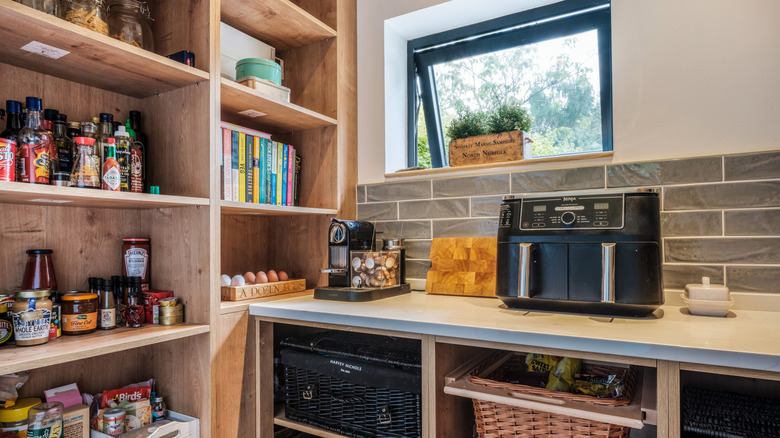
Anybody who is fortunate enough to have a walk-in pantry will know just how useful it can be. But it's more than just a place to store ingredients. A walk-in pantry is a world of opportunity when it comes to organizing your whole kitchen, and if you're not doing it already, you should at least consider storing some appliances in there. Additionally, if you have space in your pantry near a power supply, and you don't need those items every single day, you can keep them strategically placed, plugged in, and ready to go. A microwave would be a good idea to keep in there, especially if you only use yours to occasionally reheat leftovers. And if you have an air fryer that you were sure you'd use more when you bought it, that could also be sent to the pantry.
Even if you don't have power (or space near a power source to put them), you can still allocate shelves in your pantry for appliances. The kinds of appliances you store on these shelves will depend largely on how much weight they can bear (and how heavy your appliances are). If you have space, and you're unsure of your existing shelves' load capacity, consider incorporating something like Superjare's 35.4-inch bakers rack. Replete with shelves, you could use this unit to house a number of appliances, seldom-used or otherwise, with plenty of room to spare for more traditional pantry staples. It also has a power outlet built in, meaning your appliances can be left on standby for whenever they're required for duty.
Use shelf risers in your cabinets to maximize shelf space
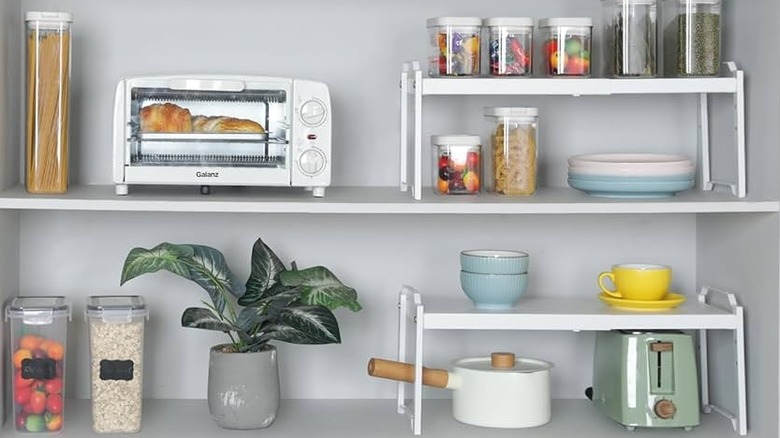
This is a really easy way to make the most of your existing cabinets and shelves. Essentially a miniature table, shelf risers are designed so that one item slides beneath the "tabletop," while another sits on top. It's a particularly useful means of hiding away small appliances and reducing kitchen clutter, especially since the electrical gadgets that we use to cook our favorite meals very rarely play nice when we attempt to stack them together.
As for which product you choose, there are plenty of cabinet risers available across most home retailers. These clear plastic cabinet risers from YUNEASELF are equally suited to cabinets and worktops, providing sturdy storage not just for appliances, but a whole host of small-to-medium-sized kitchenware. Alternatively, for something with a little more versatility, you could line your cabinets with this expandable cabinet shelf organizer rack from Across Star. It extends both horizontally and vertically, giving you the flexibility required to store a wider range of appliances than other, non-expandable solutions.
Use vertical shelving to de-clutter your countertops
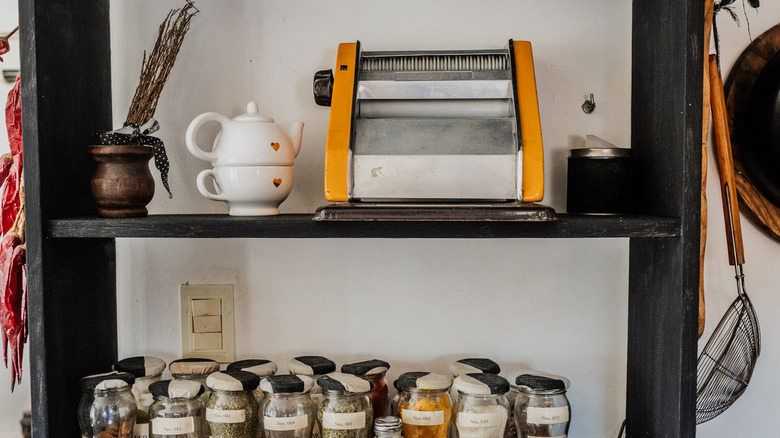
It's easy to make space on your countertop while organizing your kitchen appliances with vertical shelves. This idea is especially helpful for keeping appliances that only receive occasional use out of the way, all while allowing you to keep your fanciest equipment on full display. What's more, depending on how you go about it, you could achieve it while absorbing minimal floor space.
There are two ways to use shelving in your kitchen, and the first is to mount shelves directly onto your wall. This is the most space-saving method, as it takes up no floor space whatsoever. If you're wondering which shelves to use, you could opt for something like the Wopitues wood floating shelves set. With a load-bearing capacity of 40 lbs, these shelves would make an ideal home for smaller appliances like rice cookers and soda makers. And if you install shelves within reach of power outlets (or instruct your electrician to ensure that there are power outlets placed where you intend to hang them), you could also use them to keep a smaller microwave or coffee machine clear of the counter.
The second way to use shelves is better suited to kitchens where space is at less of a premium. It involves using a floor-mounted, freestanding shelf unit, like the 23.6-inch Superjare kitchen bakers rack that comes with a power outlet. This particular product features hooks for holding incidental items like pots and pans, and has plenty of shelving — plus a power outlet — to help you organize various appliances, all without having to remove them from the shelves in order to use them. You could use it to turn an empty space into a coffee corner, or you could reserve it for bulkier items, like your microwave or bread maker.
Employ swing-out cabinets to stow smaller appliances
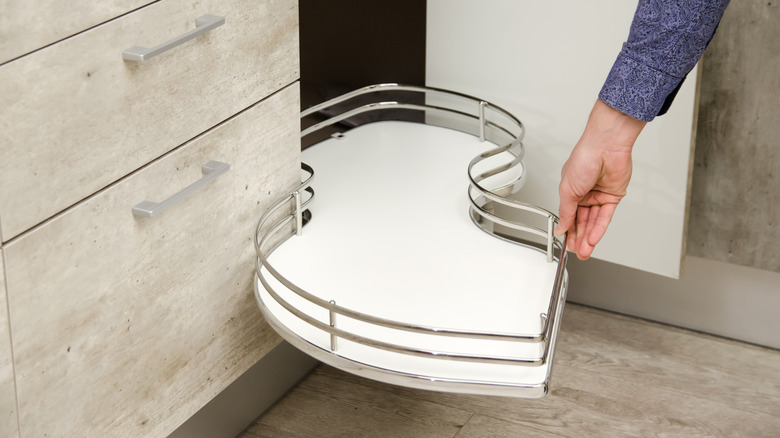
It can be hard knowing how to organize your kitchen corner cabinet storage, especially if it only features static, immovable shelves. The backs of such cupboards can become a graveyard for items that your arms simply aren't flexible enough to reach, and you can quickly regret opting for a corner cabinet altogether. Fear not, though; if this sounds like an issue in your household, then removing those static shelves and replacing them with swing-out alternatives can make your life easier and your appliances more accessible.
If you're building your kitchen from the ground-up, then you can specify your swing-out trays as part of the build with your contractor, before your cabinets are installed. Don't worry if you're upgrading an existing cabinet, though. Many swing-out shelf kits can be easily retrofitted. Rev-A-Shelf, for example, provides a range of hardware options, including this two-shelf blind corner organizer. This particular product is designed for left-opening, blind right cabinets, however, it's also available for the opposite orientation. Since it's able to be retrofitted to existing cabinets, you could easily install it yourself. Having said that, it could be worth considering hiring a contractor to fit it for you; these kits rely on a complex system of moving parts, and if not fitted correctly, you could quickly run into issues once you begin to load your appliances on the shelves.
Consider adding an appliance garage
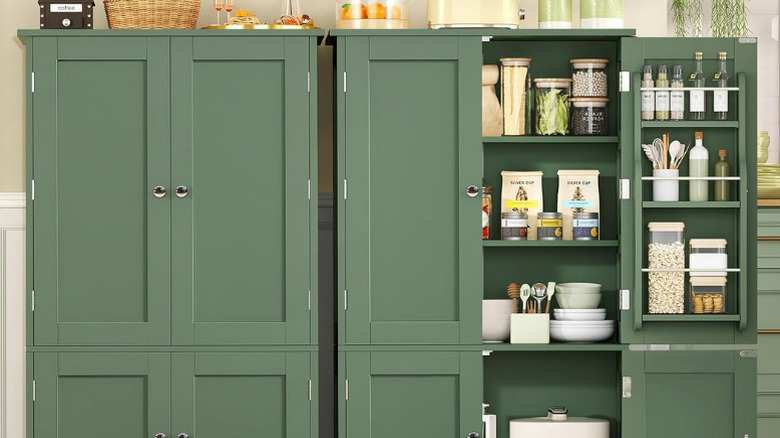
Essentially a cabinet that provides storage for your appliances, an appliance garage, is exactly what it sounds like. It serves as a shelter for your gadgetry when not in use, and while you could have yours designed in an array of styles, a popular method is to match the front of the cabinet to the rest of your kitchen. This results in an effortlessly seamless look, and if you install your garage in the right place, it needn't cost you in terms of accessibility.
There are several ways to incorporate an appliance garage into your kitchen. You could place one beneath, above, or at least near your countertop to house appliances that see regular use like the toaster or the blender that makes your morning smoothies. Or, if you've an abundance of appliances that you rarely use, you could incorporate a larger unit just about anywhere in your kitchen. Since appliances don't always stack well together, it's worth fitting a larger garage with multiple shelves so it'll help you to organize your stuff while avoiding damage.
If you're building a new kitchen, then you can easily specify your need for an appliance garage, shelves and all, to your cabinetmaker. Or you could opt for a ready-made unit, like this 43-inch storage cabinet from TEENFON. If you're working with an existing kitchen, then you may need to get creative. If you have a large, shelved cabinet that you can clear out, then that's the ideal place to do it. Alternatively, you could use cabinet risers to create more "stackable" space. And if you only have a small cabinet that can be emptied, then gather together your smallest appliances reserve that space for them.
Achieve a clean, clutter-free look with counter cabinets
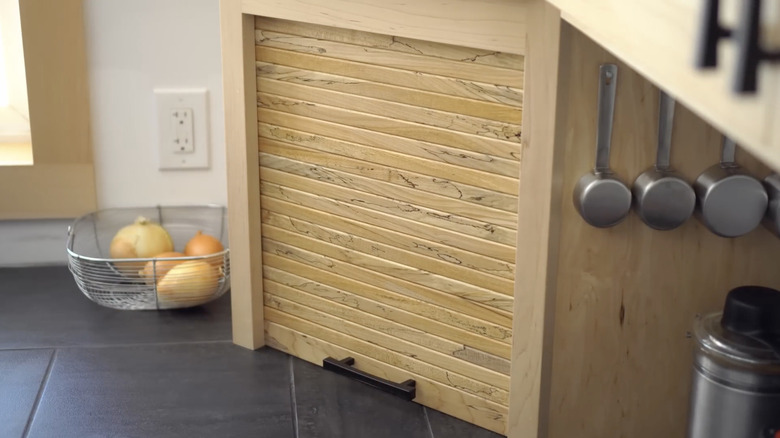
This idea is similar to an appliance garage, but is more suited to just one or two appliances that get used everyday, like your kettle and microwave. The idea is to hide them behind door that matches the rest of your cabinetry. A roll-top or slide-up door can make access easy, but it's not essential. Whichever door you choose, this idea can help to declutter your kitchen, whilst preventing more severe-looking appliance designs, like steel coffee machines and toasters, from detracting from your kitchen's aesthetic. It also negates the need to choose appliances based on how they look, since they'll be hidden for most of the time behind the door.
If you're building a new kitchen, doing this is simple — just ask your contractor to construct it for you. However, if you're working with an existing kitchen, then consider whether you have a cabinet on your counter that has a replaceable door. If not, then you may need to dust off your DIY hat and build one, door and all, to occupy the space between your counter and top cabinet. You could also hire a contractor to build one for you.
Another recommendation, since the appliances you'll keep in this cabinet are likely to be used daily, is to add slide-out shelves to the base. This is a sensible approach for appliances like toasters, which emit lots of heat and could therefore damage the top of the cabinet (or worse) if not pulled out when in use. You should also ensure that there's a power outlet handy to keep your appliances plugged in.
Store them in lower cabinets with pull-out drawers
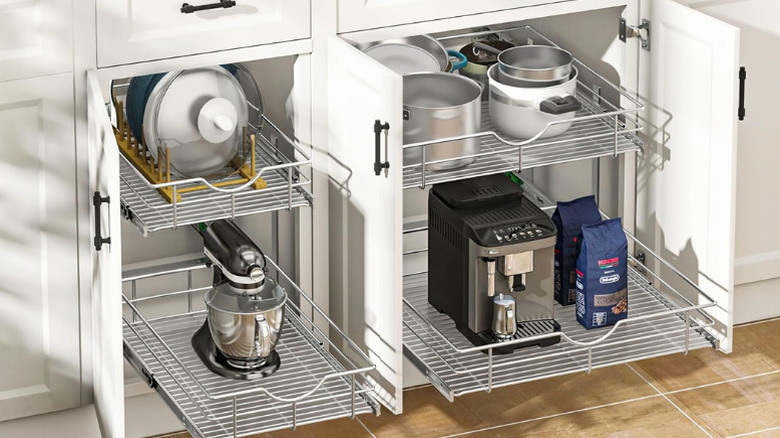
Whether you're working with a kitchen island, a breakfast bar, or a regular run of ground-level cabinets, turning one or two of your cupboards into deep drawers can save you endless headaches when fishing out your appliances. Since they're at ground level, you can forgo the pain — and risk — of pulling up a chair to reach your taller cupboards. And since they're low, you'll be able to see where everything is, without worrying about losing smaller items at the back.
To bring this idea to life, you'll first need to remove the shelves from your chosen cabinets, which should be fairly straightforward. The next step is to find some roll-out drawers, like this two-tier kitchen cabinet pull-out shelf and drawer organizer from WelFurGeer, which is ideal for most standard-sized base cabinets. Installing it yourself is fairly straightforward. In fact, it's possible to do it without drilling a single hole. If you're not sure, though, it could be worth hiring a contractor to install your drawers for you.
Group items together by cooking style
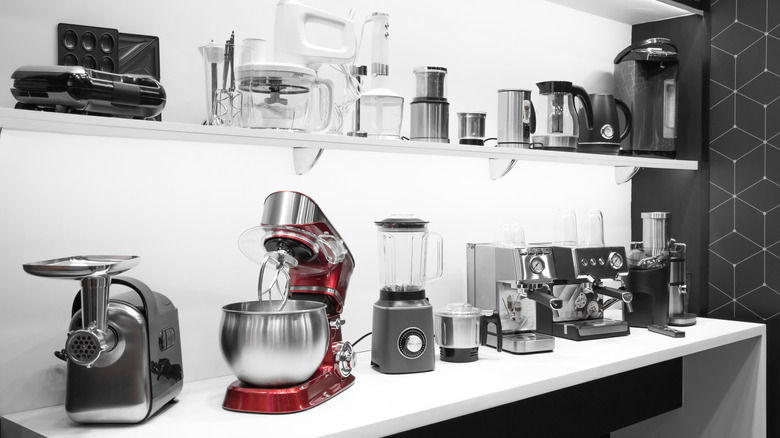
This idea is all about being smart with your storage, and it's applicable to anybody who regularly uses the kitchen — regardless of how they use it. If you regularly bake, for example, then having your most frequently-used appliances handy — like your stand mixer, electric whisk, or bread maker — makes more sense than stowing them in random order with other, non-related gadgets. Similarly, if you're more of a savory chef, you'll find keeping your go-to gadgets like slow cookers, sous vides, and air fryers together is much easier than having them scattered to the proverbial wind.
A further tip is to store your appliances near the ingredients you most frequently use. If you're a baker, then having your various sugars, flours, and rising agents nearby will make you far more efficient. You'll also be glad you took the time to organize your baking station when holiday treat-making time rolls around.
Create a hot-drink station and breakfast nook
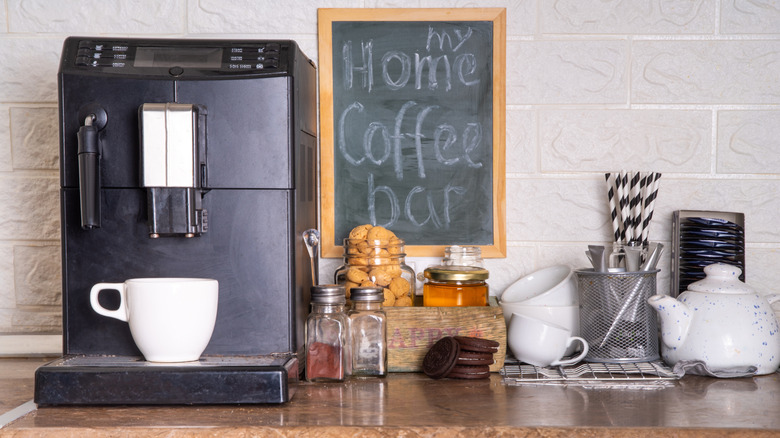
Organizing your tea, coffee, and breakfast supplies is one of the several ways to perfectly organize your kitchen. The first trick is to dedicate a corner to everything you use to make your daily teas and coffees. This could be your kettle, a coffee pot, Nespresso machine, or even a full-scale barista set-up. The important part is to contain it to one corner, and thus declutter the rest of your kitchen. As for where to position your hot drink station, it's best to place it either beneath, or next to, your cup cabinet, so that everything's located exactly where you need it when you're late and rushing for work.
Provided that you have space, then you can further organize your station by opening up the area to all breakfast-related appliances. Toasters and smoothie makers, for example, can easily clutter up counter space if not placed strategically. They can also be messy, especially if, in your hurry to get out of the door, you forgot to tighten the blender lid. If everything you use for breakfast is contained in one spot, not only will making breakfast and morning drinks be easy, but any mess will be confined to one, easy-to-manage area.