

12 Code Violations That Homeowners Could Be Fined For Doing

We may receive a commission on purchases made from links.
While HOA rules often get the most attention, state and local governments issue their own codes, and those carry real financial penalties. These rules function much like tickets from a police officer. They are enforceable, even if you live far from any planned community, and they cover a wide range of situations that many people never think about until a notice appears on the door.
For example, cities frequently issue fines for grass that grows too tall, trash bins left in view for too long, or outdoor lighting that shines into a neighbor's home. Counties may punish improper disposal of renovation debris or the use of a shed that was never permitted. Even something as simple as an unsafe set of steps on a porch can bring a violation if an inspector happens to pass by, or if a combative neighbor (if you have one of these, here's some tips on how to get along with a difficult neighbor) decides to do you in. Here's what you need to know to stay ahead and avoid potential fines.
Running a business from home that generates traffic or noise

If you live in an area zoned only for family housing, running certain businesses from your home can get you into legal trouble with the city. This is because most municipalities restrict commercial activity in residential zones to preserve neighborhood traffic levels and improve overall safety. If your business involves frequent client visits or deliveries, and has on-site employees or noticeable inventory, your neighbors can file complaints that prompt code enforcement to get involved. To avoid a fine or other prosecution, it's important to check the specific code for your city, as well as consider the overall nature of your business.
For example, if you are a nail tech who is a sole trader and services one client at a time from your home studio, you might suffer no repercussions because of the lack of visibility, but you likely still need a permit if the clients park on the street. However, if you have employees working for you and multiple clients waiting at any one time, the traffic and noise congestion involved can be cause for citation, especially if they are parking on the street. Typically, WFH corporate and customer service jobs, as well as other sole trader activities, like running an online Etsy shop by yourself, do not require any reporting.
Completing exterior modifications without a permit

Adding things like decks, house extensions, or any other exterior structures without a proper permit can cause major headaches later. Cities often treat non-permitted work as a safety and zoning violation, which means you could face fines or even forced removal of the structure. Even if you hired a contractor, you're still the one legally responsible for the consequences if the proper paperwork wasn't filed. Nosy neighbors can also report suspicious construction, triggering inspections you may not be prepared for.
To avoid this, before beginning any exterior project, contact your local government's building department to confirm whether a permit is required and what plans need approval. Reputable contractors should be willing to pull permits on your behalf, but always ask for documentation and verify with the city. Keeping everything above board ensures your home construction project is safe and fully recognized in county records. This protects you from costly surprises later.
Leaving holiday decorations up for too long

If you live in an HOA community, the board might set dates for when holiday decorations can go up and when they must come down. However, even without an HOA, many cities and counties also have similar rules. For example, the city of San Diego can issue fines if you leave Christmas lights up well past the holiday. The official rule is that seasonal holiday lighting can't be up for more than 60 days in a row, or for 120 days cumulatively within one calendar year. We assume this 60-day rule leaves a little wiggle room for those wanting to put up lights for other holidays throughout the year, too — but the 120-day limit prevents anyone from taking advantage and just calling them, let's say, "Easter lights" when the spring rolls around.
To avoid fines or friction with your neighbors, it's best to treat holiday décor like any other regulated exterior feature: Check the rules before you hang anything. Look up your city or county's nuisance ordinances, as well as your HOA's guidelines, if you have one, and mark the permitted timelines on your calendar. If you love decorating for multiple holidays, consider using neutral fixtures (like programmable smart lights such as the Rosykite Smart Outdoor Sconce Lightsk), so you can swap colors or themes without leaving anything up beyond the allowed window.
Doing construction after hours without a special permit

There tend to be laws regulating home construction or renovation, because of all the noise it can generate. If you want to do work outside of those hours, you have to apply for a permit and with good cause. In New York City, for example, it's illegal to do any construction work beyond weekdays from 7 a.m. to 6 p.m. The only exception is if you're just doing quick work on the home that you actually live in, and it's more than 300 feet away from a church, mosque, or synagogue — then you can also do work on the weekends from 10 a.m. to 4 p.m. In Albuquerque, you can't work on holidays, either, without a permit, unless it's an emergency.
The safest way to avoid fines and make a home renovation decision that might upset your neighbors with all the noise is to verify your city's permitted construction hours before starting any project. Most municipalities publish noise and work-hour rules online, and a quick call to your local building department can confirm whether you need a variance or after-hours permit. If your project is time-sensitive, be prepared to show legitimate cause, since cities don't issue these permits lightly. You can also plan work in phases to make the best use of your time. For instance, save loud tasks for approved hours, handle quiet prep work later, and communicate with neighbors so they know what to expect.
Having an overgrown lawn filled with weeds

Overgrown grass and weeds, or dead patches in your lawn, can trigger fines from both HOAs and local cities. So even if you don't have an HOA, be extra mindful. This is because many cities treat neglected yards as public nuisance violations, and some, like Pueblo, Colorado, enforce strict height limits on weeds and grasses. If your lawn exceeds their 10-inch limit, inspectors can issue fines if the problem goes unaddressed.
To stay compliant, create a simple maintenance routine: Mow regularly, address weeds early, and overseed bare patches as needed. If you travel or have a busy schedule, hiring a lawn service can keep your yard within legal limits. Choosing the right lawn care company for your yard doesn't have to be difficult. In fact, many companies, especially if they are sole traders, might let you hire them for a one-off service, or, for example, only for the summer months when things are really growing — which is good to know if you are hesitant about committing to a contract.
Leaving trash cans out too long or storing them out in the open

Putting your bins out too early and leaving them out too long can lead to issues. According to the rules of Los Angeles County, you cannot put your trash containers out for pickup before 5 p.m. the day before pickup. Also, you should take your trash containers back inside no later than 8 p.m. on the day it's picked up, or within two hours after pickup if the pickup is after 8 p.m. Breaking this city ordinance is said to lead to a fine, although it doesn't seem to occur often in this area. However, what the law says about where you can place your trash cans is a little different in Missouri City, Texas. The city has a similar ordinance, and there are lots of associated fines reported, so it's always best to follow the rules closely, just in case you live in a high-enforcement area.
Set reminders on your phone so you're putting bins out and bringing them back in within the exact windows your city requires. When you're out of town, ask a neighbor to roll your cans in for you so they're not left curbside past the deadline. If you live somewhere with stricter enforcement, double-check placement rules, since some municipalities require bins to be stored out of sight when you bring them in.
Storing unsightly items in the yard
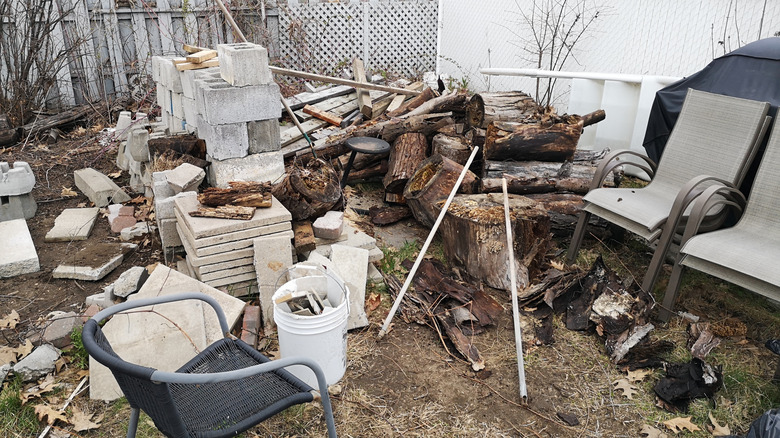
Keeping appliances, construction materials, broken furniture, or general clutter scattered around your yard can quickly lead to violations. In some places, the rule is extremely strict: If an object isn't designed to be stored outdoors and remains on your property for more than 24 hours, you're technically in violation unless you have explicit approval from local authorities. That means old refrigerators, discarded couches, stacks of lumber, or even boxes waiting for disposal can trigger a warning or fine if left out too long. And you never know when an inspector will come by — or a disgruntled neighbor will make a report against you.
The simplest way to avoid trouble is to keep your outdoor areas intentionally tidy. If you're working on a large project and need temporary outdoor storage, contact your city to request permission. Many offer short-term permits or grace periods. For example, in Houston, Texas, you can keep a dumpster in your driveway for up to 60 days without any paperwork. Even so, remember to schedule bulk pickup promptly and avoid placing household items outside "just for now." Time always goes quicker than you think.
Committing parking violations

Parking might seem like such a small thing, but many cities (and most HOAs) have strict rules about where residents can and can't leave their cars. For example, parking on your lawn, blocking sidewalks, or storing a commercial vehicle in plain view can quickly land you on the wrong side of both municipal code and neighborhood bylaws. Cities usually treat these issues as safety concerns, since sidewalk obstructions can force pedestrians into the street and lawn parking can damage underground utilities. HOAs, meanwhile, often focus on aesthetics and property value, issuing warnings or fines if a vehicle is oversized, unsightly, or parked somewhere it shouldn't be. Even work vans or wrapped company cars can trigger enforcement if your community restricts "commercial signage" on vehicles parked in driveways.
The good news is that avoiding parking violations is pretty simple once you understand the rules. Start by reviewing your city's street-parking ordinances. If you own a commercial or oversized vehicle, ask whether it needs to be stored in a garage or off-site lot. And if guests tend to block sidewalks or park creatively when visiting, give them clear instructions before they arrive, just in case. You never know when a parking inspector might come by! Case in point: One of our team members was even fined for parking her truck on the lawn while mulching flowerbeds. She didn't move it while eating lunch inside, resulting in the citation.
Not fixing chipped or faded exterior paint
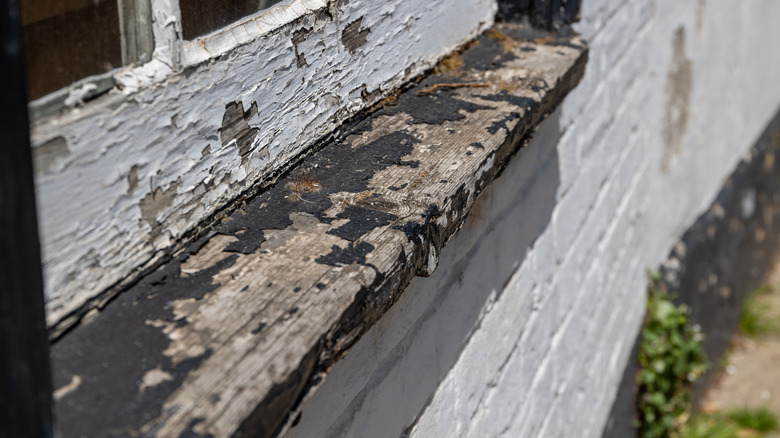
Cities often classify deteriorating paint as a form of property neglect, because it can expose wood to rot and lower the overall appearance standards of the neighborhood. Some municipalities even include paint condition in their nuisance or minimum-housing ordinances, meaning inspectors can issue warnings or fines if your home looks visibly worn down. HOAs tend to be even stricter, enforcing approved color palettes and requiring homeowners to repaint on a set schedule or whenever fading becomes noticeable from the street.
Fortunately, staying compliant doesn't have to be complicated, but it can be intricate. For example, in Midwest City, Oklahoma, residents must keep all painted parts of their homes' exteriors looking sharp. This includes doors, door and window frames, cornices, porches, trim, balconies, decks, and even fences. If you're busy, consider hiring a professional to make the process easier. But remember the most important questions to ask before hiring a painter, like what kinds of paints they will use, as well as about their licenses and insurance. If you plan to DIY, remember to use an exterior paint, like Rust-Oleum Advanced Dry Door & Trim Paint, which is better formulated to hold up to the elements than interior paints.
Removing trees without prior approval

So, you've seen all the signs that tree removal is the right decision for your yard. Now what? Cutting down a tree on your property might seem harmless, but "tree law" is surprisingly strict in many places. Cities often require permits for removing mature trees, and some states protect specific species or trees above a certain diameter. Violations can lead to hefty fines, mandatory replacement plantings, or even legal disputes with neighbors if the tree straddles a boundary line. Acting first and asking questions later can become an expensive mistake.
Before doing any tree work, contact your local planning or forestry department to check whether you need a removal permit. You can also consult state guidelines or local extension offices to see if the tree is protected. If the tree is near a property line, get a survey or written agreement from your neighbor to avoid boundary disputes. And when in doubt, hire a certified arborist as they can assess the tree's health and ensure the removal meets local requirements.
Storing boats, RVs, or trailers in the driveway
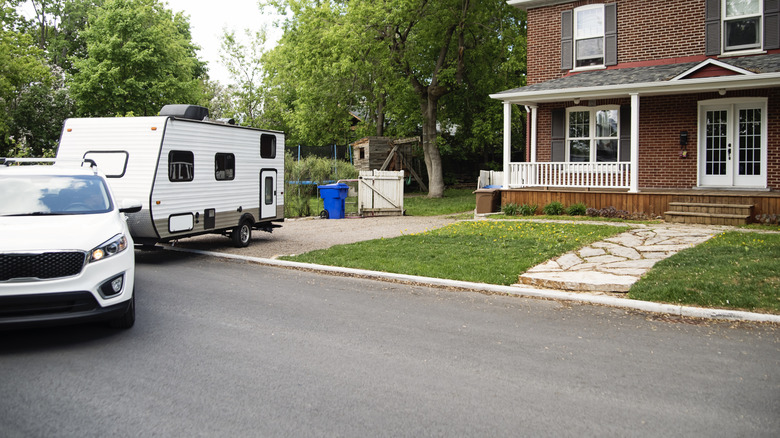
Many places have strict rules about parking large recreational vehicles where they can be seen from the street. These rules exist because oversized RVs, boats, and trailers typically take up a lot of room. Some municipalities even spell out size limits in their ordinances. For example, in Hartford, Connecticut, vehicles and equipment have to be less than 30 feet long. And even then, oversized vehicles may only be allowed if they're kept inside a fully enclosed structure that complies with zoning laws, or if they're placed in a designated parking area at least 5 feet from the side and rear property lines, and 25 feet from any neighboring home.
To avoid issues, check both your city's municipal code and your HOA bylaws before bringing home a large RV or boat. If outdoor storage isn't allowed, consider renting a secure off-site facility or building an approved enclosed structure. This ensures you stay compliant, while still keeping your recreational vehicles accessible and protected.
Improper rental use, such as with Airbnb, Vrbo , etc.

Short-term rentals can be a major source of fines if you're not following your city's rental laws. Many places require hosts to register before listing their property, and some ban full-home vacation rentals altogether unless specific conditions are met. Washington, DC is one example of a city that has tightened its rules: Anyone renting out their home for stays shorter than 30 days must hold a valid short-term rental permit. These permits are only available for primary residences. There's also a cap on full-property rentals. Hosts can only rent out their entire home for up to 90 days per year. But if a homeowner stays on-site and simply rents out a single room, that annual limit does not apply.
To stay compliant, check your city's short-term rental rules before listing anything online. Register for any required permits, and be sure the property qualifies as a primary residence if your area restricts second-home rentals. Keep careful track of annual day limits, and choose hosted stays (where you remain on-site) if you need more flexibility. If you use vacation rentals as a primary source of income, these rules are especially important to be aware of, as there is no use buying in a city where the bylaws are prohibitive.