

Where Do Returned Items To Home Depot Actually Go?
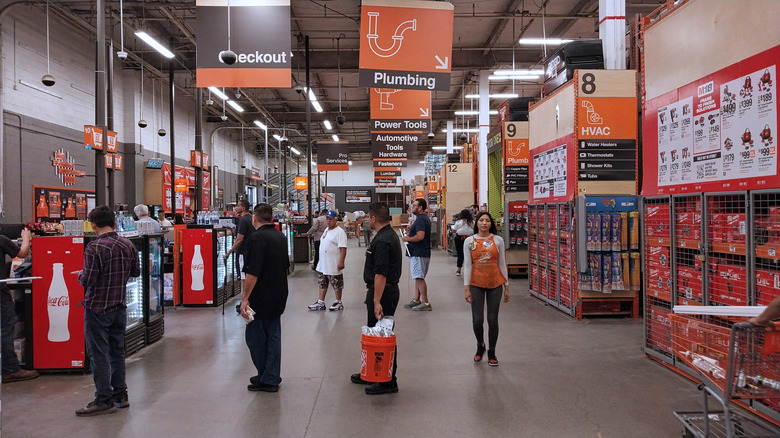
The Home Depot has plenty of game-changing DIY hacks, and because of that, you bought a ton of stuff from them for your recent home project and ended up with more than you needed. You can prep all you want for your home renovation project, but there's always something extra left over when you're done, whether it be boxes of tiles for a bathroom renovation or a gardening tool you forgot you already owned. So, you grab your receipt and those surplus items and head back to the store to return them. But what happens with that stuff you didn't need? Well, it depends on what you returned, whether you used it, what shape the item was in, and perhaps a few other considerations. For anything you return that is still new, in the package, unopened, and unused, the store will likely put it back in inventory and back on the shelf. Open box items could be another story.
For some items that are returned opened or damaged, the store will RTV them, meaning they'll begin the process of returning the item to the vendor or manufacturer from which it came. Some vendors and manufacturers may not take items back, and in that case, The Home Depot may arrange for them to be recycled or sold in bulk. To better understand all of this, it's important to dive deeper into the store's return policies and process, and examine which items they're most likely to send back and where.
Resold, RTV'd, recycled, or sold in bulk?
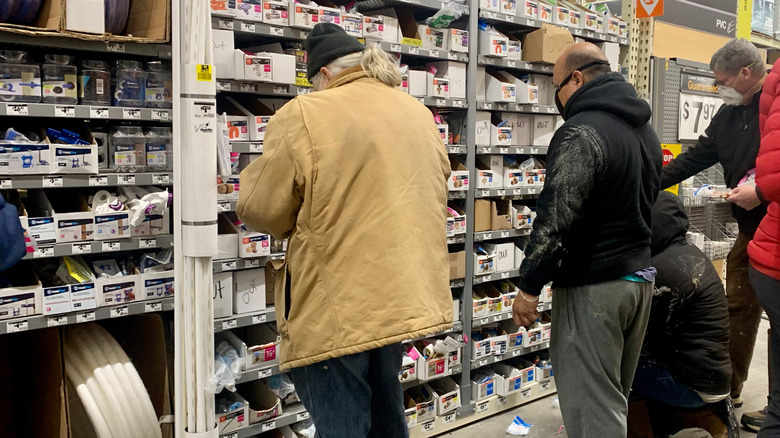
For most items you purchase at The Home Depot, you have 90 days to return them, but there are stipulations. If it appears you used and damaged an item, they don't have to fulfil the return. There are also some items you must return within a shorter period, like 30 days for most gas-powered items, and they must still be factory sealed. If there was something wrong with the item that prevented it from running, at no fault of yours, the store will likely still refund you. So, if your item is sealed when you return it and can't go back on the shelf for some reason (like it is no longer in season), this is one of those cases where the store will RTV the item. It will do the same for anything that came with a manufacturer's defect, so the store can recoup its money on an item that is no longer sellable.
If the original vendor or manufacturer doesn't do RTVs, The Home Depot has a couple of options. The Home Depot is big on recycling, so items that are damaged or don't work and can't be returned will be recycled if they have recyclable parts. If the items work, but were in an open box and accepted as returns (it happens) and can't be put back out on the floor, like most larger companies these days, The Home Depot will sell bulk lots of products, which liquidation stores often purchase to resell.