

How To Keep Your Bed At The Perfect Temperature In The Winter

We may receive a commission on purchases made from links.
Some of us have trouble getting enough sleep at night, so aside from making the bedroom feel cozier, it's critical to maintain the right temperature — the key to a good night's sleep. Although Harvard Medical School reports that most adults sleep better when temperatures are kept between 65 and 68 degrees Fahrenheit, the "ideal" sleeping temperature is highly individual. Some people run cold and need their bedrooms slightly warmer during the cool winter months. Before you turn up the heater, though, consider making your bed warmer by swapping out your sheets for fabrics that can retain body heat more effectively.
A cold bed can be impossible to fall asleep in, so it's paramount to evaluate whether your sheets are keeping you warm or allowing too much heat to escape. Not only will warmer sheets actually help you stay comfortable while you sleep, but they might also save you money from running the heater too much. You also don't want to choose materials that are known to trap too much body heat, especially if you tend to be a hot sleeper during the summer. To that end, you may want to steer clear of polyester and fleece.
The best sheet materials for achieving a warmer bed

Despite all the different blends of sheets available on the market, flannel remains one of the best materials for making your bed warmer. It's also considered a type of heavier weave, which makes it appropriate for winter use. For extra soft qualities, choose a blend with cotton for extra softness. You know you've found a good set of flannel sheets if they keep your bed warm while maintaining their softness. These Sleep Philosophy True North Cozy Flannel sheets are a good starting point if you're looking for warm cotton-based flannel.
On the other hand, if you don't want the heaviness of pure flannel, consider a flannel set mixed with microfiber for a bit more insulation. Blends of wool, Egyptian cotton, jersey, or linen are other options that can keep your bed warmer. Cotton and linen may be better options for traditionally hot sleepers due to their breathability. You might also find it helpful to organize your bedsheets by season, so you have the perfect set for when temperatures change.
Maximizing the warmth of your bedsheets during the winter
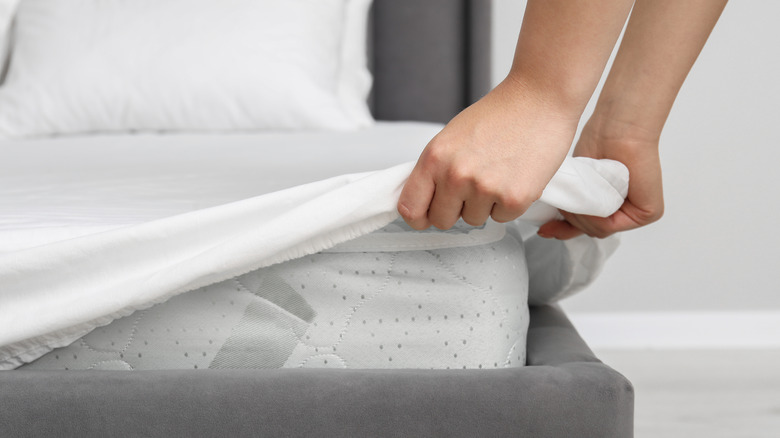
If you still feel cold despite getting different sheets, it can be helpful to add extra layers to your bed. Start with your fitted and top sheets per normal, and then add a cozy blanket between them and your comforter. If you're still cold after adding this extra layer, you can add light blankets on top of the comforter and remove them if you get too toasty during the night. Resist the urge to place too many thick blankets on your bed, or else you might get restless and sweaty from the extra heat. Layering your bed is also a much safer option than heated mattress pads or blankets, even if you have newer versions of these electric-based appliances.
Finally, don't underestimate the importance of well-fitting sheets. If your sheets are constantly falling off the corners of your bed, it may be time to invest in a new set that will stay put. Doing so will help ensure that no cold air makes its way into your bed during your warm winter slumbers. If your bed is on the thicker end, you may even explore whether deep pocket sheets are a better fit for your mattress.